SAEDNEWS: From Tesla to BMW and Hyundai, carmakers are increasingly hiding door handles inside the bodywork or making them pop out only when needed. The change is driven by cleaner styling, aerodynamic efficiency and the rise of digital vehicle access—but the technology also creates new questions about reliability and emergency escape.
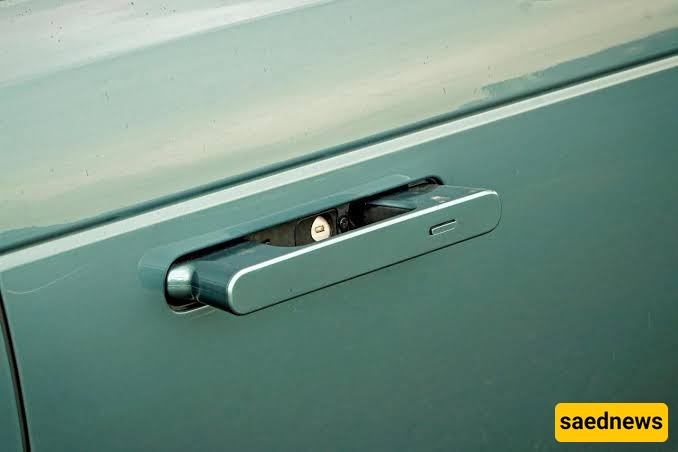
According to SaedNews, the humble car door handle is quietly becoming one of the most technologically complicated parts of a modern vehicle.
For decades, opening a car door required little thought: reach for a visible handle, pull it, and the latch released. Today, the handle on a new car may be almost invisible until you approach with a key, touch a sensor, press one end of a panel or trigger an electric mechanism.
The change is not accidental.
Automakers are trying to make the entire side of the vehicle look smoother, cleaner and more integrated. At the same time, especially in electric vehicles, engineers are searching for every possible way to reduce aerodynamic drag.
But there is an important catch: the more a door handle becomes a piece of electronics, the less it resembles the simple mechanical lever it replaced.
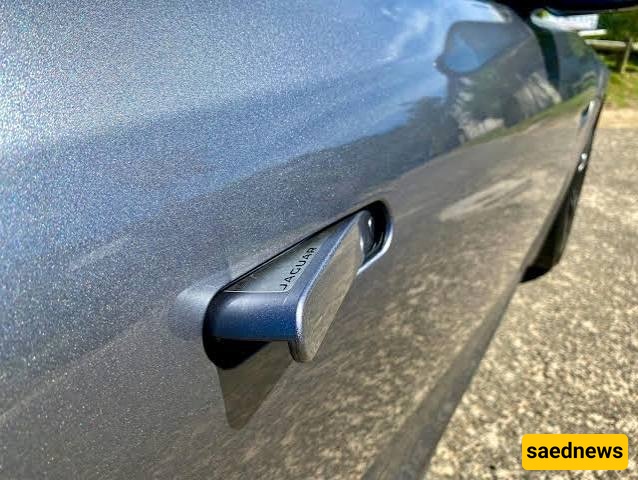
Traditional exterior handles are deliberately obvious. They need to provide a grip, give the driver enough leverage to open the latch and remain usable in different weather conditions.
Flush handles take a different approach.
Some sit almost level with the door until they are needed. Others rotate outward, slide into position or present a gripping surface after being activated.
Automotive supplier Huf, which develops door-access systems for car manufacturers, describes several modern designs, including fixed flush handles, handles that extend parallel to the body and rotating systems that reveal a grip when activated. Some versions can also incorporate automatic deployment, illumination and digital-key technology.
That means the “handle” can increasingly be thought of as part of the vehicle's electronic access system rather than simply a piece of hardware attached to the door.
A car moving at highway speed has to push air out of its way. Anything protruding from the body can disturb airflow, although the overall shape of the vehicle matters much more than any single small component.
This is particularly important for electric cars because reducing aerodynamic drag can help improve efficiency and driving range.
Hyundai, for example, explicitly lists flush door handles among the aerodynamic measures used on the IONIQ 6, which has a claimed drag coefficient of 0.21. Kia likewise describes the flush handles on the EV3 as helping maintain a smooth surface while driving.
BMW has also incorporated flush-fitting door handles into vehicles designed around aerodynamic efficiency. Its BMW X1 and iX1 press material lists flush-fitting handles alongside air curtains, optimized mirrors, wheels and underbody treatments as part of a broader package of aerodynamic measures.
So the handle is not disappearing simply because designers think hidden handles look futuristic.
It is part of a much larger attempt to control the airflow around the car.
There is an important distinction between helpful and game-changing.
Flush handles can reduce aerodynamic disturbance, but they are only one small part of a vehicle's total drag.
A 2025 analysis by Ars Technica, citing engineering estimates, reported that making a handle flush could reduce a vehicle's drag coefficient by around 0.01, with the resulting range improvement generally amounting to roughly a mile or two under the testing conditions discussed. The precise benefit varies with the vehicle's frontal area, speed, body shape and other aerodynamic features.
That puts the design in perspective.
The smoother handle may contribute to efficiency, but it is not the secret behind an electric car's range. The roofline, wheels, underbody, mirrors, tires and overall body shape can all have much larger aerodynamic consequences.
The handle is one piece of a much bigger puzzle.
Because appearance matters, too.
A conventional handle interrupts the visual flow of a car's side panel. A flush design can make the door appear almost like one uninterrupted surface.
For car designers, that creates a valuable visual effect: the vehicle can look cleaner, more expensive and more technologically advanced.
BMW's newer iX3, for example, uses door handles integrated flush into the doors that extend automatically when the vehicle's digital key approaches.
Huf similarly emphasizes the ability of flush systems to blend into the bodywork while providing different deployment and access mechanisms.
In other words, the handle has become part of the car's identity.
Flush handles are not exclusive to EVs, but the technology fits naturally with the design priorities of electric vehicles.
An electric vehicle benefits from low aerodynamic drag because energy efficiency directly affects how far it can travel between charges.
That gives designers an additional reason to smooth the bodywork wherever possible.
The rise of digital keys and passive entry systems also makes the concept more natural. Instead of manually inserting or even pressing a conventional key, the vehicle can recognize a key fob or smartphone and prepare the door for the driver.
Huf says modern access systems can incorporate passive entry and digital-key technologies, including NFC-based approaches and smartphone-based access.
The result is a door that can seem to know when you want to use it.
This is where the change becomes more than cosmetic.
A conventional handle is largely mechanical. Pull it, and a mechanical linkage operates the latch.
A modern flush handle can include sensors, motors, wiring, electronic controls and software.
Tesla's Model 3 is a useful example. Its owner's manual instructs drivers to press the wide portion of the exterior handle, causing it to pivot outward so the door can be opened. The handle then retracts automatically.
Tesla's service documentation also shows that the exterior release handle is connected to the vehicle's electrical system.
That does not mean every flush handle is fully electronic. Some systems remain mechanically activated even though they sit flush with the body. Huf, for example, offers both manual and automatic versions.
But the industry's direction is clear: access to the car is increasingly becoming an electronic experience.
The most obvious problem with an electronic door mechanism is what happens when the car loses electrical power.
A traditional handle does not need the vehicle's battery to tell it what to do.
A sophisticated modern system may.
This issue has attracted increasing regulatory attention. In February 2026, members of the European Parliament formally raised questions about safety risks associated with flush handles, particularly where electrical mechanisms could become difficult to operate after a crash or power failure. The parliamentary document also referenced regulatory developments in China and a proposed U.S. measure concerning manual door releases.
The issue is important enough that China has moved toward new requirements concerning vehicle door handles. Reporting in 2026 described a Chinese standard scheduled to take effect in 2027 for new models, with requirements intended to ensure mechanical means of opening doors.
That does not mean every flush handle is unsafe.
It means the industry is being pushed to reconcile sleek electronic access with the basic requirement that occupants must be able to get out of a vehicle in an emergency.
Tesla's Model 3 documentation provides a useful example of how manufacturers address this problem.
The vehicle has an electronic exterior access system, but Tesla also provides manual emergency releases for opening doors when the vehicle has no power. The current owner's manual explains manual procedures for both front and rear doors, depending on the vehicle configuration.
That is an important distinction.
The question is not whether a modern car can use electronics to open a door. It clearly can.
The question is what happens when those electronics are unavailable.
For years, flush handles represented the future: smoother bodywork, cleaner styling, digital keys and a more theatrical interaction with the vehicle.
Now the industry is confronting the less glamorous side of that future.
A handle has to look good, contribute to efficiency and work conveniently—but it also has to remain dependable when a car is damaged, unpowered or involved in an emergency.
That could change the designs we see over the next few years.
Instead of completely disappearing, door handles may evolve toward systems that retain the smooth appearance of flush designs while providing more obvious mechanical backup mechanisms.
In fact, the technology itself is already diverse. Some handles remain physically operable, some deploy automatically, and others combine electronic recognition with a mechanical opening action.
The strangest part of this design evolution is that the door handle has not really disappeared.
It has become less visible but more important.
What once was a simple lever has become a small showcase for the automotive industry's larger transformation: aerodynamics, electrification, sensors, digital keys, software and increasingly integrated vehicle design.
The next time a car door handle seems to vanish into the bodywork, it is worth looking at it differently.
That tiny piece of the door represents a surprisingly large engineering trade-off: how do you make a car look like it has no handle, without making the handle less useful when you actually need it?