SAEDNEWS: Why Are the Fast and Slow Speeds of an Evaporative Cooler the Same?
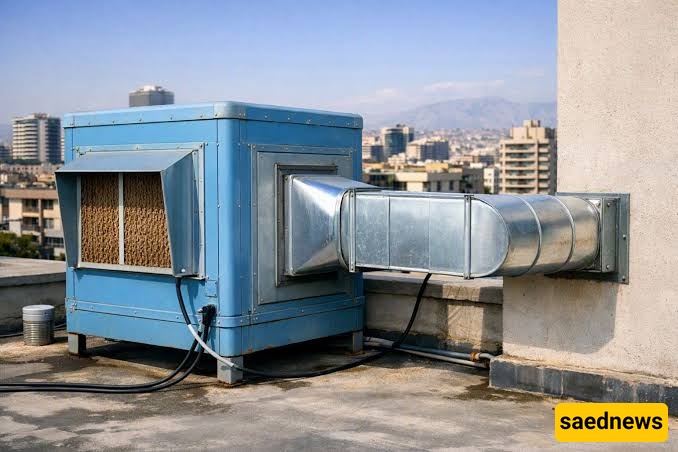
According to Saednews, An evaporative cooler is one of the most commonly used cooling systems in many homes and buildings. These coolers are usually equipped with a two-speed motor that allows users to adjust the airflow level. During hot days, people often set the cooler to high speed for stronger cooling, while the low-speed setting is used when a softer airflow is preferred.
However, sometimes after turning on the cooler, users may notice that the high and low speed settings feel exactly the same. In other words, the fan speed and airflow remain almost unchanged in both modes. This issue not only reduces the cooling efficiency of the unit but may also increase pressure on the motor and raise electricity consumption.
The reason behind identical high and low speeds is usually related to problems with parts such as the wiring, cooler switch, motor, capacitor, or internal electrical connections. Below are the main causes of this problem and how they can be checked.
To understand why both speeds may become identical, it is important to know how the motor operates. An evaporative cooler motor usually has two speed settings created through separate low-speed and high-speed windings.
When the cooler switch is placed on the low-speed setting, electricity flows through the low-speed circuit, causing the fan to rotate more slowly. When the high-speed setting is selected, a different circuit is activated, allowing the motor to run faster.
If a problem occurs in these circuits, the motor may no longer be able to produce two different speeds, causing both settings to operate at the same speed.
One of the most common reasons for identical cooler speeds is incorrect motor wiring. This problem often occurs after installing a new cooler, repairing the motor, or replacing electrical wires.
Evaporative cooler motors have several wires with different functions. If the wires connected to the high-speed and low-speed terminals are placed incorrectly, both settings may produce the same speed.
Signs of incorrect wiring include:
No difference in motor sound between high and low settings
No change in airflow when switching speeds
The cooler operating at only one fixed speed
To solve this issue, the motor connections and the cooler terminal box should be inspected.
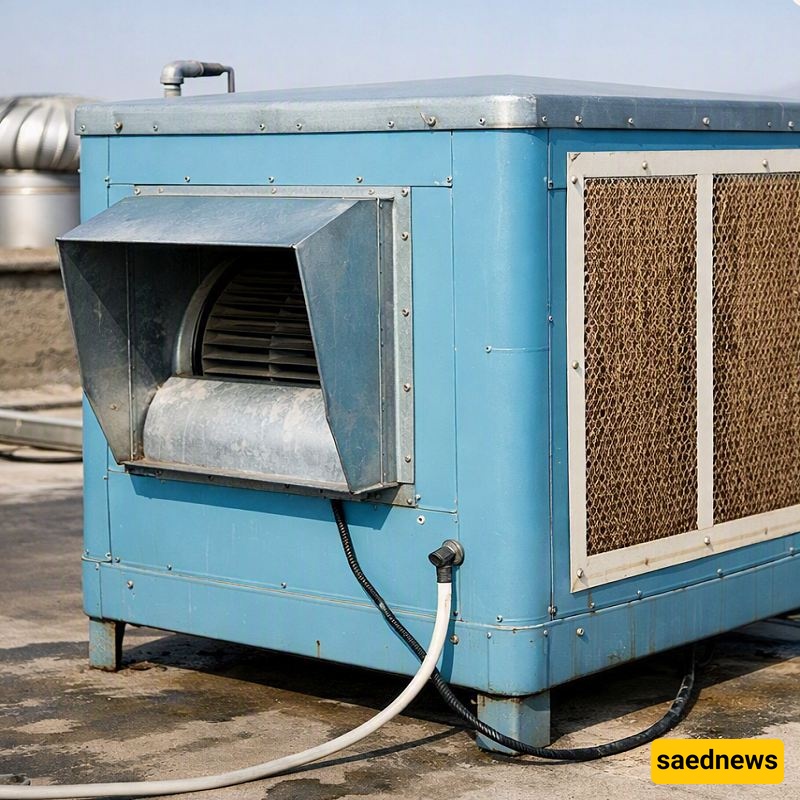
The evaporative cooler switch controls different parts of the system, including the motor and water pump. If the internal contacts of the switch become damaged or incorrect connections occur, the high and low speed commands may not be transferred properly.
A faulty switch may cause:
Electricity to flow through the wrong circuits
The motor to always operate at one speed
The speed setting to fail when switching from low to high
Replacing the cooler switch or checking its wiring connections usually resolves this problem.
An evaporative cooler motor uses separate windings to create different speeds. If the low-speed winding becomes burned, partially damaged, or disconnected, the motor may not function normally.
In some cases, the motor may run only at high speed, making it appear as though both speed settings are identical.
Signs of motor winding problems include:
Excessive motor heat
Burning smell
Reduced airflow power
No change in fan speed
Testing the motor windings usually requires specialized equipment.
The capacitor is an important component for starting and maintaining proper motor operation. If the capacitor loses capacity or becomes defective, the motor may not have enough power to operate correctly at different speeds.
A damaged capacitor may cause symptoms such as:
Difficulty starting the cooler
Unusual motor sounds
Reduced fan rotation strength
Little or no noticeable difference between speeds
If the capacitor is faulty, it should be replaced with a suitable model that has the correct specifications.
Some evaporative cooler motors use a centrifugal switch to control certain operating conditions. This component changes the electrical path according to motor rotation.
If the centrifugal switch fails, the motor may not switch correctly between operating modes, preventing proper speed changes.
Signs of centrifugal switch failure include:
No speed change in the motor
Intermittent cooler operation
Unusual sounds during operation
The terminal box is where the power supply, motor, water pump, and switch wires are connected. Any mistake in this area can affect cooler performance.
Problems such as:
Swapped high-speed and low-speed wires
Loose connections
Incorrect wire placement
can cause the cooler to operate at the same speed in both settings.
Sometimes the cause of identical speeds is related directly to the motor itself. Internal wear, reduced motor power, or damaged windings can interfere with the two-speed function.
If the motor also produces excessive noise, overheats, or shuts down unexpectedly, it should be inspected before continued use.
You can identify this problem by checking several signs:
The motor sound does not change when switching from low to high speed.
The airflow level remains almost identical in both modes.
The fan blade speed shows no noticeable difference.
The cooler always operates with the same power level.
For an accurate diagnosis, the wiring and internal components should be checked by a qualified technician.
Using an evaporative cooler with faulty speed settings for a long time can create several problems. When the motor continuously operates in one condition, extra stress may be placed on its components.
Possible consequences include:
Higher electricity consumption
Shorter motor lifespan
Excessive motor overheating
Damage to internal windings
Reduced cooling performance
For this reason, the problem should be inspected and repaired as soon as possible.
The first step is to determine the actual cause. Common solutions include:
Checking and correcting motor wiring
Testing the cooler switch and replacing it if necessary
Inspecting the capacitor condition
Testing motor windings
Checking the terminal box and electrical connections
Repairing or replacing the motor if it has serious damage
Working with electrical wiring without proper knowledge can create a risk of electric shock. For motor and electrical problems, it is safer to seek help from a qualified repair professional.
When an evaporative cooler’s high and low speeds become identical, the problem is usually caused by issues with wiring, the control switch, capacitor, motor, or internal windings. This fault prevents the cooler from operating normally and may place additional stress on its components over time.
If there is no noticeable difference in airflow or speed after switching from low to high mode, the wiring connections and cooler switch should be checked first. If the problem comes from the motor or internal parts, professional repair can help prevent further damage and avoid expensive replacement costs.