SAEDNEWS: The brain and heart, due to their inability to divide and regenerate, are the main factors limiting human lifespan, whereas the liver can maintain its function for thousands of years.
According to SAEDNEWS, In 1997, Jeanne Calment, the oldest verified person in recorded history, died at the age of 122. However, could humans live far beyond this age? Researchers have addressed this question through mathematical modelling and the analysis of cellular mutations, finding that if several key organs did not limit our lifespan, the maximum possible human lifespan could be far greater than previously imagined.
To estimate the maximum possible lifespan, researchers developed a mathematical model in which human mortality rates were set equivalent to those of a 30-year-old Swiss individual. Switzerland and the age of 30 were selected because this group represents, on average, some of the healthiest individuals, while still having a risk of death from common factors such as accidents, diseases, or substance use.
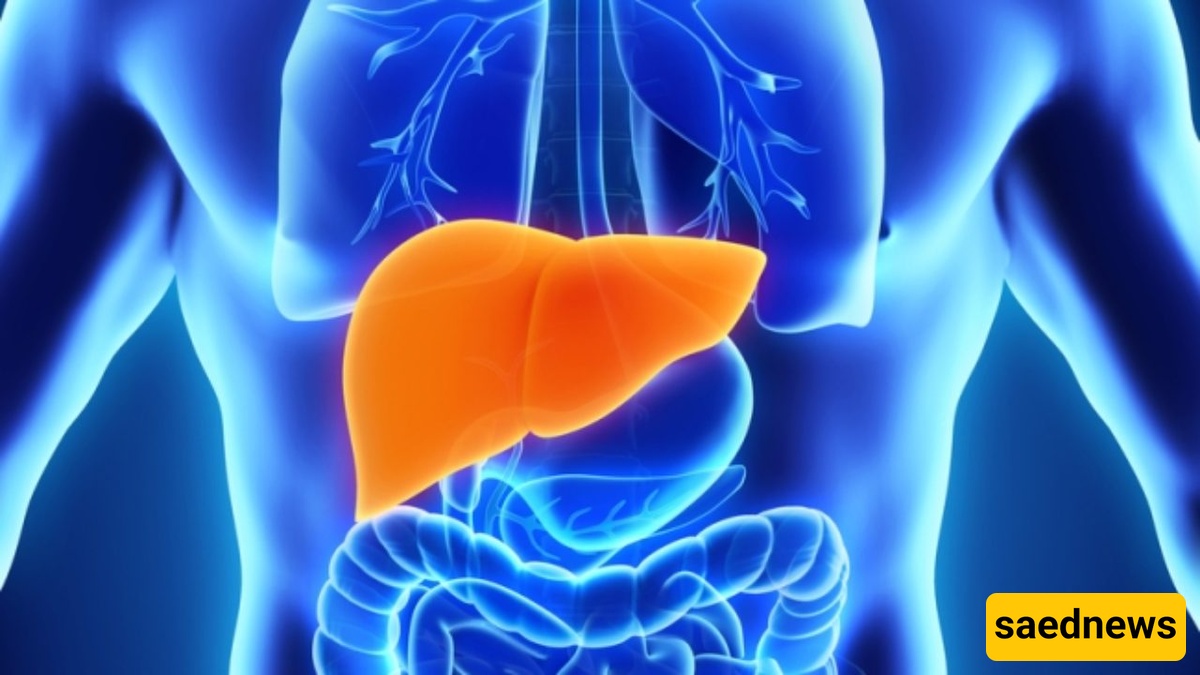
The liver, as an organ with remarkable regenerative capacity, could potentially maintain its function for thousands of years through continuous cellular renewal.
In this idealized model, where increasing age is not associated with a higher risk of death, humans could theoretically live for more than 29,000 years. However, when researchers incorporated aging processes and cellular mutations into the equation, they found that two specific organs dramatically limit this potential lifespan.
According to IFLScience, researchers used mathematical modelling of different organs and considered only somatic mutations (DNA copying errors that occur during cell division). They discovered remarkable differences among tissues. Evgeny Efimov, the study’s author, explained that brain neurons and heart muscle cells, which lack the ability to divide and regenerate, are the primary factors restricting human lifespan. As these cells accumulate mutations, they gradually lose function, reducing the theoretical average lifespan from 1,759 years to 156 years.
In contrast, the liver, an organ with exceptional regenerative capacity, can maintain its function for thousands of years through continuous cellular renewal and by minimizing the harmful effects of mutations. In other words, if the brain and heart could function like the liver, humans might theoretically live for thousands of years.
According to the study, the maximum possible average human lifespan, considering the limitations caused by cellular mutations, is estimated to be between 146 and 194 years, while the absolute maximum lifespan could reach 470 years. However, reaching the age of 150 would require a method to replace worn-out neurons. The researchers emphasize that “cell therapy aimed at replacing neurons may be the only practical approach for achieving lifespans beyond 150 years, even if other aging-related factors are eliminated.”
Dmitry Kryukov, a co-author of the study, stated: “Although somatic mutations play an important role in aging, they alone cannot explain mortality. Other mechanisms, such as loss of protein homeostasis, mitochondrial dysfunction, and epigenetic changes, also contribute equally to limiting lifespan.”
Brain neurons and heart muscle cells, due to their inability to divide and regenerate, are the primary factors restricting human lifespan.
One of the study’s notable findings is that aging does not occur at the same rate across all organs. The brain and heart are affected by aging much faster than other organs, such as the liver and skin. This suggests that efforts to extend human lifespan should focus specifically on these critical organs.
Despite significant advances in longevity research, achieving the maximum possible human lifespan remains a major challenge. However, this study provides new directions for aging research and the development of targeted therapies aimed at improving both the quality and length of human life.