SAEDNEWS: The olive tree is an evergreen plant known for its strong resistance to drought. It grows best in Mediterranean climates, where the conditions are ideal for its development.
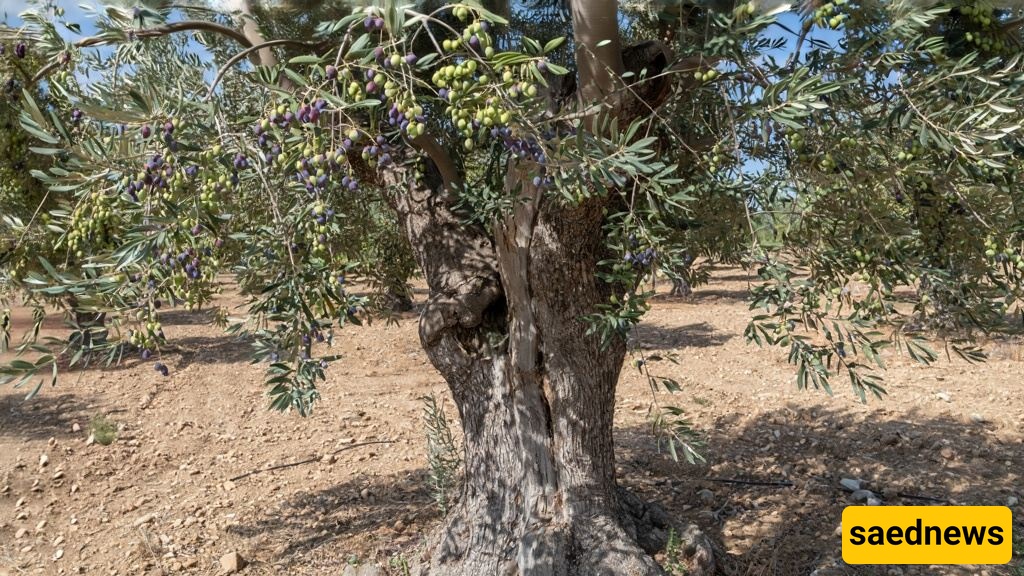
According to Saednews, The olive tree belongs to the Oleaceae family and is an evergreen plant. Its original habitat includes Southeast Asia, parts of Oceania, Australia, and Africa. Its flowers are complete, but in most cases the ovary and pistil fail to develop, which is why the number of fruits produced is always much lower than the number of flowers on the tree.
Olive trees prefer a Mediterranean climate and grow best in moderately warm and relatively dry conditions. They can be cultivated in areas where winter temperatures do not fall below freezing, as well as in dry regions where sufficient irrigation is available during summer.
Olive trees can tolerate temperatures below 40°C (104°F) and cold conditions down to approximately -10°C (14°F). Temperatures outside this range may damage the tree and negatively affect its growth.
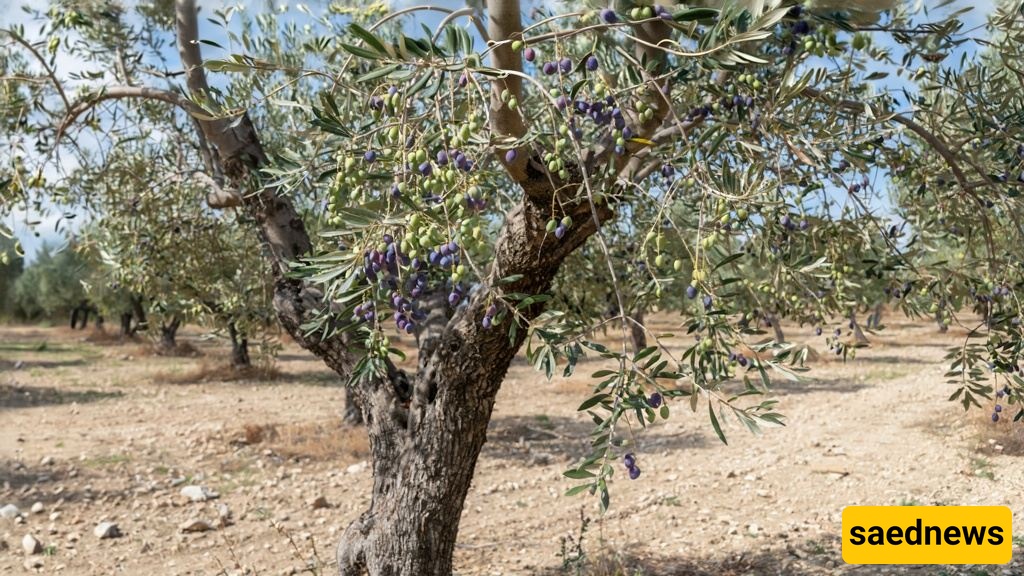
Olive trees can tolerate a wide range of soil types, but deep, fertile soils with medium texture are considered the most suitable for cultivation. This plant is sensitive to high soil salinity and excessive moisture.
Neutral or slightly acidic soils are ideal for olive cultivation. If these soils contain a small amount of lime, the growing conditions become even more favorable for the plant.
Olive trees can be propagated through seeds, grafting, cuttings, layering, suckers, and more recently through tissue culture.
It is recommended to obtain olive seeds from the pits of semi-ripe fruits. When the fruit changes color from green to light yellow, it is harvested and the pits are planted in the soil.
The required amount of seed varies depending on regional conditions and ranges from 250 grams to 5 kilograms per hectare.
Olive trees are usually trained into a vase-shaped form. The spacing between branches along the trunk should be kept even, and the main branches should be positioned outward with wide angles from the trunk whenever possible.
This structure allows better sunlight penetration because excessive shade inside the tree canopy can damage lower branches.
Annual pruning is carried out to open up the canopy, prevent excessive tree height, and sometimes reduce water loss through evaporation.
The amount of organic manure required depends on soil conditions and crop yield.
Productive olive trees grown in moist soils generally require approximately:
2.5 kg of ammonium sulfate
2 kg of superphosphate
1.5 kg of ammonium nitrate
per tree.
If the soil is dry, about two-thirds of this fertilizer amount is usually sufficient for each tree.
Olive trees are highly resistant to drought; however, they still require irrigation depending on the climate and growing conditions.
Hot and dry regions require more water. Young trees need additional watering during their early years after planting.
Table olive varieties generally require more water than oil-producing olive varieties. In areas receiving around 400 mm of annual rainfall, olive trees can also be grown under rain-fed conditions without regular irrigation.