SAEDNEWS: Primroses are native to cold, humid regions. In Iran, the genus includes six perennial early-spring species. Primula heterochroma (multicolored primrose) and Primula gaubaeana (Luristan primrose) are endemic to Iran.
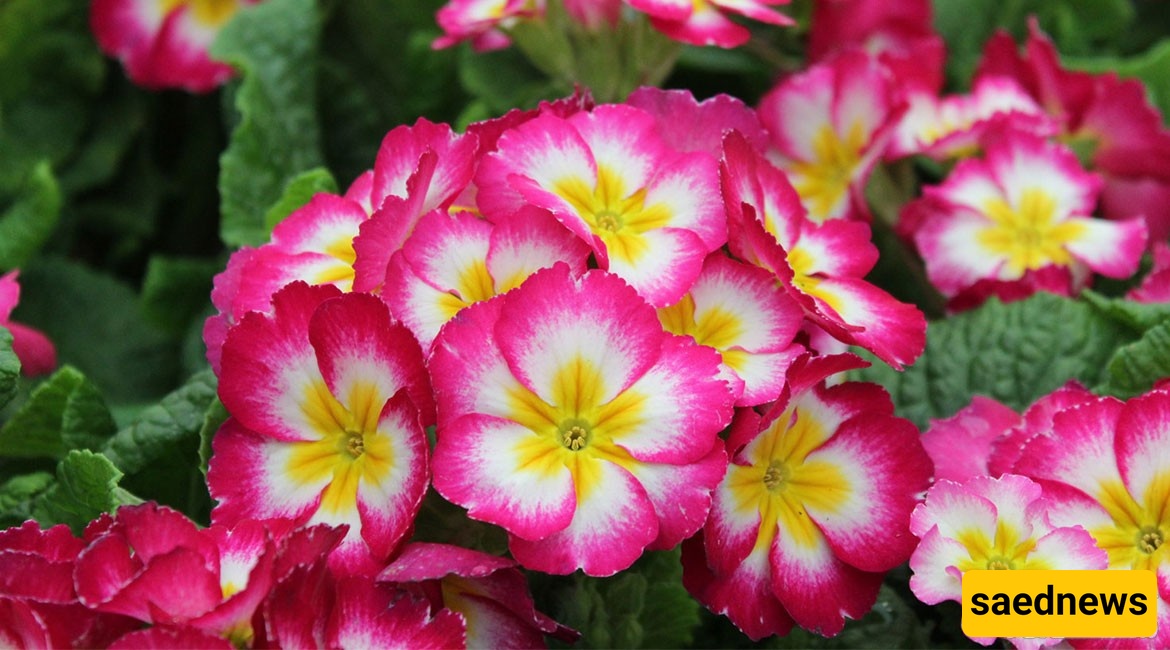
According to Saednews, Primula (scientific name: Primula vulgaris) is a perennial herbaceous plant belonging to the Primulaceae family. Many of its cultivated varieties have been developed through human hybridization. It prefers moderate room temperatures, around 20°C.
The plant’s height ranges from 25 to 60 cm, and it should be planted at intervals of 30 to 50 cm. It grows well in both sunny and semi-shaded locations. The soil should be rich and well-drained. Primula flowers come in a wide variety of colors and, under suitable conditions, can bloom almost throughout the year.
Although all species can be propagated by dividing offshoots and replanting them, growers often prefer seed propagation to develop new varieties. Seed sowing is typically done in late spring. Once the seedlings grow into young plants, they are transplanted to a suitable location.
To encourage winter flowering, mature plants (about 25 cm tall) are moved into pots in autumn and kept in a greenhouse environment. A loose soil mix containing leaf mold and sand is sufficient, and fertilization should be applied every two weeks.
Primula is one of the most attractive ornamental houseplants, commonly sold in spring. Although it has a relatively short lifespan in commercial settings, proper care and optimal conditions can extend its longevity.
Primula is a herbaceous plant with hundreds of species worldwide, developed through natural and artificial pollination. It belongs to the Primulaceae family, with the scientific name Primula vulgaris. It is native to temperate regions of the Northern Hemisphere and is also found in tropical mountainous regions such as Ethiopia, Indonesia, and New Guinea, as well as parts of South America.
Primula is often considered an early-blooming plant. While many varieties are annual in cultivation, some are perennial in natural and garden environments. Its flowers are large, clustered, and grow in the center of the leaves. Flower colors include yellow, pink, white, blue, red, purple, copper-red, and yellow with orange markings. Some varieties are fragrant.
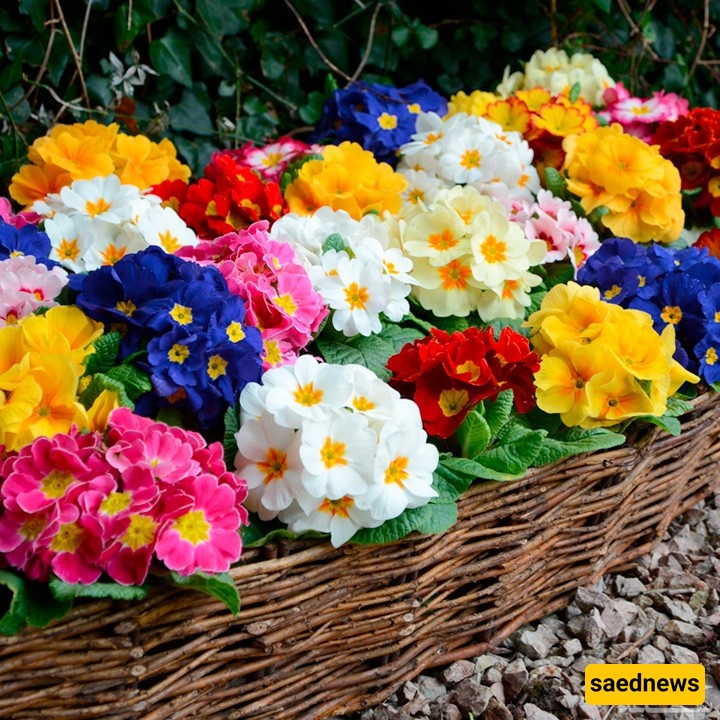
Primula is relatively cold-tolerant. The ideal growth temperature is around 12–15°C. Plants are typically grown at 5–7°C until flower buds appear. Once buds are visible (December to March), they can be transferred to about 13°C for forcing. This process usually takes 2–4 weeks. Higher temperatures can lead to weak flowers and excessive foliage, while temperatures above 13°C may cause elongated and weak stems.
In winter, full sunlight is necessary. During other seasons, partial shading may be used mainly to control temperature; otherwise, full light exposure is recommended.
Primula requires high moisture levels. The soil should never be allowed to dry out. It also thrives in high relative humidity, around 70–90%.
The best soil mix includes garden loam, decomposed leaf mold, and peat in equal proportions. A pH of around 6 supports optimal growth. Superphosphate may be added to the soil mix. The plant also requires nitrogen and potassium. In peat-free soil mixes, iron deficiency is common, so iron-containing fertilizers are recommended.
Primula is propagated mainly by seed, though division of clumps in autumn is also possible.
Seeds are sown in late summer (August) or early autumn. Primula seeds lose viability quickly, so fresh seeds are required. Germination may drop by up to 50% in one-year-old seeds. Seeds require light for germination and should be sown on the soil surface without covering.
Under humid conditions at around 15°C, seeds germinate within 2–3 weeks. Temperatures above 21°C prevent germination. After about four weeks, seedlings reaching 3 cm are transplanted into small pots, and later moved to larger containers. Care must be taken to preserve the terminal bud during transplanting. Flower buds develop in autumn at around 10°C, and plants bloom gradually in winter under cool greenhouse conditions.
The plant is watered thoroughly before division to protect the roots. The root clumps are separated carefully and planted into small pots filled with light soil.
Potted primulas bloom gradually in winter under cold greenhouse conditions. Different species have different requirements. For example, Primula malacoides requires short-day conditions and cool temperatures, while long daylight inhibits flowering. Primula obconica does not require specific temperature or light conditions to flower.
Primula may suffer from leaf yellowing and leaf edge burn, often caused by overwatering or alkaline soil. These symptoms may also indicate magnesium deficiency.
Excess nitrogen or ammonia can damage roots and cause leaf disorders. Oversized leaves are usually the result of excessive nitrogen or high temperatures.