SAEDNEWS: Marble Arch is a famous marble triumphal arch located in London, England. It was designed by architect John Nash and completed in 1827. Today, the monument stands at the busy junction of Oxford Street and Park Lane, directly opposite Edgware Road.
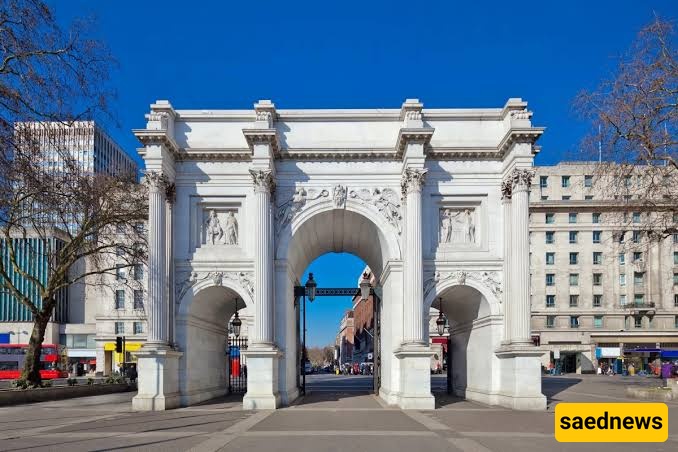
According to Saednews, Marble Arch is one of London's most recognizable historic monuments. Originally designed as the ceremonial entrance to Buckingham Palace, the impressive white marble arch was later relocated to a prominent site near Hyde Park, where it remains today as a symbol of the city's rich architectural heritage.
Constructed during the 19th century, Marble Arch was designed by renowned British architect John Nash in 1827. His original vision placed the monument at the entrance to the Cour d'Honneur of Buckingham Palace, serving as a grand ceremonial gateway for the royal residence. However, in 1851, the arch was moved to its present location at the busy junction of Oxford Street, Park Lane, and Edgware Road. Although it now stands as an isolated monument surrounded by traffic, it continues to attract visitors from around the world.
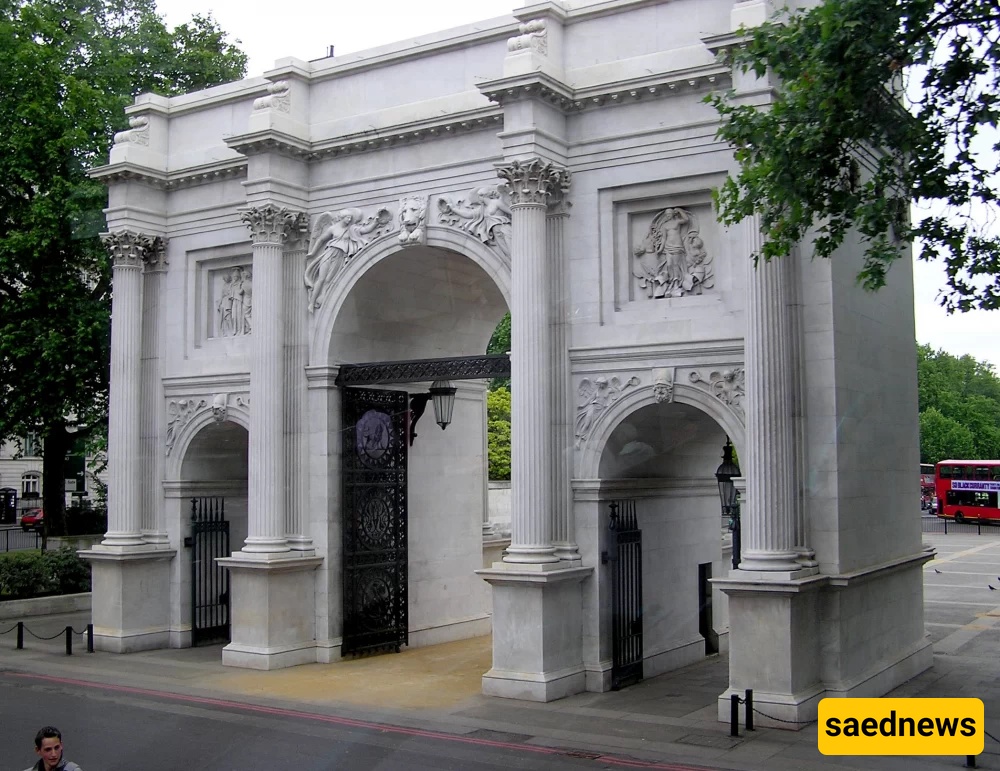
The monument consists of one large central arch flanked by two smaller side arches. Nash drew inspiration from two famous European triumphal arches: the Arch of Constantine in Rome and the Arc de Triomphe du Carrousel in Paris. To give the structure its elegant appearance, high-quality white marble from Carrara and Seravezza in Italy was used.
Decorative reliefs above the arches represent the nations of England, Scotland, and Ireland. A sculpture was originally planned for the top of the monument and was first assigned to sculptor John Flaxman. Following his death, other artists continued the work. In 1827, Francis Leggatt Chantrey began creating a bronze equestrian statue of King George IV, but the project was abandoned three years later after the king's death. His successor, King William IV, considered the cost of completing the statue unnecessary.
Construction resumed in 1832, with architect Edward Blore modifying Nash's original design by simplifying the structure and removing the planned statue. Marble Arch was completed within a year. Several unused sculptural elements, including the Waterloo Frieze and the Nelson Panels, were incorporated into Buckingham Palace, while the unfinished equestrian statue of George IV was eventually installed in Trafalgar Square in 1843.
Historically, only members of the British royal family and the King's Horse Guards were permitted to pass through Marble Arch. Today, this tradition survives only during special ceremonial occasions, and visitors are free to walk beneath the arches.
Although the monument was originally brilliant white, decades of London's industrial pollution caused the marble to lose much of its original brightness, giving it the weathered appearance seen today.
Marble Arch's relocation was closely linked to the expansion of Buckingham Palace. After Queen Victoria made the palace her official residence, it became clear that the building was too small for the growing royal household. Plans were made to enlarge the palace by extending the Cour d'Honneur, requiring the removal of the arch. Thomas Cubitt supervised its relocation to the northeastern entrance of Hyde Park, completing the project in 1851.
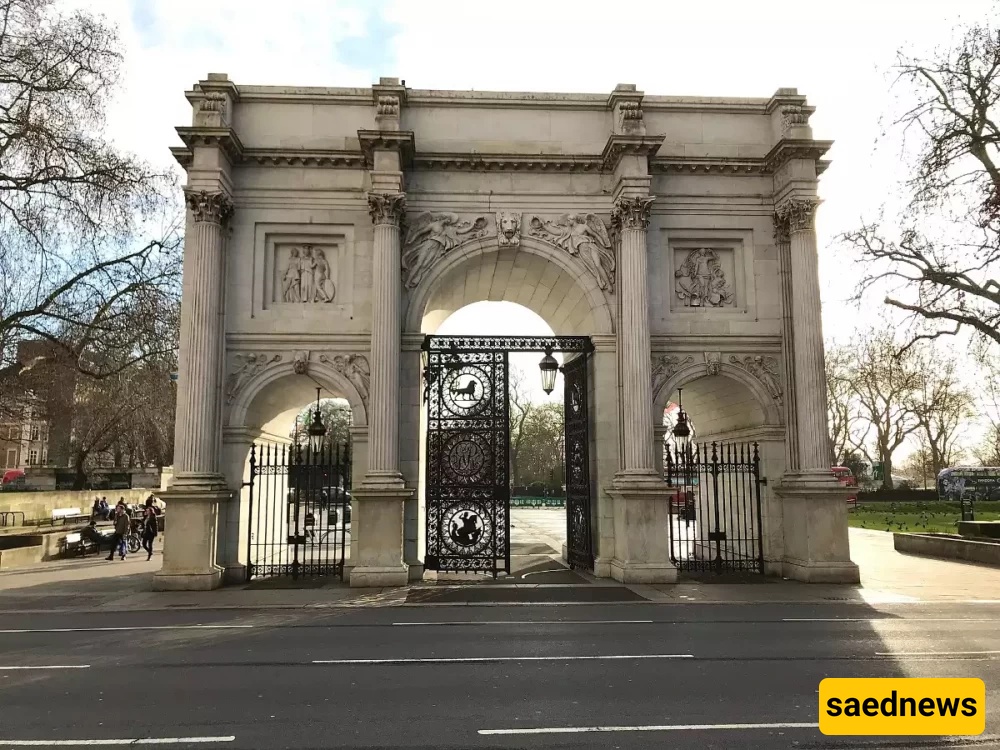
Inside the monument are three small rooms that served as a police station until 1968. In 2005, discussions were held about relocating the arch once again to improve public access and make it a more prominent landmark, but no such plans were implemented.
Today, Marble Arch remains one of London's most significant historic monuments, offering visitors a glimpse into Britain's royal history, classical architecture, and the city's ever-evolving urban landscape.