SAEDNEWS: Desert night-stock is an annual plant belonging to the mustard (stock) family. Its flowers contain natural pigments, and the plant’s aerial parts are rich in essential oils. It also contains alkaloids and glycosides.
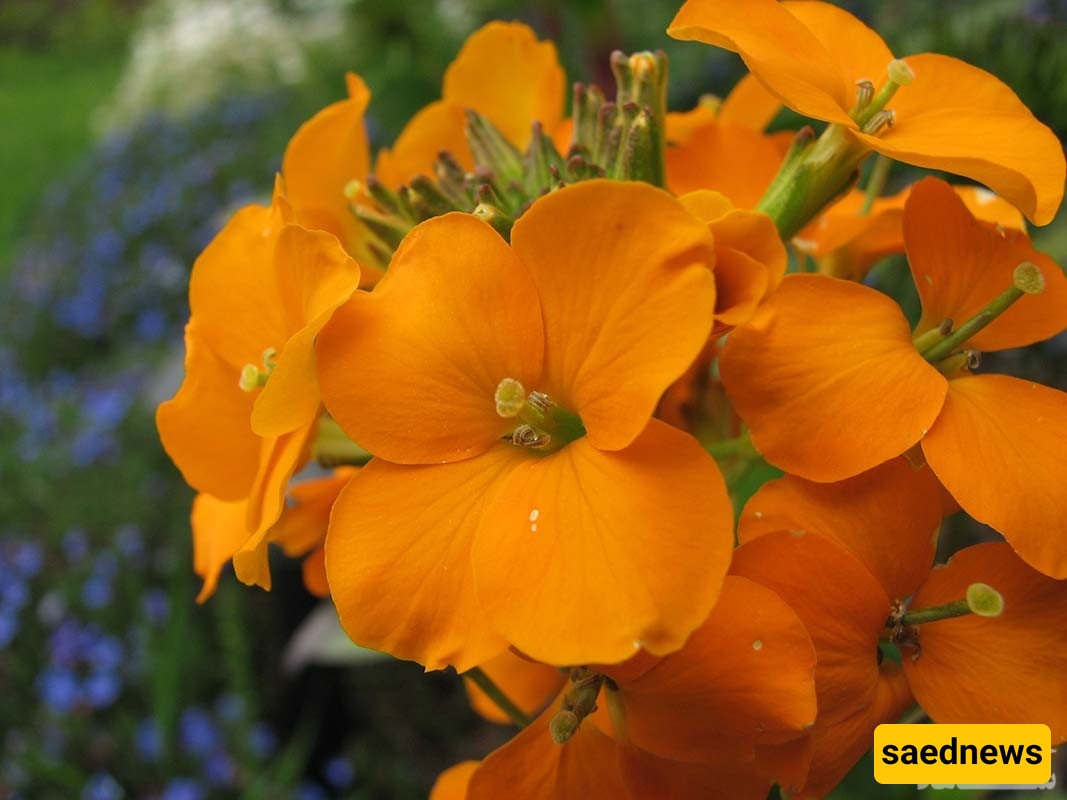
According to Saednews, This is a cold-tolerant ornamental plant that includes annual, biennial, and perennial species. It is usually cultivated as a biennial and shows greater resistance to cold compared to common night-scented stock–type plants. It is mostly grown in gardens, often in clustered plantings. Some varieties are also used for cut flower production.
Its flowers are relatively simple, appearing in yellow, orange, red, and purple shades. Each flower consists of four broad petals. Both dwarf and tall-growing types exist. The flowers grow in clusters that are usually sparse and open. The leaves are narrow, elongated, slightly hairy, and light green in color.
This plant grows in a wide range of soils, from poor to moderately fertile, as long as drainage is adequate and the soil is slightly alkaline. The presence of a small amount of lime in the soil is beneficial, as it helps reduce fungal diseases affecting the roots.
It requires full sunlight for optimal growth. In perennial varieties, pruning after flowering is necessary to prevent excessive elongation and to maintain a compact shape.
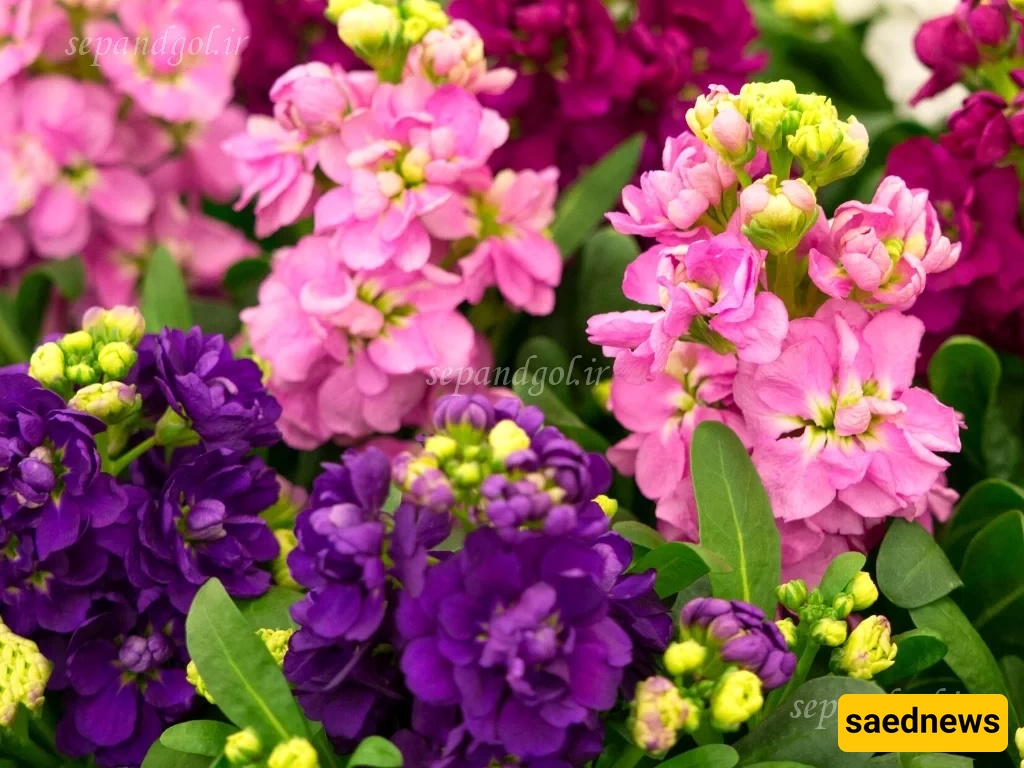
When seeds are sown in August, the plant typically flowers in early spring of the following year. Some improved cultivars are capable of flowering 2.5 to 3 months after sowing.
Propagation is done by seed. If seeds are sown in a nursery in August and transplanted to their permanent location in autumn, flowering occurs in April and May. Spring sowing leads to flowering in summer, although the flower quality is generally lower.
Plants grown from the previous year tend to produce longer-lasting and higher-quality blooms compared to first-year growth.