SAEDNEWS: Fossilized Prehistoric Poop Sheds Light on Parasite-Host Relationships 200 Million Years Ago
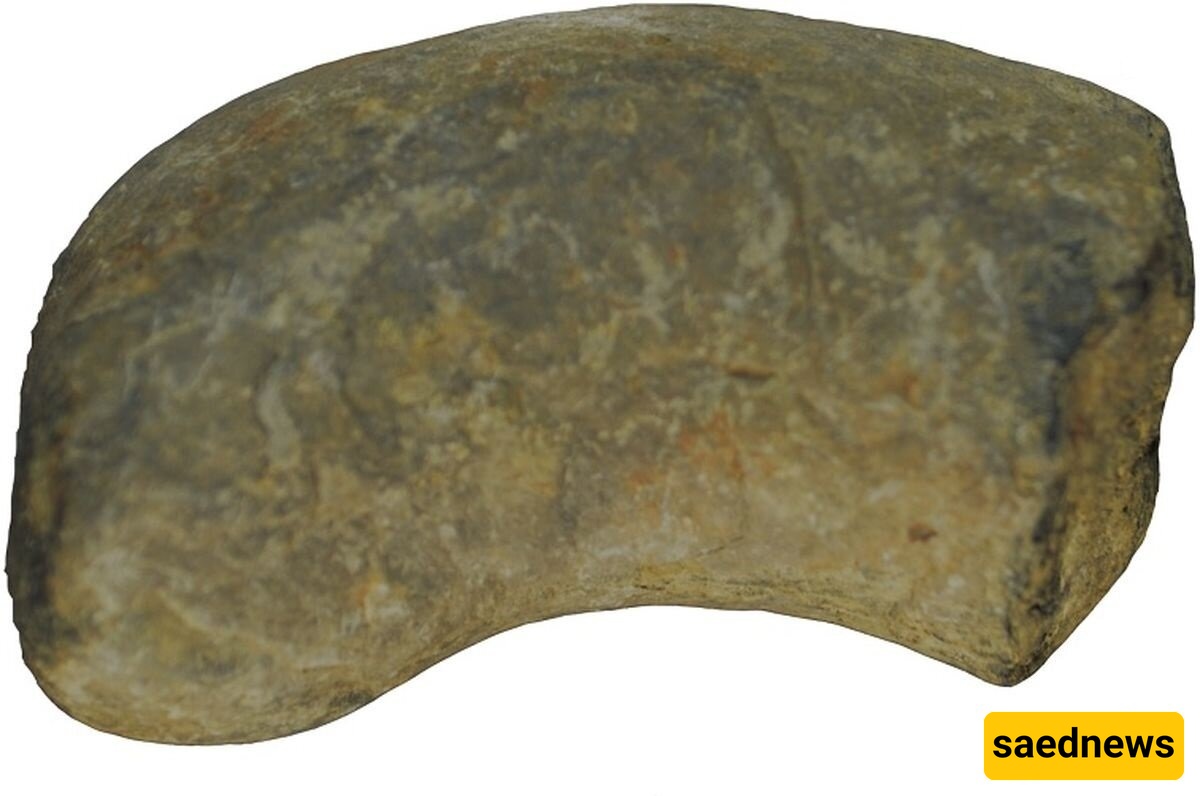
According to SaedNews’ history service, citing Fararu, scientists have recently analyzed a 200-million-year-old piece of fossilized feces—likely from a crocodile-like animal—and discovered that the creature was infected with a prehistoric type of parasite.
The fossilized droppings, unearthed in Thailand, represent the first documented example of parasites living in the body of an Asian vertebrate during the Late Triassic period, which spanned from 230 to 200 million years ago.
Published in the journal PLoS ONE, the study suggests that parasitic infections were common during this era.
Tanit Nansrirach, the paper’s lead author and a paleontologist at Mahasarakham University in Thailand, said, “This discovery is crucial for understanding parasite diversity and how they interacted with ancient ecosystems.”
Fossilized feces, also known as coprolites, can provide clues about which animals lived in which regions at specific times. They also offer insights into the diets of ancient creatures and the workings of their digestive systems, in addition to preserving evidence of parasites.
Parasites typically inhabit the soft tissues of animals, which rarely fossilize. Coprolites, however, can preserve traces of these parasites.
Martin Quarnström, a paleontologist at Uppsala University in Sweden, explained: “Coprolites can surprisingly contain fossils that are rarely found elsewhere, including muscle cells, exquisitely preserved insects, hair, and parasites. In this sense, ancient feces are like treasure chests, although their dark coloration makes examining their contents somewhat challenging.”
The coprolite studied in this research was discovered in 2010 near the village of Nang Yakung in Thailand. The fossil was long and cylindrical, measuring more than 7 centimeters in length and 20 centimeters in diameter, with a hard, smooth, gray surface. Researchers sliced the specimen into smaller pieces for microscopic examination.
The coprolite contained eggs from at least six parasites of five different types. Scientists believe that one of the parasites belonged to a group of annelid worms known as Ascaridia. Since fossils of these parasites are extremely rare, the discovery is especially exciting for researchers.
Based on the shape of the coprolite and the discovery of additional remains of a creature called Phytosaurus near the site, scientists think the feces belonged to this species. Phytosaurs resembled modern crocodiles and went extinct at the end of the Triassic period. The parasites likely entered the host’s body through consumption of fish, amphibians, or other reptiles.