SAEDNEWS: According to Vending Market Watch, a 2017 study found that 68% of consumers drink coffee with half-and-half, cream, or other types of milk.

According to Saednews, Coffee and milk are one of those combinations that have both passionate fans and devoted critics. In general, the main purpose of adding milk to coffee is to balance flavors, improve its nutritional profile, or even create an appealing visual presentation. For these reasons, coffee and milk can be considered one of the most complete pairings among beverages. But what exactly is the right milk for coffee?
It is true that some coffee drinks do not traditionally contain milk, while in others its use is largely a matter of personal preference. However, in many coffee-based beverages, including lattes, cappuccinos, and a wide range of espresso drinks, milk makes up more than half—or at least one-third—of the drink. So, is adding milk to coffee all that matters, or should we also consider factors such as its chemical composition, type, flavor, and texture?
Whether a particular type of milk works well with coffee largely depends on its molecular composition. Not a chemistry expert? No problem. You only need to pay attention to two key components: fat and protein.
An important part of milk chemistry involves a complex mixture of fats known as milk fat globules. These globules coat the tongue and soften the intensity of coffee flavors. As a result, coffee combined with milk tends to taste less bitter and acidic than black coffee. This is one reason milk works so well as a complement to coffee, creating a rich, sweet, and creamy beverage. At the same time, this characteristic makes milk less suitable for fruit-based drinks.
Another important part of the puzzle involves the two main types of protein found in milk: whey protein and casein. The protein content of cow's milk is essential for producing tiny bubbles, or microfoam, when the milk is heated. The interaction between milk proteins and the coffee compounds helps bring out the desirable flavor characteristics of drinks such as lattes and cappuccinos. This combination generally produces a more pleasant flavor when the coffee is hot.
In coffee-based drinks such as lattes and cappuccinos, milk can account for more than half—or at least one-third—of the total beverage.

A general rule when choosing milk is that the higher its fat content, the richer and creamier its flavor will be. This is why whole milk is a popular choice in many cafés.
In general, adding milk containing around 3–4% fat to coffee can create a more balanced drink with a pleasant flavor and texture. This is also why, when customers do not specify their preferred type of milk, baristas often use whole milk as the default option.
Many people assume that whole milk is extremely high in fat, but the reality is different. The fat content of whole milk is only around 3% of its total weight. A cup of whole milk contains approximately 150 calories, 8 grams of protein, and 8 grams of fat.
Since the amount of milk added to a cup of coffee is usually less than a full glass, there is generally no need to be afraid of adding whole milk to your coffee.
Whole milk also contains naturally occurring vitamins such as A, D, E, and K. If you are looking for a creamy and flavorful addition to your coffee, or if you are preparing a latte or cappuccino, whole milk can be a suitable choice. However, people who are particularly concerned about their daily fat or calorie intake, or those who have difficulty digesting lactose, may prefer other options.
Low-fat milk generally contains 1–2% fat. During processing, some of the cream is removed, which also slightly changes the milk's natural sweetness and texture.
Although low-fat milk can be a good option for reducing fat and calories, a latte or cappuccino made with it may taste somewhat lighter and less creamy.
Two-percent milk, commonly classified as low-fat milk, is produced by removing cream from large batches of milk during processing and then adding back enough milk fat to bring the final fat content to around 2% of the total weight. A cup of 2% milk contains approximately 120 calories, 8 grams of protein, and 5 grams of fat.
The flavor of 2% milk is still quite similar to whole milk because the difference in fat content is relatively small. Therefore, it can be a useful option if you want to reduce your calorie intake.
Because it is lighter, 2% milk does not add as much body to brewed coffee. However, steamed low-fat milk can produce relatively dry and dense foam, allowing the espresso flavor to remain more noticeable.
As its name suggests, fat-free milk has virtually all of its milk fat removed during processing, leaving a product with no cream. A cup of fat-free milk contains approximately 80 calories, 8 grams of protein, and virtually no fat.
This makes it an appealing choice for people who want to keep their morning coffee low in calories. However, removing the fat also affects the flavor. Without fat, fat-free milk lacks the rich and creamy character associated with whole milk and instead has a lighter, thinner texture.
Many people simply do not enjoy fat-free milk because of its distinctive taste. If your main goal is to soften or dilute the flavor of black coffee without adding many calories, however, it can serve that purpose.
At the other end of the spectrum are higher-fat milks, which can add considerably more richness to coffee. This type of milk is often used as a key ingredient in lattes.
Kyle Ramage, a barista champion and former U.S. coffee representative, has expressed the view that choosing the right milk for coffee ultimately depends on personal taste. Black coffee naturally has a relatively high level of acidity, with a pH of around 4.5, and milk can help soften the overall bitterness and acidity.
For making lattes and cappuccinos, higher-fat milk is often preferred because it produces a richer, creamier texture and a fuller flavor.
When browsing the refrigerated section of a grocery store, you may come across newer and less traditional alternatives such as soy milk, rice milk, or coconut milk. These non-dairy options often contain more water and less fat and protein than animal milk, so their chemical composition differs considerably.
As a result, they may not influence the flavor of coffee in exactly the same way as dairy milk. Nevertheless, many plant-based milks can still produce a rich and creamy texture when combined with coffee.
Before anything else, it is worth noting that dairy milk generally provides a richer and more traditional flavor in coffee, while plant-based alternatives offer different nutritional profiles and flavors.
Some popular plant-based options include:
Almond milk: Light in both texture and flavor, with a distinct nutty taste.
Soy milk: Thicker and sweeter than almond milk, with a noticeable soy flavor.
Rice milk: Similar in lightness to fat-free milk. Its thin texture can make a latte feel somewhat loose.
Coconut milk: Mildly nutty, with a slightly tangy flavor.
Adding milk to coffee can therefore create a balance between flavor and nutritional preferences. Generally, higher-fat milk contributes more richness and body to the coffee.
One way to enjoy a dairy-free coffee is to use almond milk. If you have never tried making homemade almond milk, preparing it yourself can be an enjoyable option. Fresh almond milk can have a particularly pleasant flavor, and it is also possible to make it at home.
Because almonds naturally contain fat, almond milk can provide a satisfying alternative to dairy milk in coffee.
Specialty barista milk is formulated specifically for use in coffee beverages. Its creamy consistency and carefully controlled homogenization help provide good stability.
In other words, when you want to create a layer of fine bubbles or microfoam on your coffee, barista milk can be particularly useful.
A latte is one of the many espresso-based beverages in which milk plays a central role. In this type of drink, using cream or an unsuitable milk texture can change the balance of the beverage.
For brewed coffee, such as French press coffee, using barista-style milk or higher-fat milk can also be preferable if you enjoy a softer and creamier drink. Adding milk or cream can give these coffees a more delicate flavor.
Clearly, adding milk to coffee has both advantages and disadvantages. The ideal choice ultimately depends on individual taste, dietary preferences, and how the coffee is prepared.

Absolutely. If your coffee does not taste perfect, it is certainly not the end of the world. Coffee is often consumed early in the morning, when convenience matters and caffeine is the priority, so you can use whatever milk you have available.
Now that you understand how different types of milk affect flavor, texture, and foam, you have already taken an important step toward making a better cup of coffee.
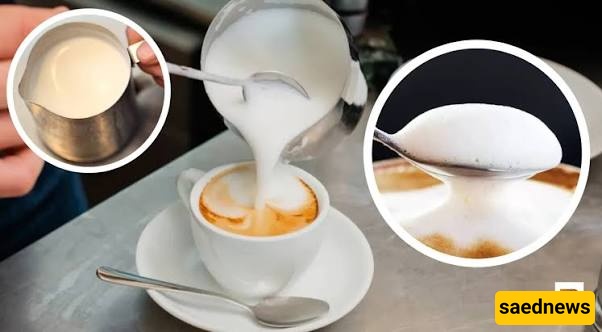
When we sit in a café and order a cappuccino, latte, or another hot coffee drink, we often enjoy the layer of milk foam on top, sometimes decorated with an attractive design. But what techniques can you use to make professional-quality milk foam at home?
Cafés and restaurants can easily create the desired foam using an espresso machine and its steam wand. However, you do not necessarily need professional equipment. You can make milk foam using everyday kitchen tools, including a microwave, French press, or even a whisk.
As a general rule, fat-free or 2% milk tends to produce more stable foam, making these varieties useful when foam is the main objective.
Pour cold milk into a jar, such as a jam or sauce jar, filling it no more than halfway. Close the lid tightly and shake vigorously for about 30 seconds to one minute, until the volume approximately doubles and foam forms.
Remove the lid and place the jar in the microwave for around 30 seconds to help stabilize the foam.
You can pour the warm milk into your coffee and then spoon the foam over the top. This method produces relatively large bubbles, so it is not particularly suitable for detailed latte art.
Warm the milk and pour it into a suitable container. Use a manual whisk to beat the milk.
Try moving the whisk back and forth rather than simply stirring in circles, as this can help create better foam.
If you have an electric whisk, you can use it as well. Continue whisking until you reach the desired amount and consistency of foam.
Pour warm milk into a blender and operate it at medium speed.
This method can produce very small, even, and relatively high-quality bubbles, resulting in a smooth foam.
Pour warm milk, ideally around 60°C (140°F), into a French press. Fill the container only halfway to leave enough room for the foam to expand.
Move the French press plunger up and down repeatedly until the desired amount of foam forms.
With the right milk and technique, you can create a coffee drink with the flavor, texture, and foam that best suits your personal preference.