SAEDNEWS: Properly storing cooked chicken in the refrigerator is essential for maintaining its quality and preventing food poisoning. In this article, you will learn about safe storage times, proper packaging methods, signs of spoilage, and the best practices for reheating cooked chicken.
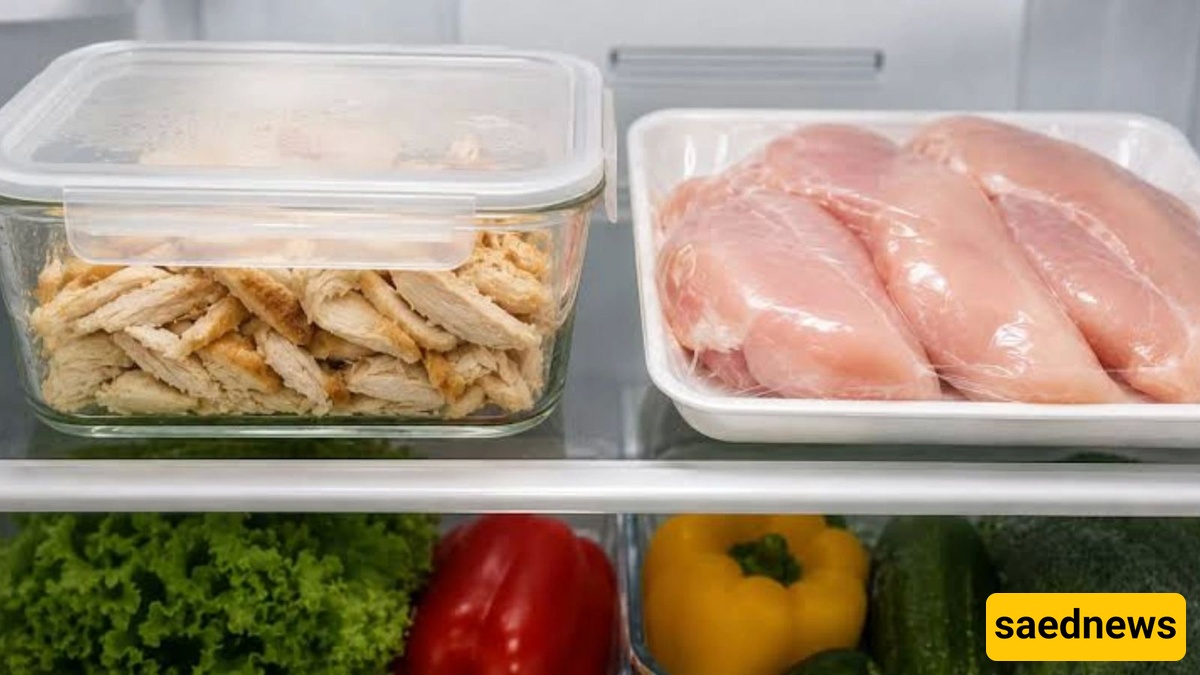
According to Saednews, Based on food safety standards, including recommendations from the U.S. Food and Drug Administration (FDA) and the U.S. Department of Agriculture (USDA), cooked chicken stored in a refrigerator at 4°C (40°F) or below can generally be kept safely for 3 to 4 days. This guideline applies regardless of how the chicken was prepared. Boiled, grilled, fried, shredded, or sauced chicken all fall within the same time frame. The countdown begins from the time the chicken finishes cooking, not from the first time it is reheated as a leftover.
One of the most important factors in determining how long cooked chicken remains safe is not just time, but also storage temperature. If your refrigerator is warmer than 4°C (40°F), the chicken may spoil more quickly, even if it has been refrigerated for only one day. To make sure your refrigerator is maintaining the correct temperature, consider using a refrigerator thermometer and placing it on a middle shelf.
Type of Cooked Chicken | Refrigerator Storage Time |
|---|---|
Boiled or steamed chicken | 3–4 days |
Fried chicken | 3–4 days |
Grilled chicken | 3–4 days |
Cooked shredded chicken | 3–4 days |
Chicken with sauce | 3–4 days |
Chicken soup or stew | 3–4 days |
Chicken salad | 3–4 days |
If chicken is used in a dish such as soup or stew, the recommended storage period remains 3 to 4 days. However, dishes containing dairy-based sauces or mayonnaise may have a shorter practical shelf life. In such cases, it is safer to consume them sooner.
Simply placing cooked chicken in the refrigerator is not enough. Following a few basic storage practices can help preserve its quality while reducing the risk of foodborne contamination.
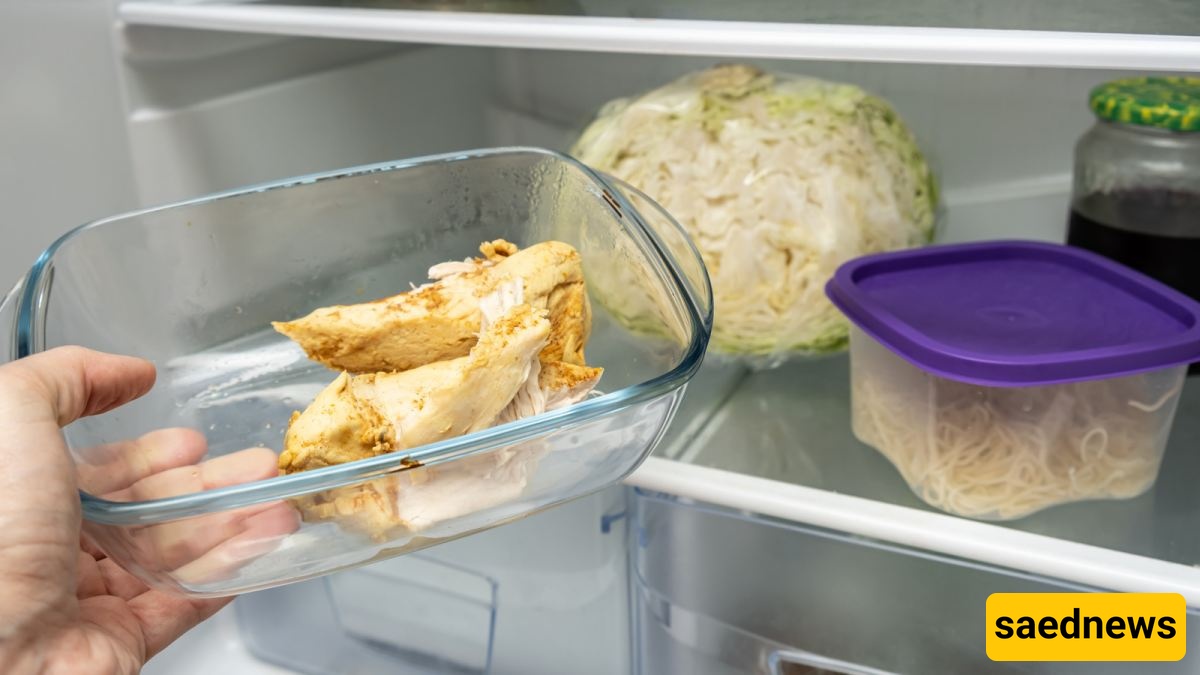
After cooking, chicken should not be left at room temperature for more than 2 hours. If the surrounding temperature is above 32°C (90°F), such as during hot summer weather or an outdoor picnic, this limit drops to 1 hour.
Temperatures between 4°C and 60°C (40°F and 140°F) are commonly referred to as the “danger zone” because bacteria can multiply rapidly within this range.
A common misconception is that hot food should never be placed directly in the refrigerator. This concern mainly applies to large, bulky containers that can raise the refrigerator's internal temperature. A safer approach is to divide the chicken into smaller portions or place it in several shallow containers so that it cools more quickly.
This allows warm food to be refrigerated promptly in smaller containers, which is generally safer than leaving it at room temperature until it cools completely.
One of the most useful principles for storing cooked chicken is to avoid repeatedly taking it out of the refrigerator and putting it back.
Repeatedly removing portions from one large container can expose the food to temperature changes and increase the opportunity for bacterial growth. Instead, divide the chicken into portions based on the meals you expect to eat.
For example, if you have enough chicken for two remaining meals, place each portion in a separate container and remove only the portion you plan to eat.
If the cooked chicken is in large pieces or chunks, remove the meat from the bone and cut it into smaller pieces before storing it. This helps it cool more quickly and makes portioning easier. Always use a clean cutting board and knife.
The storage container should be made from food-safe material, such as glass or BPA-free plastic, and should have a secure, tightly fitting lid.
A shallow container provides more surface area for contact with the cold air inside the refrigerator, allowing the food to cool more quickly and evenly.
A tightly sealed container also helps:
Prevent the chicken's smell from spreading to other foods.
Keep other food odors from being absorbed by the chicken.
Retain moisture and prevent the meat from drying out.
Protect the chicken from contamination caused by drips from raw foods.
If you do not have a container with a lid, cover the dish completely with several layers of food-safe plastic wrap before placing it in the refrigerator.
Human memory is not always reliable, especially when several different cooked foods are stored in the refrigerator.
Write the cooking date on a label or directly on the container using a marker. Remember that the day the chicken is cooked counts as Day 1.
For example, if you cook chicken on Saturday afternoon, it should generally be consumed by Tuesday or, at the latest, Wednesday.
This simple habit can help prevent accidentally eating spoiled food or throwing away food unnecessarily early.
Not every part of a refrigerator maintains the same temperature. Cooked chicken is best stored on the middle or inner shelves, rather than in the refrigerator door, because these areas generally maintain a more stable temperature.
Cooked chicken should also never be stored directly next to raw chicken or below raw meat where juices could drip onto it.
A safer arrangement is to keep raw meats on the lowest shelf in a tightly sealed container and store cooked chicken on higher shelves. This helps prevent raw meat juices from contaminating ready-to-eat food.
Cooked chicken should generally not remain at room temperature for more than 2 hours. In hot conditions above 32°C (90°F), the safe limit is reduced to 1 hour.
If cooked chicken has been left outside the refrigerator overnight, it should be discarded, even if it still looks and smells normal. Reheating cannot necessarily destroy toxins produced by certain bacteria, such as Staphylococcus.
Food safety should always take priority over avoiding food waste.
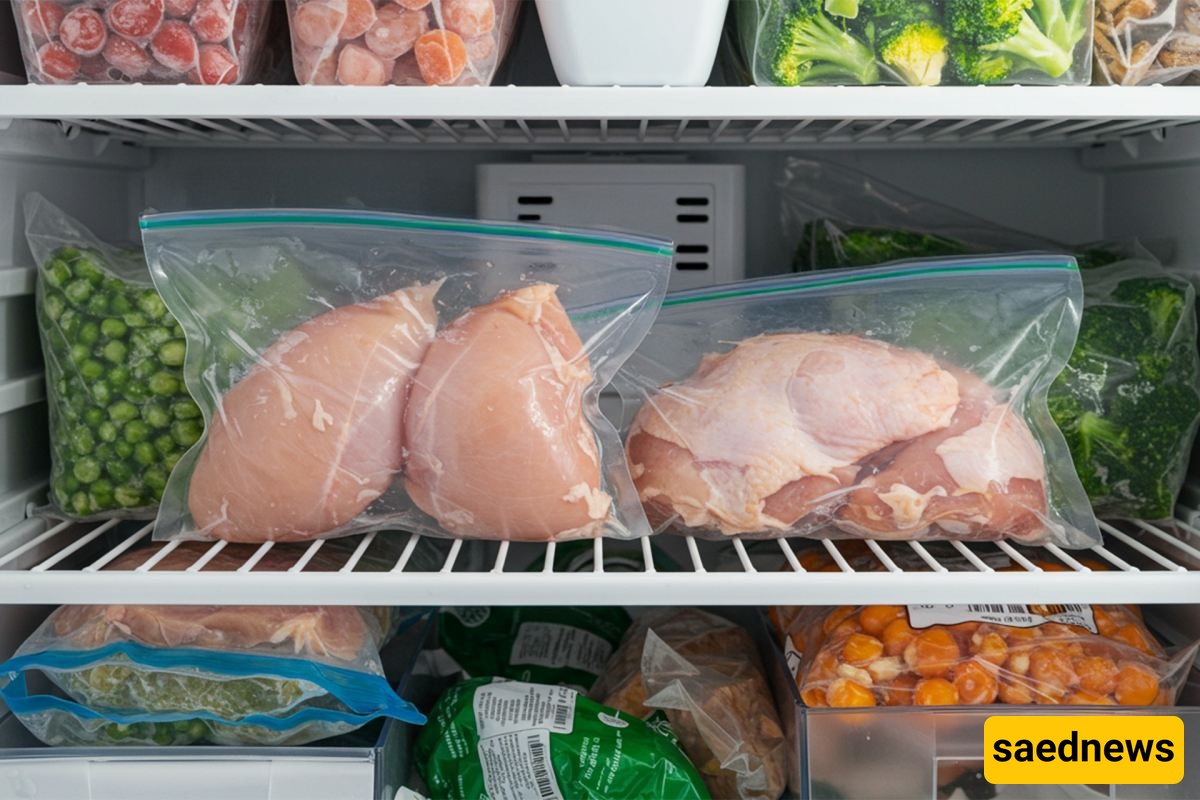
If you know you will not be able to eat cooked chicken within four days, freezing it is a better option.
At approximately -18°C (0°F), properly stored cooked chicken can maintain good quality for up to 4 months.
Place the chicken in a freezer-safe bag or airtight freezer container and remove as much air as possible from the package to help prevent freezer burn and excessive drying. Label the package with the freezing date.
For thawing, the safest approach is to transfer the frozen chicken from the freezer to the refrigerator the night before and allow it to thaw gradually.
If you are short on time, you can use the microwave's defrost setting. However, chicken thawed in the microwave should be cooked or thoroughly reheated immediately and should not be refrozen in its thawed state.
Do not eat cooked chicken showing any of the following signs of spoilage, even if it is still within the recommended storage period:
Sour, rotten, or unusual odor: An unpleasant or abnormal smell is one of the clearest warning signs.
Color changes: Chicken may develop gray, green, or unusually dark coloring.
Slimy or sticky texture: A slippery or sticky surface is a strong indication that the chicken has spoiled.
Mold: Green, gray, or black spots on the chicken or its sauce mean the entire dish should be discarded.
Unusual taste: If the chicken seems questionable after cooking, do not continue eating it if it tastes abnormal.
Keep in mind that reheating spoiled chicken does not necessarily make it safe to eat because some toxins produced by bacteria can withstand heat.