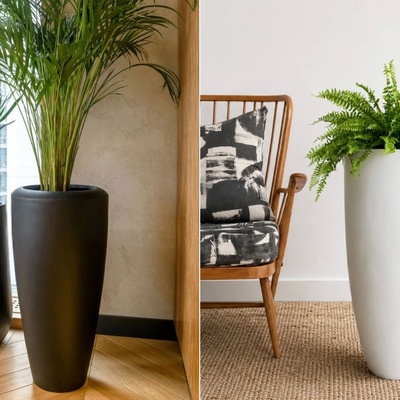
SAEDNEWS: Choosing the right pot depth is one of the most common concerns among plant lovers. In this guide, we explain how to prevent root rot when growing plants in tall pots.
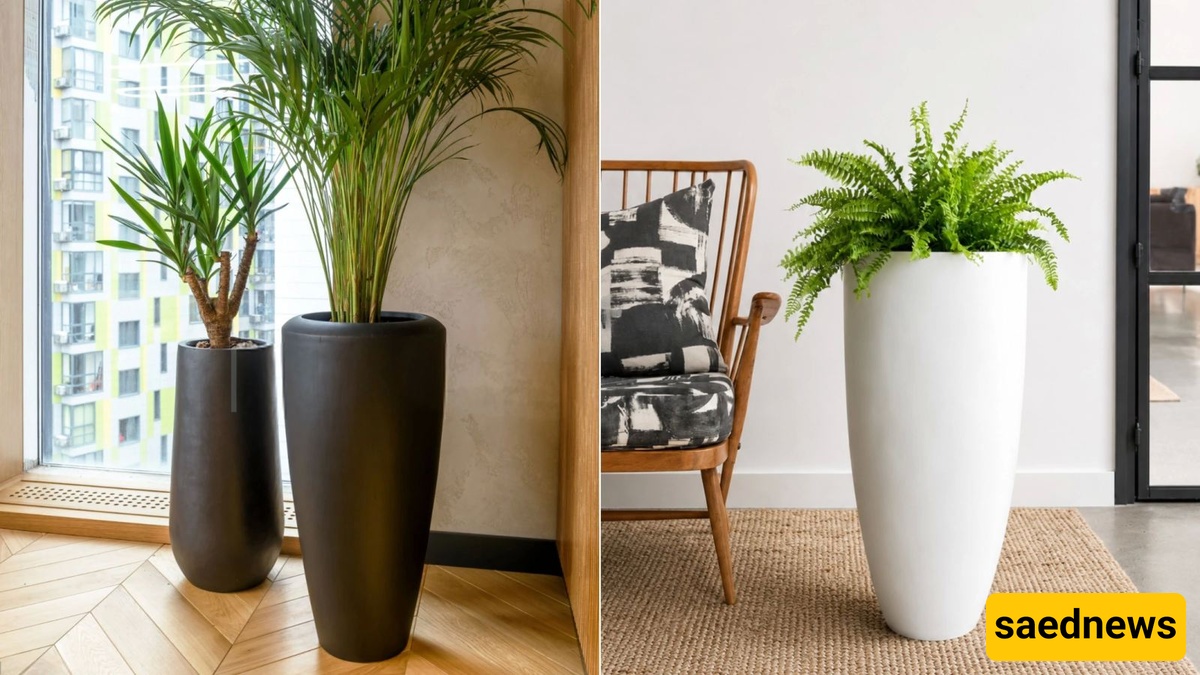
According to Saednews, Anyone who has lived with houseplants for several years has probably experienced this situation: a plant's roots begin growing through the drainage holes, its old pot seems too small, and while browsing a garden store, you spot an elegant, tall planter. It is cheaper than a wide alternative and takes up less floor space. The decision seems obvious: "I'll buy this one. It has more room, so my plant will grow better."
This reasoning sounds perfectly logical, but it does not take into account the physics of soil in a container. A deeper pot does not automatically benefit a plant. What really determines its health is the balance between growing medium volume, soil pore size, root oxygen availability, and watering patterns.
In some situations, a tall pot is a smart choice. In others, it can become the main cause of yellowing leaves, dropping buds, and root rot.
First, it is important to understand the difference between these two types of containers, because many potting mistakes begin here.
A large pot is a container with a substantial overall volume. Its capacity may come from a wider diameter, greater depth, or a combination of both.
A tall pot, however, has a depth that is disproportionately greater than its diameter. For example, imagine a planter that is 25 centimeters wide but 80 centimeters deep. Although its overall capacity may be moderate, its depth-to-width ratio is unusually high. This proportion changes how water and air behave inside the growing medium.
With a wide pot, the main concern is that much of the soil may remain unoccupied by roots during the first few months and stay wet for extended periods.
With a tall pot, the problem can be more serious. Water that reaches the bottom has no way out except through the drainage holes. As a result, a saturated layer of soil can develop at the base and remain there for weeks.
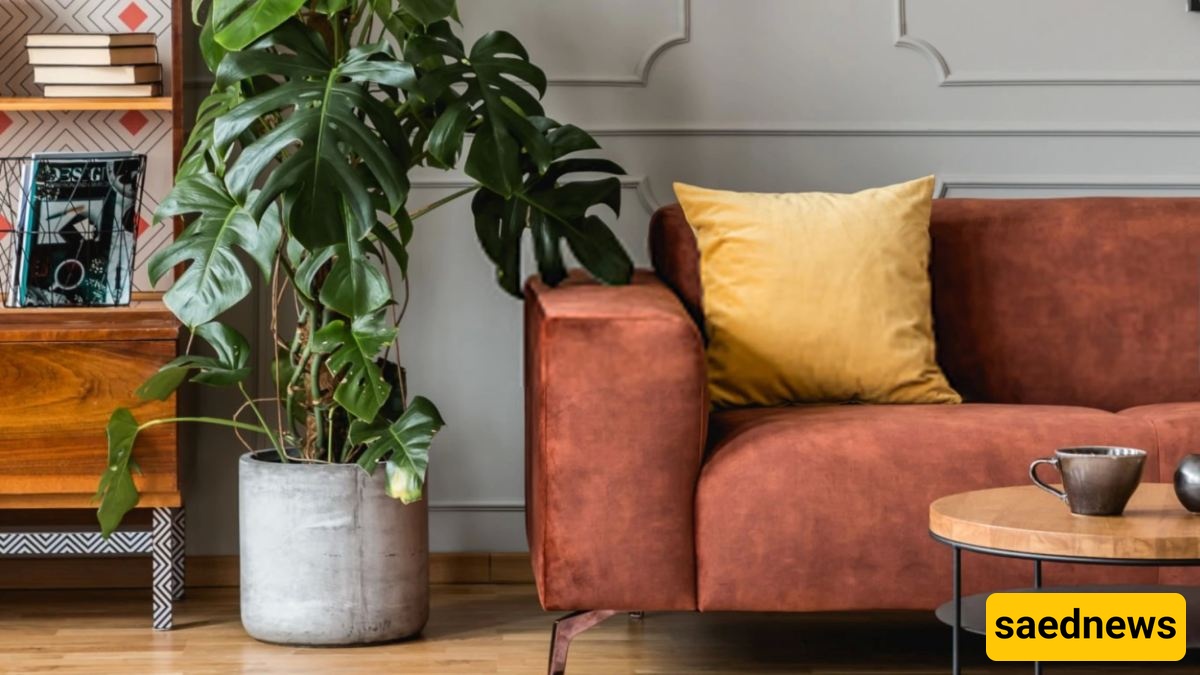
To understand how water behaves inside a pot, you need to know about a phenomenon called the perched water table, also known as the saturated zone.
This concept is widely used in growing-media research and explains why some common gardening beliefs are misleading.
When you water a plant, water moves downward through the upper layers of soil until it reaches the bottom. Some of it escapes through the drainage holes, but not all of it.
Capillary forces between soil particles hold on to a portion of the water. Once drainage stops, a layer of saturated soil remains at the bottom of the container.
The height of this saturated layer does not depend on the overall height of the pot. Instead, it depends primarily on the size of the pores in the growing medium. Coarse growing media create a relatively shallow saturated layer, while fine-textured media produce a deeper one.
Here is the important part: when the same growing medium is used, the height of this saturated layer remains relatively constant, but its volume increases with the pot's cross-sectional area.
In a tall pot with a moderate diameter, a column of saturated soil can form at the bottom. If a plant has shallow roots, they may never reach this area, leaving a considerable amount of the growing medium unused and permanently wet.
If the plant has deep roots, they may eventually reach the saturated zone, where oxygen availability is extremely limited.
The practical takeaway: Greater depth alone offers no guarantee of healthier growth. What matters is the pore structure of the growing medium and how effectively excess water drains away.
Contrary to what some people assume, roots are living, metabolically active organs. They need oxygen for cellular respiration, and that oxygen must come from the air spaces between soil particles.
In saturated growing media, water replaces air, filling the pores that would normally provide oxygen to the roots.
The consequences develop in several stages:
Reduced water absorption: Roots cannot absorb water efficiently in oxygen-deprived conditions, even when surrounded by moisture. This is why a plant growing in waterlogged soil may show signs of dehydration, such as wilting and dry leaf edges.
Root growth stops: Healthy roots generally have firm, light-colored tips. When oxygen becomes limited, root tips may turn brown, become soft, and eventually stop growing.
Root pathogens become more active: Soil-borne pathogens such as Phytophthora and Pythium thrive in excessively wet conditions and can cause serious root damage and rot.
Ethylene accumulation and hormonal stress: Waterlogged plant tissues may produce more ethylene, a plant hormone associated with leaf drop, growth disruption, and stress responses.
In a shorter pot, the distance between the soil surface and the saturated layer is relatively small, allowing air to penetrate more effectively.
In a tall pot, this distance can become much greater, making gas exchange in the lower layers more difficult.
This explains why a plant may appear perfectly healthy for months before suddenly deteriorating. The damage may have been developing deep inside the pot, completely out of sight.
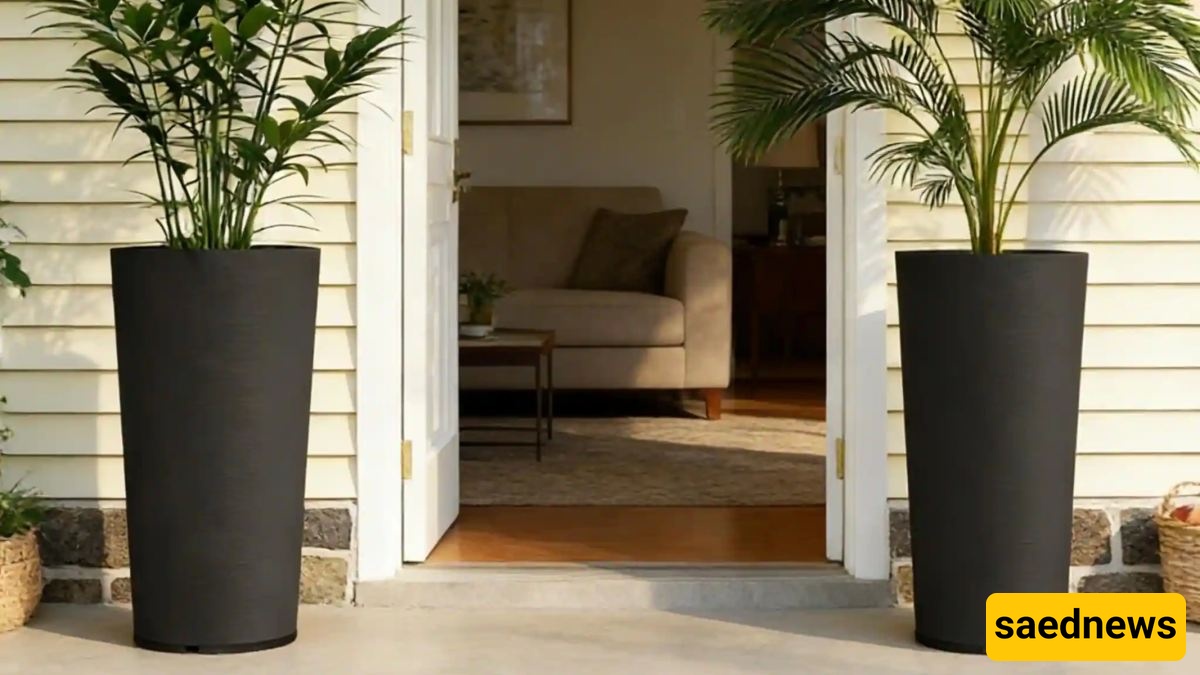
Before the damage becomes severe, look for these signs that your tall planter may be creating unfavorable growing conditions:
Soil stays wet for too long: If the soil takes more than two or three weeks to dry, the growing medium volume may be excessive for the plant's root system and environmental conditions.
Lower leaves turn yellow and fall off: This may be accompanied by soft stems.
The soil develops an unpleasant, sour smell: This can indicate anaerobic activity and the early stages of root deterioration.
The plant keeps wilting despite moist soil: This may indicate that the roots responsible for water absorption are no longer functioning properly.
Roots develop brown or black patches: When repotting, healthy roots should generally be firm and light-colored rather than dark and mushy.
Small mushrooms appear on the soil surface: These can indicate persistently moist conditions, although their presence alone does not necessarily mean the plant is unhealthy.
New growth becomes pale and stems appear thin: Poor root conditions can interfere with nutrient uptake and healthy development.
If you notice several of these symptoms at the same time, it may be time to reconsider the pot size or growing-medium composition.
The short answer is plants with naturally deep or downward-growing root systems, or those that can tolerate relatively dry growing conditions.
Chamaedorea (Parlor Palm), Kentia Palm, and other indoor palms can benefit from sufficient root depth.
Their roots can extend downward, making a deeper container a potentially suitable option. However, successful growth still depends on using a well-aerated growing medium and providing effective drainage.
Ficus lyrata (Fiddle-Leaf Fig), Ficus elastica (Rubber Plant), and Ficus benjamina (Weeping Fig) can develop extensive root systems.
In smaller containers, their roots may eventually become crowded. A deeper pot with an appropriate diameter can provide additional growing space, provided the increase in container size is not excessive.
Lemon, bitter orange, and kumquat trees can benefit from containers that provide adequate root depth.
These plants develop substantial root systems, and a suitably deep container can support their growth. The growing medium must still drain efficiently to prevent waterlogging.
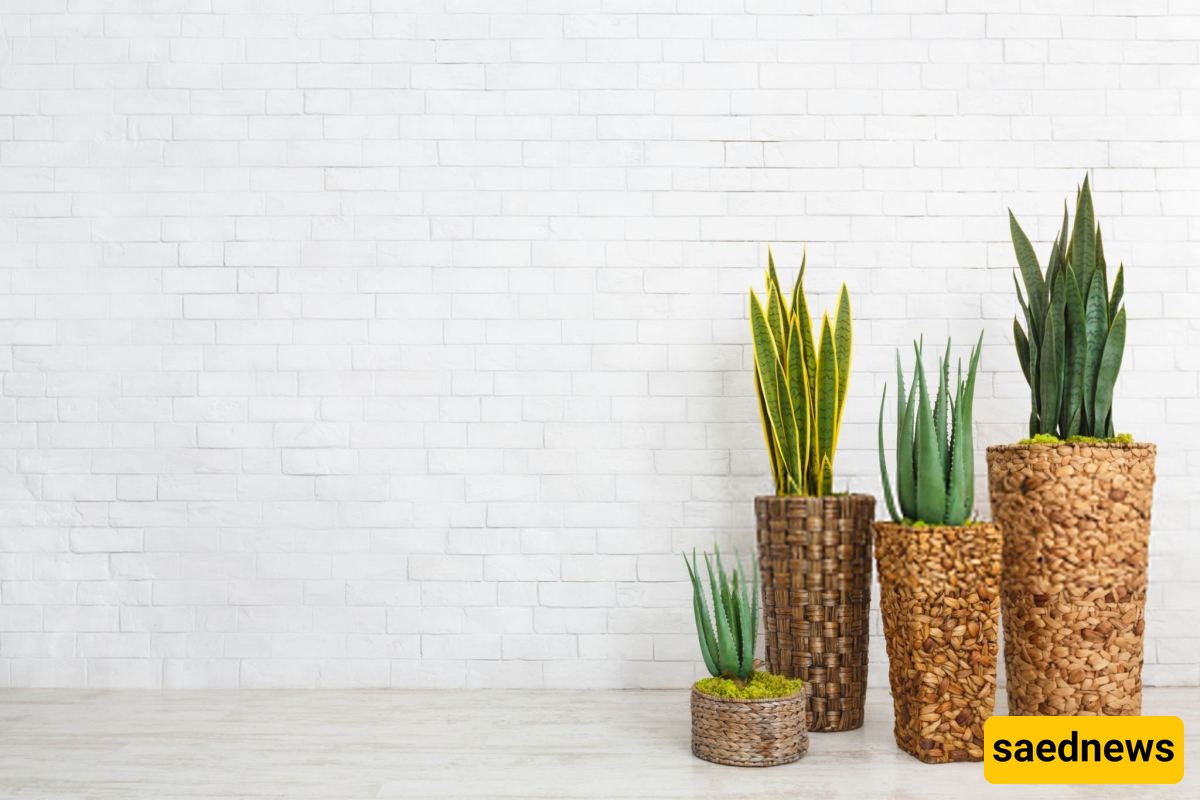
Snake plants (Dracaena trifasciata, formerly Sansevieria trifasciata) have thick, water-storing roots and rhizomes.
They can grow successfully in deeper containers when the growing medium is coarse and well-draining. Because they are particularly sensitive to overwatering, a lightweight, aerated soil mix is essential.
Plants such as Monstera and larger Philodendron varieties develop extensive root systems as they climb and grow.
In their natural environments, they use both aerial and terrestrial roots to attach themselves to trees and access moisture and nutrients. A suitably sized, stable container can support their development.
For plants such as Japanese maple, magnolia, and camellia, larger containers with adequate depth can help accommodate their root systems and provide stability.
However, the container's width, drainage, growing medium, and the plant's mature size must all be considered.
A tall planter is not automatically better than a wide one. Its suitability depends on the plant's root structure, the growing medium, drainage conditions, and watering habits.
Before choosing a new pot, consider the following:
Match the pot dimensions to the plant's root system.
Avoid choosing a container that holds far more soil than the roots can use.
Use a well-aerated growing medium appropriate for the plant.
Always provide adequate drainage holes.
Never assume that a deeper pot automatically means healthier roots.
Remember: The best pot is not necessarily the biggest, tallest, or most attractive one. It is the container that provides the right balance of moisture, oxygen, and room for healthy root development.