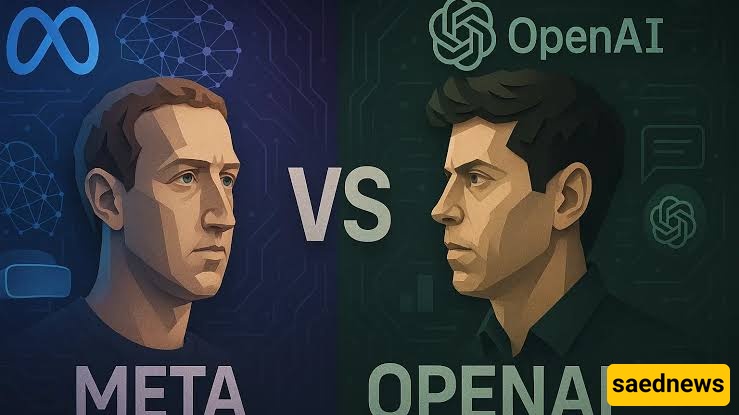
SAEDNEWS: Meta Introduces Two New AI Models to Challenge OpenAI and Anthropic in Coding, Professional Services, and Autonomous Agents
According to Saednews citing Meta, the models are the company’s most capable AI systems to date. They are designed to power personal and professional AI agents that can carry out complex, long-running tasks with minimal human intervention.
The launch marks another step in Meta’s efforts to develop AI systems that go beyond responding to individual prompts. Instead, these systems are designed to pursue users’ goals over time, adapt to changing circumstances and manage complex workflows.
One of their key features is Active Memory, which allows the models to retain important information about users across multiple conversations and retrieve it when needed.
Meta has also introduced Active Focus, a feature designed to help AI agents continue working when they encounter obstacles. It enables them to explore alternative approaches, adapt to new information and request clarification when necessary.
According to Meta, the models can also delegate tasks to smaller AI agents, recover from errors without abandoning their original objectives and perform specialized work in fields such as law, finance and healthcare.
The company said the systems could assist with a variety of everyday and professional tasks, including reviewing lease agreements, navigating insurance claims, analyzing personal finances and developing software applications.
To make the technology available to developers, Meta has released Muse Wonder through its Meta Model API and Muse Code programming tool.
Muse Wonder Full, the more capable of the two models, is available through paid Muse Code subscriptions. Pricing starts at $50 per month, providing access to Meta’s most advanced models.
Meta plans to integrate Muse Wonder into its Muse personal assistant at a later stage, initially making the model available to subscribers.
To support its claims about the models’ capabilities, Meta published benchmark results that it said demonstrated performance matching or exceeding that of selected models from OpenAI and Anthropic in coding, memory and professional tasks.
However, these results reflect the company’s own assessments. The models’ broader capabilities will require further evaluation through independent testing.
Alongside its performance claims, Meta said it had trained the Wonder family to protect private information, refuse assistance with harmful activities and strengthen defenses against cyberattacks.

The company added that it would publish a more detailed safety report at a later date.
The launch is part of Meta’s broader strategy to develop what CEO Mark Zuckerberg has described as “personal superintelligence” — AI systems capable of understanding users’ goals, preferences and long-term needs.
This approach reflects the company’s ambition to move beyond general-purpose chatbots toward AI assistants that can retain context, make progress on complex tasks and provide more personalized support.
Unlike some of Meta’s earlier AI models, which were released with downloadable model weights, the company has not announced plans to open-source the Muse Wonder models.