SAEDNEWS: The house mouse is one of the small mammals that remains active throughout the year. It is recognized by its rounded ears and long tail and plays an important role in both scientific research and human life.
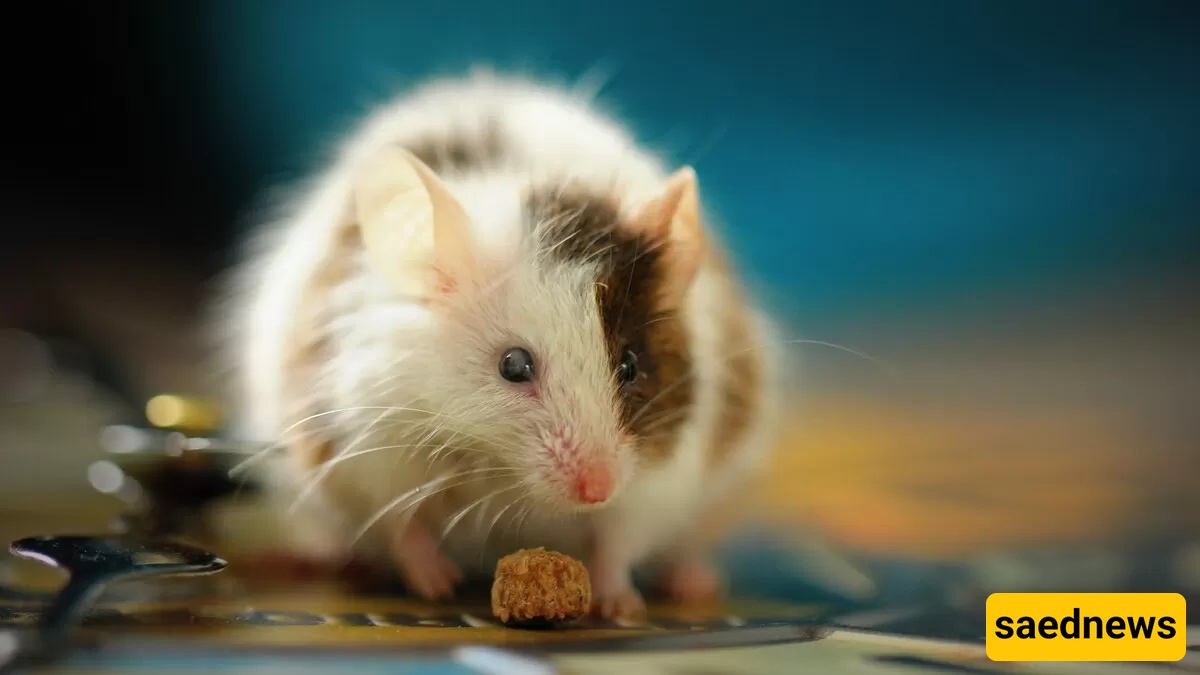
According to Saednews, The house mouse, scientifically known as Mus musculus, includes various species, geographical varieties, and chromosomal strains of mice that live in human homes or are kept as domestic animals. These mice have played an important role in the advancement of science and technology. Because of their light-colored outer coat and adaptable characteristics, they have been widely used in small and large-scale scientific experiments from the past to the present. In Europe and Asia, house mice are specially bred for research purposes. Their importance in scientific studies has provided valuable information about many aspects of biology.
The house mouse is a small mammal with relatively rounded ears, a long tail, and soft fur. It is one of the most common mouse species in the world. These mice remain active throughout the year and can adapt easily to homes, workplaces, and other human environments.
Body Size: The body length is usually around 7 to 9 centimeters, with a tail approximately the same length as the body.
Weight: They typically weigh between 11 and 30 grams.
Distinctive Features: Their very small feet, rounded ears, and lighter coat color help distinguish them from brown rats and other rodent species.
Life Span: In natural conditions, their lifespan is generally short, but under controlled conditions they may live between 4 and 16 years.
Pregnancy Period: Approximately 3 weeks.
Sexual Maturity: Young mice usually reach sexual maturity between 8 and 12 weeks after birth.

House mice usually build nests in hidden areas such as underground spaces, walls, storage areas, or sheltered locations. However, they are excellent climbers and frequently move above ground in search of food and shelter.
Their preferred diet mainly consists of grains and seeds. They usually consume small amounts of food throughout the day and can survive with very little water because they obtain much of their moisture from their food. Contrary to the common cartoon image, cheese is not their favorite food. In reality, house mice show a stronger preference for grains, cereals, and seeds.
The house mouse generally has brownish or grayish fur covering its body from the nose to the tip of the tail. Common identification features include small feet, large eyes, large ears, and a pointed snout.
The tail of the house mouse is usually hairless, relatively long, and thin compared with many other rodents. Another important characteristic is its strong odor, which should be considered when keeping these animals in homes or enclosed environments.
House mice are highly adaptable creatures. They are intelligent, curious, and capable of learning from their surroundings. Their ability to live close to humans has made them one of the most studied mammals in the world.
House mice and humans have been connected throughout history. These mice have always used human homes, farms, and cities because they provide easy access to food, warmth, and shelter.
The relationship between humans and house mice has often been complicated. Because they can damage food supplies and contribute to the spread of certain diseases, they are sometimes considered unwanted pests. However, they have also become valuable animals in scientific research, laboratory studies, and even as domesticated fancy mice kept as pets.
Newborn Mus musculus pups are born blind and deaf, with limited sensory and motor abilities. During their first days of life, they cannot regulate their body temperature effectively and depend completely on their mother for warmth, protection, and nutrition.
During the first two weeks, young mice are highly dependent on maternal care. At this early stage, they produce many different sounds to communicate their needs to their mother. These vocal signals help maintain the mother’s attention and improve their chances of survival.
For example, when pups are being cleaned, they may produce specific sounds to communicate discomfort caused by pain, a twisted tail, or rough handling. They also produce particular sounds while nursing or crawling inside the nest, allowing the mother to respond appropriately.
The house mouse is a small but highly adaptable mammal that has successfully lived alongside humans for thousands of years. Its unique biological characteristics, rapid reproduction, and ability to adjust to different environments have made it both an important research animal and a common household species. Through scientific studies, house mice have contributed greatly to our understanding of genetics, medicine, and animal behavior.