SAESNEWS: Some people believe that leaving shampoo on the scalp for a longer time leads to a deeper clean. However, scientific research suggests that this habit may actually damage both the hair and the scalp rather than provide additional cleansing benefits.
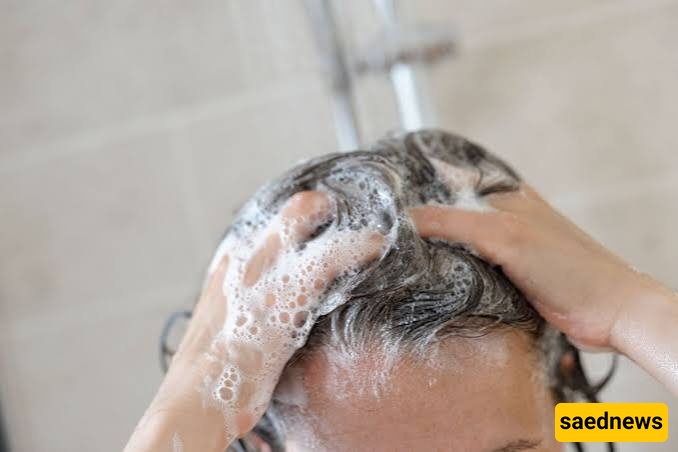
According to Saednews, Many people leave shampoo on their hair for several minutes during a shower, believing that the longer it stays on the scalp, the more nutrients the hair absorbs or the cleaner it becomes. While this idea is common, dermatology experts say that leaving shampoo on for an extended period is usually unnecessary and, in some cases, may even be harmful.
Shampoo is primarily designed to cleanse the scalp and hair. It contains surfactants—cleansing agents that lift away excess oil, dirt, dead skin cells, and product buildup by reducing the surface tension of water.
Modern shampoos may also contain proteins, vitamins, botanical extracts, moisturizing ingredients, and conditioning agents intended to improve the appearance and health of the hair. However, these ingredients are only effective within an appropriate contact time.
According to dermatologists, the ideal contact time for most shampoos is 30 seconds to 2 minutes. This is generally enough for the shampoo to clean the scalp and allow beneficial ingredients to do their job.
The exact time depends on several factors:
Type of shampoo: Daily shampoos usually require less than two minutes, while anti-dandruff or medicated shampoos may need 3 to 5 minutes to allow active ingredients to work.
Hair type: Oily hair may benefit from slightly longer cleansing, while dry or damaged hair should not be exposed to shampoo for extended periods.
Purpose of washing: For routine cleaning, 30 to 60 seconds is sufficient. If using a therapeutic shampoo, always follow the instructions provided on the product label.
Scientific evidence suggests that leaving shampoo on the scalp for more than five minutes offers no additional benefits and may increase the risk of hair and scalp problems.
The scalp is protected by a slightly acidic layer known as the acid mantle, with a natural pH of approximately 4.5 to 5.5. Prolonged exposure to shampoo can disturb this protective barrier, potentially leading to dryness, itching, flaking, and scalp irritation.

Surfactants remove not only excess oil but also the natural oils that help keep hair healthy. Leaving shampoo on for too long can strip away these protective oils, making hair dry, brittle, frizzy, and more susceptible to split ends and breakage.
Some shampoos contain cleansing agents such as Sodium Lauryl Sulfate (SLS) or Sodium Laureth Sulfate (SLES). While effective cleansers, prolonged contact may increase the likelihood of redness, itching, sensitivity, or contact dermatitis, especially in people with sensitive skin.
Hair does not continue absorbing beneficial ingredients simply because shampoo remains on longer. Most conditioning and nourishing ingredients work within the first couple of minutes. Extended contact may instead leave detergent residue that makes hair appear dull or feel heavy.
Certain shampoos are specifically formulated to remain on the scalp for a few extra minutes.
Products containing ingredients such as ketoconazole, zinc pyrithione, or selenium sulfide typically require 3 to 5 minutes of contact time to effectively combat dandruff-causing microorganisms.
Some shampoos containing caffeine, biotin, or specialized botanical extracts may recommend several minutes of contact before rinsing. Always follow the manufacturer's directions.
Certain sulfate-free or plant oil-enriched shampoos may recommend remaining on the hair for 2 to 3 minutes to improve conditioning and moisture retention.
To achieve the best results while minimizing damage:
Thoroughly wet your hair with lukewarm water.
Use an appropriate amount of shampoo and lather it in your hands before applying.
Gently massage the scalp using your fingertips rather than your nails.
Massage for 30 to 60 seconds, then distribute the lather through the lengths of your hair.
Rinse thoroughly with lukewarm water until all shampoo residue is removed.
Finish with a conditioner or hair mask applied only to the mid-lengths and ends of the hair.
Washing hair too frequently, especially if it is naturally dry.
Using a shampoo that is unsuitable for your hair type.
Failing to rinse shampoo out completely.
Rubbing wet hair vigorously with a towel instead of gently blotting it dry.
A shampoo with a pH close to the scalp's natural range (around 4.5–5.5) helps maintain the hair cuticle and scalp barrier. Highly alkaline shampoos can raise the hair cuticle, increasing dryness, frizz, and breakage. The higher the shampoo's pH, the less advisable it is to leave it on the scalp for extended periods.
People who prefer gentler hair care options may consider:
Plant-based shampoos containing ingredients such as aloe vera, chamomile, rosemary, or lavender.
Sulfate-free shampoos for color-treated or sensitive hair.
Traditional homemade hair treatments suitable for specific hair types.
Leaving shampoo on your hair for longer does not make it cleaner or healthier. For most people, 30 seconds to 2 minutes is sufficient for effective cleansing. Only medicated or specialty shampoos should remain on the scalp for longer, and even then, the manufacturer's instructions should be followed carefully. Proper shampoo selection, gentle washing techniques, and thorough rinsing are far more important for maintaining healthy hair and a balanced scalp than extending shampoo contact time.