SAEDNEWS: This species is not endangered, but it is very hard to find in nature because of its unusual skeleton and body structure. Discovering one of them has surprised scientists, and real footage of its behavior could have a major impact.

According to Saed News, citing Sarpoosh, scientists have, for the first time, succeeded in observing a squid known as the “ram’s horn squid” from the Spirula group in the deep ocean. Researchers have long been studying and searching for the ram’s horn squid, Spirula spirula, and have now managed to find the only surviving member of this family.
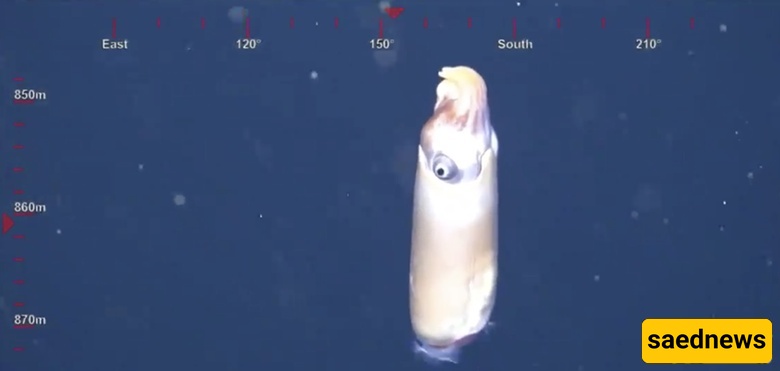
This organism is not considered endangered or naturally vulnerable; rather, it is difficult to find in nature due to the unique shape of its internal shell and body structure. For this reason, discovering one of these creatures has surprised scientists, and real footage of its movement and behavior could have a significant impact on scientific understanding. The squid shown in this video was recorded by researchers from the Schmidt Ocean Institute and appears quite different from laboratory specimens of Spirula spirula.
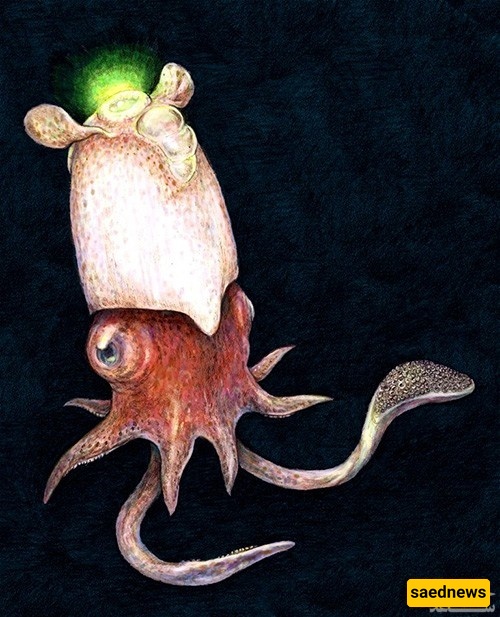
In this species, the buoyant organs are positioned downward, while light-producing organs are located on the upper part of the body. These luminous organs are used to blind prey, suggesting that the natural behavior of this squid challenges previous assumptions about it.
Secrets of the Deep Ocean
Like other squids, this animal has ten arms and is not technically a true fish. It is more accurately classified as a cephalopod within the mollusk phylum and can be described as a type of shelled cephalopod. It also shares many characteristics with nautilus-like organisms.
The deep sea remains largely unexplored, and very little information is available about its inhabitants—similar to regions of space that have not yet been fully discovered. Deploying imaging and research equipment to these depths is extremely difficult and often impossible. This squid lives near the seafloor and has been found at depths of around 300 feet. The long footage was captured using a remotely operated vehicle at a depth of about 3,000 feet in an area of the eastern Pacific near Australia.
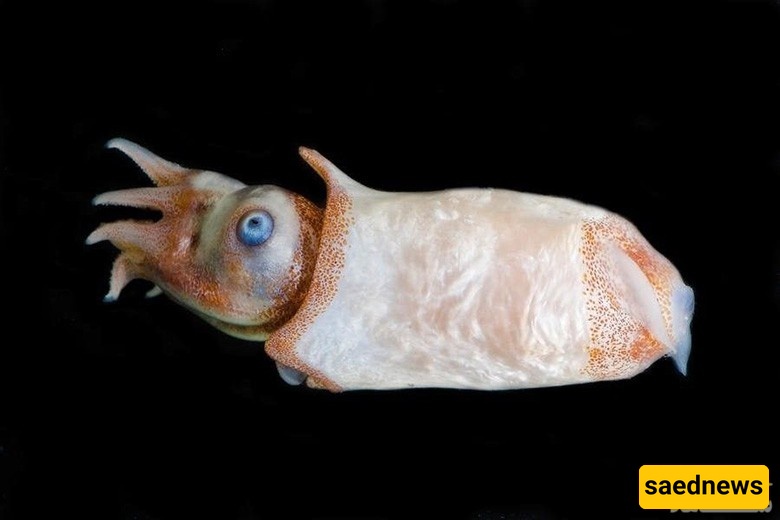
Organisms living at these depths have developed dynamic adaptations to survive in such extreme environments. This newly observed squid can reportedly adjust its buoyancy and move through different depths using its spiral shell structure.
Humans cannot survive at such depths due to extreme pressure, which would cause bodily destruction, but these organisms endure by using hard, calcified structures similar to shells.