SAEDNEWS: Renaissance paintings often reward a second, closer look: a tiny animal, flower, object, gesture or inscription could add another layer of meaning to an otherwise ordinary-looking scene. But these details were not always “secret codes”—many belonged to a visual language that educated Renaissance viewers were expected to understand.
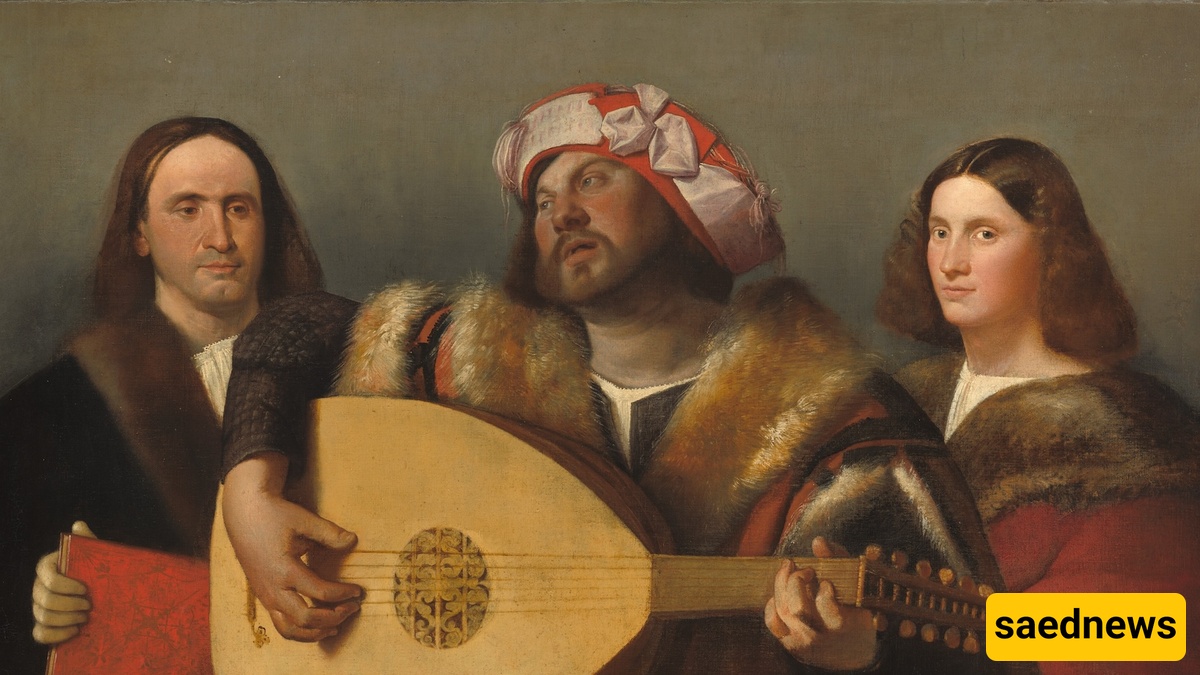
According to SaedNews, some Renaissance paintings are less like pictures and more like carefully constructed visual puzzles. A dog sitting quietly beside a couple, a mousetrap on a carpenter's workbench, a broken lute string or a strangely distorted skull can seem like insignificant details at first. Yet some of these objects were deliberately chosen because they carried associations that contemporary viewers could recognize.
The important distinction is that Renaissance artists did not necessarily hide messages in the modern sense of concealing a secret for someone to discover centuries later. Much of what appears mysterious to us today was part of the visual vocabulary of the period. Religious stories, classical mythology, popular emblems and familiar moral associations gave ordinary objects additional meanings.
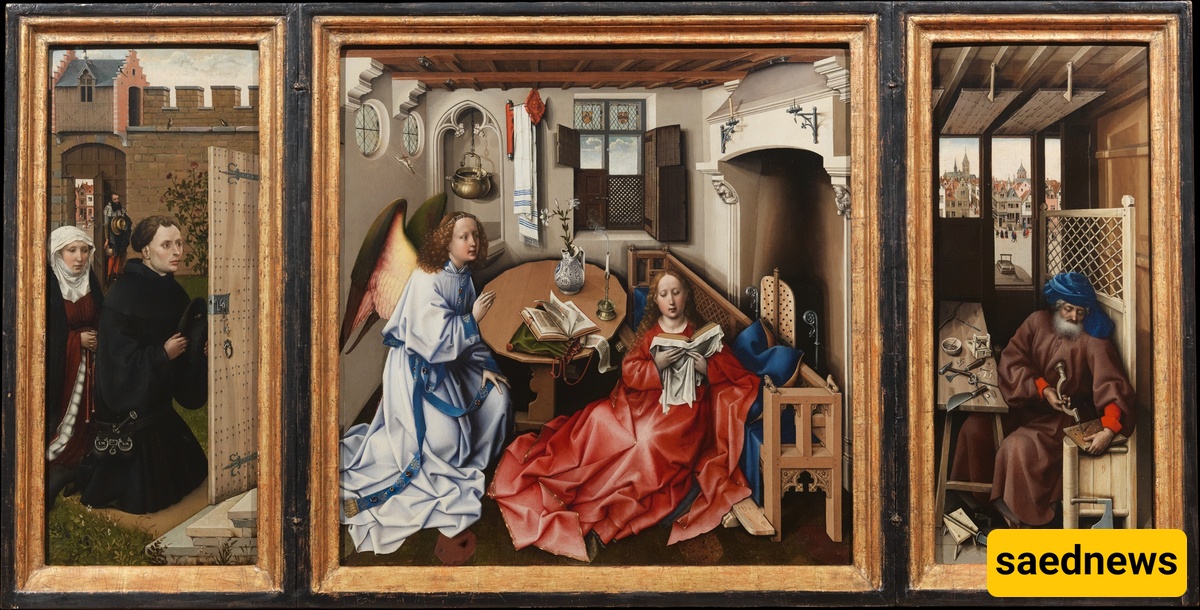
Renaissance artists worked in cultures where images had to communicate far more than appearance. Religious paintings, portraits and allegories could identify people, express virtues, refer to biblical stories or comment on mortality.
A useful example is the Mérode Altarpiece, attributed to the workshop of Robert Campin and dated to around 1427–32. In the right-hand panel, Joseph is shown working in his carpenter's shop. Among the tools are mousetraps. The Metropolitan Museum of Art notes that these are thought to refer to an idea associated with Saint Augustine: the Cross could function as a trap for the devil.
To a modern viewer, the mousetrap might simply make Joseph's workshop look more convincing. To a historically informed viewer, however, it could contribute to the theological meaning of the entire scene.
That is the key to understanding Renaissance symbolism: the smallest object could participate in the story.
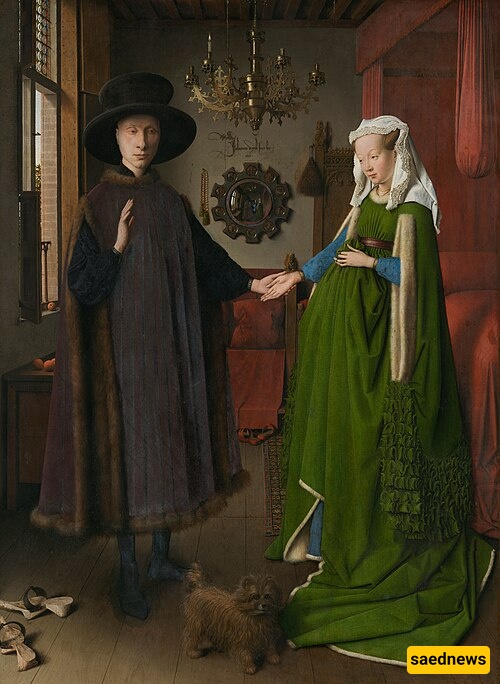
Jan van Eyck's Arnolfini Portrait of 1434 provides another famous example.
At the feet of the couple sits a small dog, painted with remarkable attention to detail. The National Gallery in London explains that dogs were commonly associated with faithfulness in marriage.
But even here, caution matters. Art historians have debated the meaning of many details in the painting. The National Gallery's catalogue points out that several objects traditionally interpreted symbolically—including the dog, oranges and discarded footwear—may not have been conceived as fixed symbolic codes.
This uncertainty is important. It shows why reading Renaissance art is not simply a matter of finding a list online that says “dog equals fidelity” or “orange equals wealth.” Symbolism depended on context, and individual objects could have more than one association.
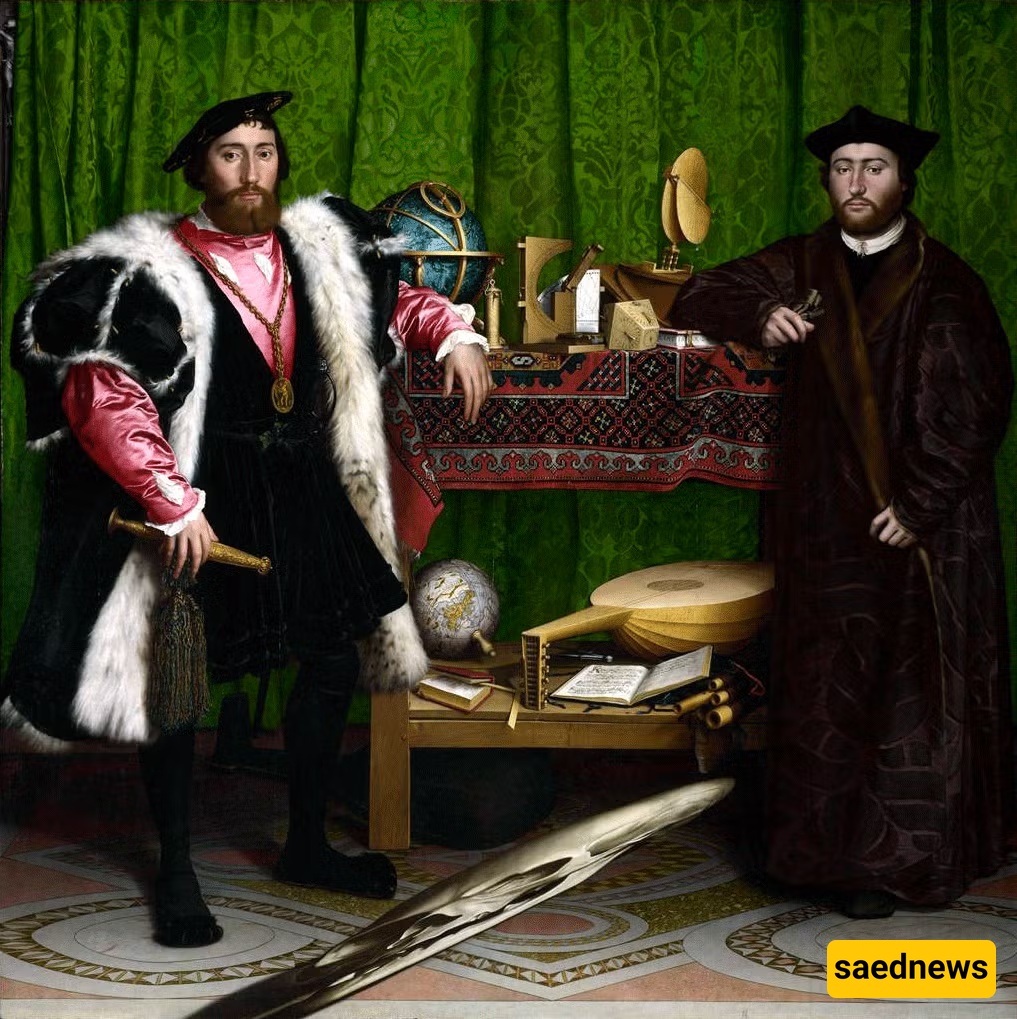
One of the most dramatic examples comes from Hans Holbein the Younger's The Ambassadors, painted in 1533.
The portrait is packed with objects associated with knowledge, music, science and political life. Yet stretched across the lower part of the composition is an apparently bizarre, distorted shape.
Look at the painting from the correct angle and it becomes a skull.
The technique is called anamorphosis: an image is deliberately distorted so that it becomes recognizable only from a particular viewpoint. The National Gallery identifies the skull as a memento mori—a reminder of mortality. A small crucifix is also partly concealed behind the curtain at the upper left.
Here the “hidden” element really does depend on the viewer's movement. The painting effectively asks you to look twice.
The effect is more than a clever optical trick. The skull introduces mortality into a portrait otherwise filled with evidence of human knowledge and achievement. The objects suggest what people can learn, measure and possess; the skull reminds them that none of it makes them immortal.
Plants were another important part of Renaissance visual language.
The Getty Museum notes that elements of nature in Renaissance imagery—including flowers, rocks, water and sky—could carry layers of meaning. Even tiny details could contribute to the spiritual or narrative purpose of an image.
Sandro Botticelli's Primavera, painted around 1480, is an especially striking example. The Uffizi identifies nine mythological figures in the scene, including Venus, Cupid, the Three Graces, Mercury, Zephyrus, Chloris and Flora. The museum also emphasizes that the precise overall meaning remains mysterious, even though the work is associated with themes including love, peace and prosperity.
The plants themselves are extraordinarily detailed. The Uffizi identifies at least 42 recognizable species in the painting, including 14 green plants and 28 flowering species.
That botanical precision matters because the garden is not simply background scenery. The abundance of flowers helps create the world in which the mythological narrative unfolds.
Yet Primavera also demonstrates another important rule of Renaissance interpretation: not every mystery has a single confirmed answer. Its complex combination of mythology, literature, philosophy and imagery has produced competing interpretations over centuries. The Uffizi itself describes its meaning as complex and mysterious.
Part of the answer lies in the nature of Renaissance art itself.
Artists were increasingly interested in creating convincing worlds filled with recognizable objects. At the same time, patrons commissioned paintings for specific religious, domestic, political and social purposes. A painting could therefore operate on several levels at once: it could be beautiful, tell a story, demonstrate the painter's technical skill and communicate ideas about the person who commissioned it.
The Renaissance also developed a sophisticated culture of emblems, allegories, classical references and visual riddles. Getty scholarship on the period describes the popularity of games involving rebuses, hieroglyphs, riddles and emblems in courtly culture.
This helps explain why some artists could turn an apparently ordinary object into an intellectual game.
Perhaps the biggest misconception is that every unusual object in a Renaissance painting must have a hidden meaning.
It does not.
Art historians frequently disagree about symbolism, and meanings can change depending on the period, culture and context. The Getty explicitly warns that symbols can have different meanings for different people and across historical periods.
Even the celebrated Arnolfini Portrait demonstrates the danger of overinterpreting every detail. Some traditional symbolic readings have been questioned by later scholarship.
So the best way to approach a Renaissance painting is not to assume that every flower is a code or every gesture is a secret. Instead, ask a more useful question:
Why did the artist choose to show this particular object, in this particular place, in this particular way?
Sometimes the answer is symbolism. Sometimes it is realism. Sometimes it is both.
That may be the most fascinating thing about these works.
The closer you look, the more the painting can change. A dog becomes a reference to fidelity. A mousetrap becomes a theological clue. A broken musical instrument can suggest discord. A distorted shape becomes a skull. A garden becomes an allegory.
But the discoveries are not all equally certain.
The real skill of looking at Renaissance art is learning to separate what the evidence supports from what later viewers have imagined. That makes the paintings more interesting, not less. Their tiny details were part of a culture in which pictures could carry several meanings simultaneously—and some of those meanings are still being debated today.