SAEDNEWS: Film cameras, vinyl records, printed books and other physical formats are finding new audiences even as digital technology becomes more powerful. The appeal may be less about rejecting technology than about reclaiming attention, ownership and experiences that feel tangible.
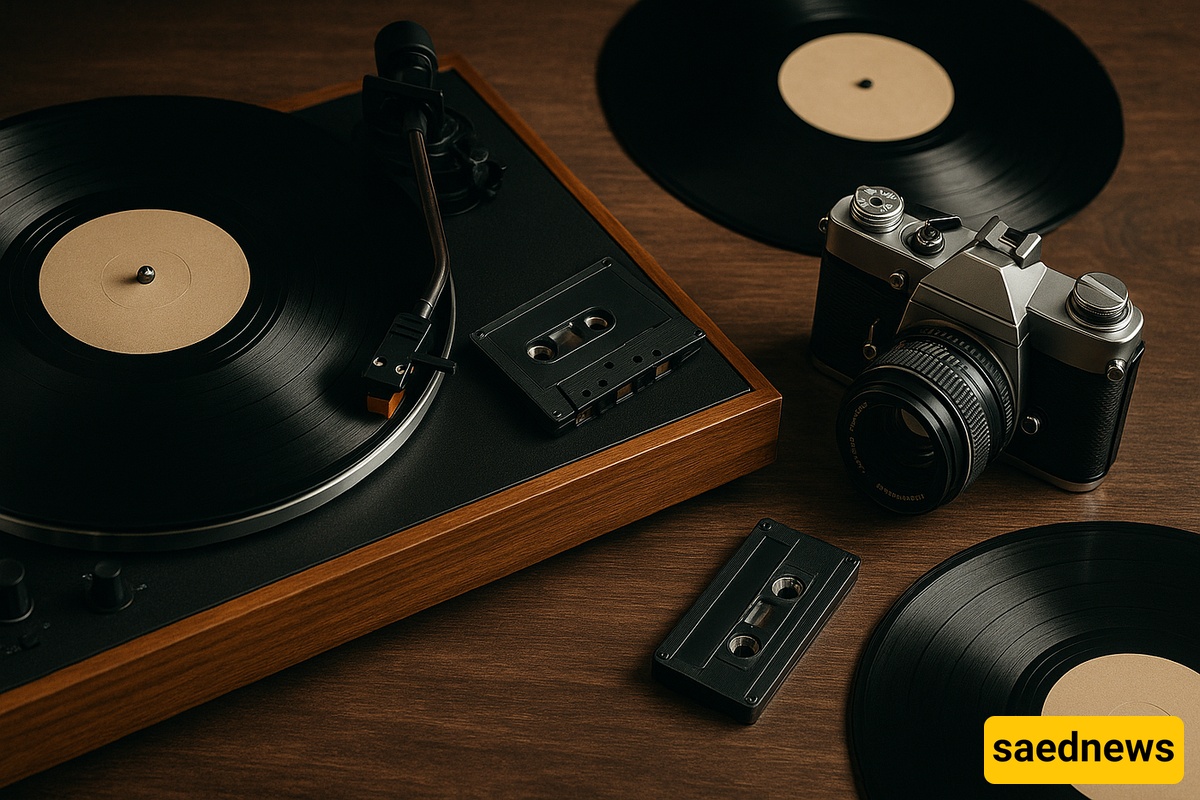
According to SaedNews, the return of analog technology looks strange at first. Smartphones can produce better photographs than many old cameras, streaming services can put millions of songs within seconds of a listener, and digital books can fit an entire library into a device thinner than a notebook.
Yet some of the technologies that digitalization supposedly made obsolete are becoming desirable again.
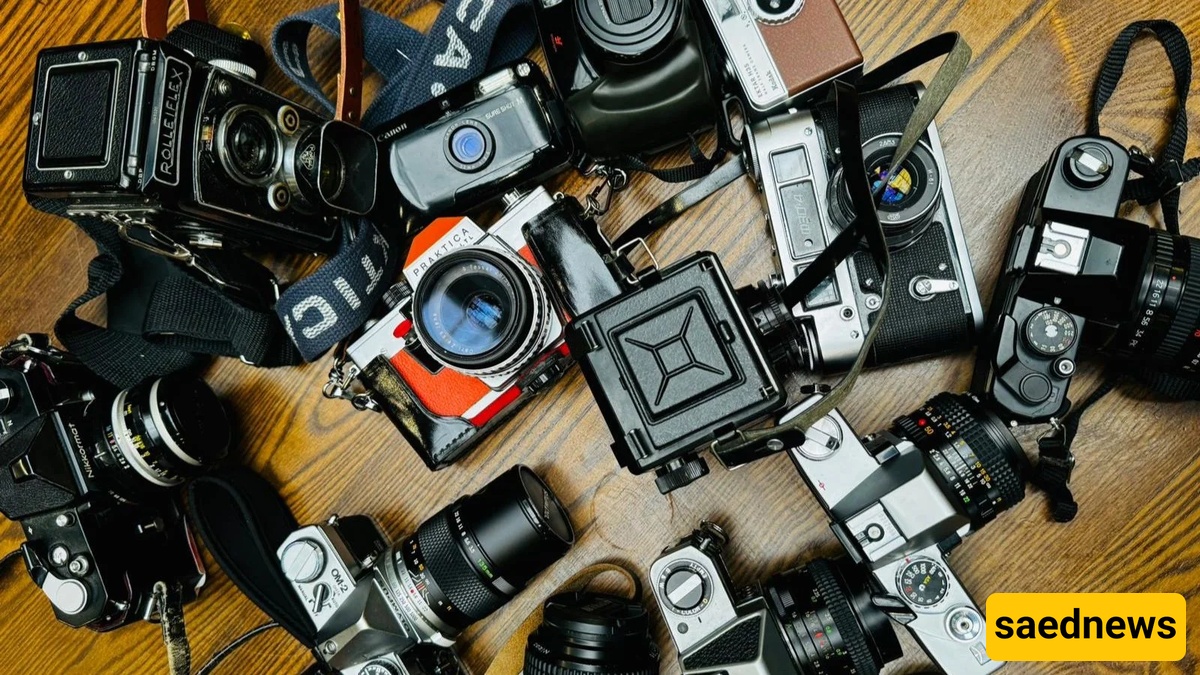
Film cameras are back in fashion. Vinyl continues to grow. Printed books remain resilient. Cassette players, VHS tapes and other physical formats are finding new enthusiasts. In 2026, the phenomenon has become visible enough to generate its own cultural vocabulary: people are talking about “going analog” and deliberately creating offline spaces in lives dominated by screens.
But there is an important distinction: the analog revival does not mean people suddenly think old technology is better.
For many users, the attraction is precisely what digital technology removed—the friction.
Digital technology is built around immediacy.
Take a photograph and you can inspect it instantly. Want another song? Tap the screen. Want another movie? Start browsing. Need to rewrite something? Delete it and begin again.
Analog formats introduce small obstacles.
A film camera gives you a limited number of exposures. A vinyl record requires you to choose an album, put it on the turntable and physically move the needle. A printed book occupies space and cannot instantly change fonts or download another chapter.
Those limitations can become part of the experience.
Recent reporting on the renewed popularity of film photography suggests that younger users are attracted to precisely this slower process. Fujifilm has described renewed interest in its instant and disposable film cameras as connected with being more present rather than constantly checking, editing and evaluating photographs online.
The limitation becomes a feature.
Photography may be the most visible part of the analog revival.
Digital cameras did not merely make photography easier; smartphones turned almost everyone into a photographer. The number of images a person can take is effectively unlimited, and deleting an unwanted picture costs nothing.
Film works differently.
A roll has a finite number of frames. Mistakes are possible. The result may not be visible for hours or days. Developing the film adds another step between taking a photograph and seeing it.
That delay can change how a person photographs.
Instead of taking ten nearly identical pictures and selecting the best one later, the photographer has a reason to pause before pressing the shutter.
The resurgence is not simply anecdotal. Recent reporting citing industry and survey data indicates that younger adults are becoming an increasingly important part of the film-photography audience, while disposable-camera sales and interest in analog photography have risen in recent years.
At the same time, the appeal is not limited to Gen Z. Fujifilm says its Instax products have expanded from an initially younger audience to a broader age range.
Music offers another striking example.
Streaming has become the dominant way most people consume recorded music, but physical music has not disappeared. According to the International Federation of the Phonographic Industry, global physical-music revenue increased 8% in 2025, while vinyl revenue grew 13.7%—the format's 19th consecutive year of growth.
That does not mean vinyl is replacing streaming. It is doing something different.
A streaming service is extraordinarily good at access. A record is extraordinarily good at ownership and ritual.
A listener can hold the album, examine its artwork, arrange a collection on a shelf and play a particular record deliberately. The physical object can also become part of someone's identity, room and social life.
The same album can therefore exist in two worlds: streamed for convenience and owned on vinyl for the experience.
Printed books provide a quieter example.
Digital reading is convenient, searchable and portable, but print has remained remarkably resilient. In the United States, Circana BookScan outlets recorded 762.4 million print-book units sold in 2025, a 0.3% increase from 2024. Sales were below the pandemic-era peak but remained above pre-pandemic levels.
That is not evidence that everyone is abandoning e-books. It is evidence that digital convenience did not eliminate the appeal of physical reading.
A printed book has weight, texture and a fixed sequence of pages. It does not produce notifications, recommend another title or tempt the reader to switch applications.
That difference matters when the problem is not access to information but too much access to everything.
This is perhaps the biggest misconception surrounding the movement.
Someone can use a film camera and still edit the resulting photograph digitally. A person can buy vinyl while listening to Spotify every morning. A reader can prefer paper novels while doing their research online.
In other words, the emerging relationship is often hybrid rather than oppositional.
Even Kodak's continued film business illustrates this point. The company has described renewed demand for photographic and motion-picture film while simultaneously developing modern film products and supporting contemporary production workflows.
The future of analog may therefore be less about replacing digital technology than choosing when digital technology is useful and when it is not.
There is also an aesthetic component.
Film grain, light leaks, cassette hiss, paper texture and mechanical buttons all introduce variations that digital systems tend to minimize. Apps now routinely imitate these characteristics because the visual language of imperfection has become desirable.
That creates an amusing reversal: digital technology is increasingly capable of simulating analog flaws, while consumers are sometimes returning to the original physical processes.
But aesthetics alone do not explain the revival.
The deeper attraction is that analog objects make the user participate.
You have to select the record. Turn the page. Wind the film. Write the sentence. Develop the photograph. Repair the machine.
The technology becomes something you do rather than something that simply happens around you.
For decades, technological progress was associated with removing friction.
Faster downloads were better. Fewer buttons were better. Automatic settings were better. Instant results were better.
Now the cultural value equation is becoming more complicated.
When almost everything is instant, waiting can feel special.
When photographs are unlimited, a 24-exposure roll feels finite.
When entertainment is infinite, choosing one album can feel meaningful.
When communication is constant, writing a physical letter can feel unusually personal.
That does not make analog technology inherently superior. Film can be expensive, physical media takes up space, and older equipment can be inconvenient or difficult to maintain. Film itself is also a fragile medium requiring careful preservation; the Library of Congress notes that photographic film can deteriorate through chemical and environmental processes.
The point is not that inconvenience is always good.
It is that some forms of inconvenience create attention.
The analog revival is unlikely to send smartphones, streaming platforms or digital cameras back into museums.
Instead, it may represent a correction to the assumption that every older format becomes worthless once a newer one arrives.
The Library of Congress, for example, maintains preservation programs for analog film, audio and video while also operating large-scale digital preservation systems. Its approach recognizes that old and new formats can coexist rather than requiring one to erase the other.
That may be the most interesting lesson of the analog comeback.
People are not necessarily choosing the past over the future. They are choosing different tools for different kinds of experiences.
The smartphone remains unbeatable when speed matters. Streaming remains unmatched for access. Digital photography is extraordinarily practical.
But sometimes people do not want the fastest option.
Sometimes they want the photograph they cannot see yet, the album they have to turn over, the book they can hold, or the handwritten page that cannot be instantly deleted.
In a world increasingly optimized for convenience, that small amount of friction may be exactly what makes analog feel new again.