SAEDNEWS: An Interesting and Readable Biography of Napoleon Bonaparte, Along with Fascinating Quotes and Images of Napoleon, Prepared for You in This Article
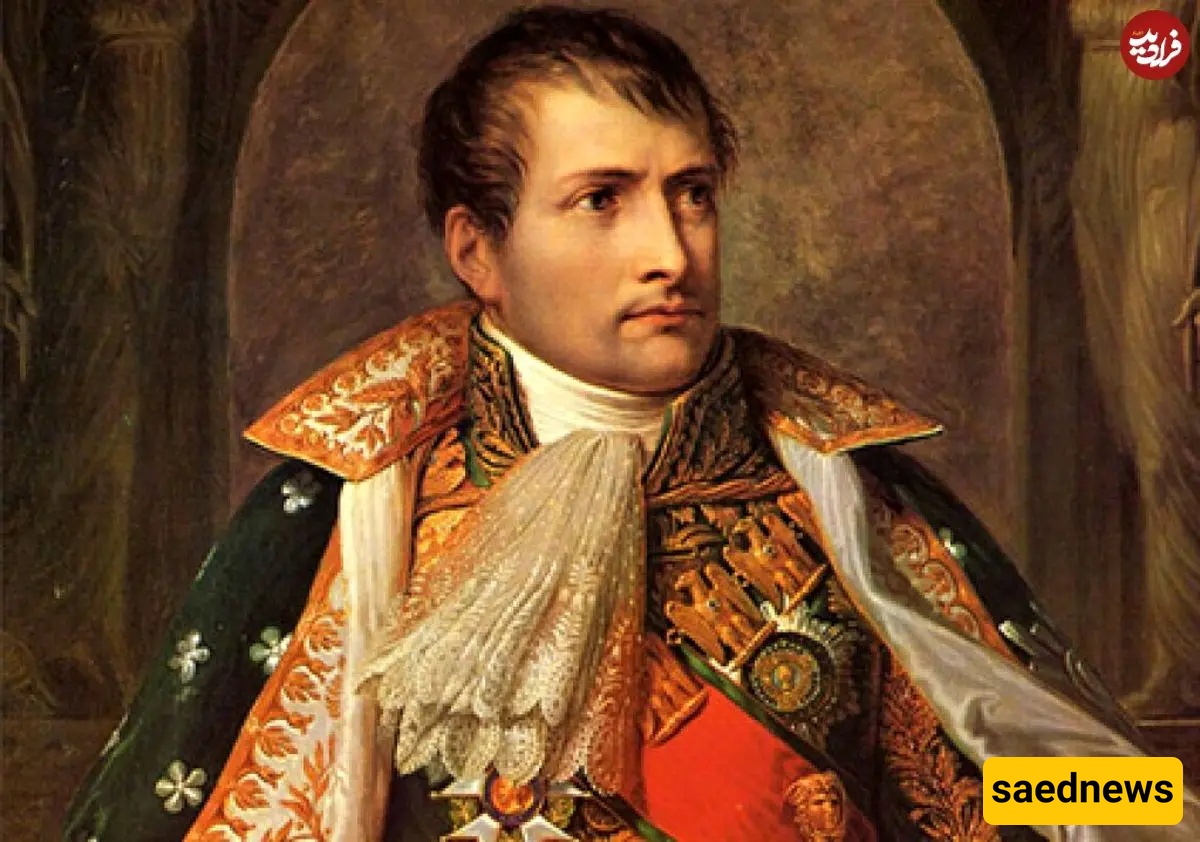
According to Saednews, Napoleon Bonaparte, known by his regnal name Napoleon I, was a French military commander and emperor whose historical figure has been portrayed in countless films from the silent era to the present day. The 2023 film “Napoleon” directed by Ridley Scott, originally titled “Kitbag”, is one of those works that encourages audiences to learn more about Napoleon, his revolutionary wars, his family, his wife, and other aspects of this famous historical figure. If you are also interested in historical films and are somewhat familiar with Napoleon through movies or the novel My Uncle Napoleon, read this section to learn more about this famous French ruler.
Napoleon Bonaparte was never known as the “King of France.” Instead, he is recognized as Napoleon Bonaparte, Emperor of France.
During the French Republic, he rose through the military ranks due to his outstanding talent. He briefly served as First Consul of France and later crowned himself Emperor of France in 1804 under the title Napoleon I.
He participated in many of the Napoleonic Wars across Europe until his defeat at the Battle of Waterloo in 1815, which marked the end of his rule.
After his defeat, he was exiled to the island of Elba and later died there in 1821. He is regarded as one of the greatest military commanders in history, with a highly influential legacy in politics and warfare.
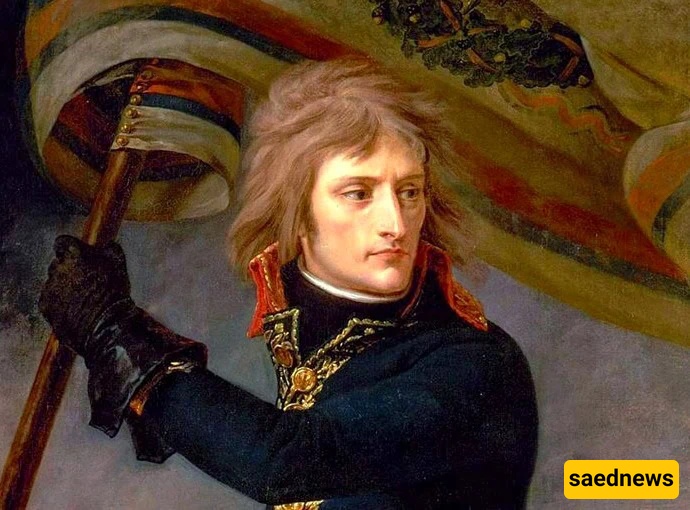
Napoleon Bonaparte was born on August 15, 1769, in Ajaccio on the island of Corsica, which at that time belonged to the Republic of Genoa. He was the third of eight children in the Bonaparte family, which had Corsican origins and close ties with France.
At a young age, he was sent to mainland France for military education. In 1785, he returned to France and continued his studies at the École Militaire in Paris.
After the French Revolution began in 1789, he quickly advanced in military ranks due to his abilities. In 1799, he became First Consul of France, and in 1804 he declared himself Emperor.
Napoleon is known as a brilliant military commander and expanded French influence across Italy, Germany, the Netherlands, and other regions. He fought in numerous campaigns known as the Napoleonic Wars across Europe. However, after his defeat at Waterloo in 1815, he was exiled.
One of the most frequently discussed topics about Napoleon is his height. Most sources state that he was of average height, around 168 cm.
Napoleon’s coronation as Emperor of France took place on December 2, 1804, at Notre-Dame Cathedral in Paris. This ceremony is considered one of the most significant events in French history.
Pope Pius VII attended the ceremony and performed the coronation. However, Napoleon famously crowned himself, placing the imperial crown on his own head.
This event symbolized his power and the establishment of the French Empire, marking a shift away from republican principles.
Napoleon was originally buried on Saint Helena Island in the South Atlantic Ocean, where he died in 1821.
Later, in 1840, his remains were transferred to Paris and buried at Les Invalides (Dôme des Invalides), a complex originally built as a military hospital and later used as a burial site for French military leaders.
His tomb is located beneath a large dome and is one of the most visited historical monuments in Paris.
The title “Napoleon II” can refer to different historical interpretations, most commonly Napoleon François Charles Bonaparte, the son of Napoleon I.
Born on March 20, 1811, he was known as the King of Rome and was considered the heir to the French Empire. After his father’s fall, he was briefly referred to as Napoleon II, but he never truly ruled France.
He lived most of his life away from power due to political changes and the collapse of the Napoleonic regime.
The Napoleonic Wars were a series of conflicts led by Napoleon Bonaparte from the 1790s to 1815, which significantly shaped European history.
1796–1797 Italian Campaigns: Early victories against Austria and Italian states
1805 Austerlitz Campaign: Victory over Austria and Russia
1806–1807 Campaigns: Conflicts involving Prussia, Russia, and Sweden
Naval Wars (1805–1807): Struggles with Britain
1809 War: Victory against Austria at Wagram
1812 Russian Campaign: Failed invasion of Russia
1813 Leipzig Campaign: Major defeat against European coalition
1814 Campaign: Fall of Paris and collapse of the Empire
1815 Waterloo Campaign: Final defeat and exile
These wars reshaped borders, political systems, and economies across Europe.
Napoleon worked with many famous military commanders, including:
Michel Ney
Louis-Nicolas Davout
Jean Lannes
Joachim Murat
André Masséna
Jean-Baptiste Jourdan
Others who played important roles in his campaigns
These marshals were key figures in Napoleon’s military success across Europe.
The Battle of Waterloo took place on June 18, 1815, near Waterloo in present-day Belgium.
Napoleon faced the allied forces led by the Duke of Wellington (Britain) and Field Marshal Blücher (Prussia).
The battle resulted in Napoleon’s final defeat. Afterward, he was exiled to Saint Helena, where he remained until his death in 1821.
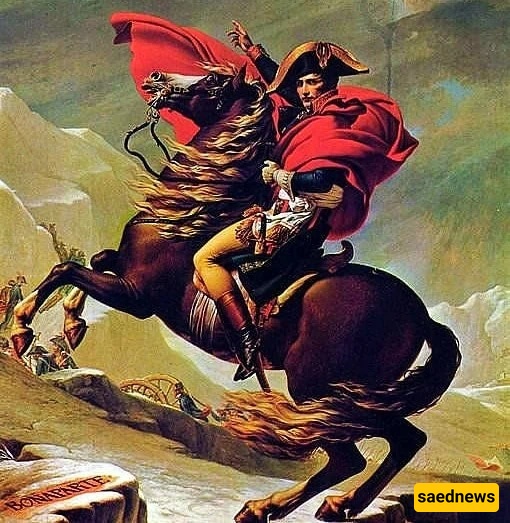
Napoleon had children from different marriages:
Napoleon François (King of Rome): Born in 1811, considered his heir and sometimes referred to as Napoleon II
Napoleon Louis: Born in 1802, involved in political developments after Napoleon’s fall
After Napoleon’s defeat, his family members were exiled and lived in different countries.
Several theories explain this:
Symbol of power and authority
Military identification and distinction
Representation of courage and ambition
There is no definitive historical evidence, and these remain interpretations.
“I am not satisfied with my life until I conquer the world.”
“Great courage lies in facing one’s own people.”
“As long as people served me, I ruled.”
“History is the version of events agreed upon by people.”
“Victory belongs to those who endure small mistakes.”
“Every land that submits to you becomes yours.”