SAEDNEWS: A 3D scan of a cat mummy shows the presence of three tails and five cat legs inside a mummification cloth. Researchers have offered various explanations regarding this finding.
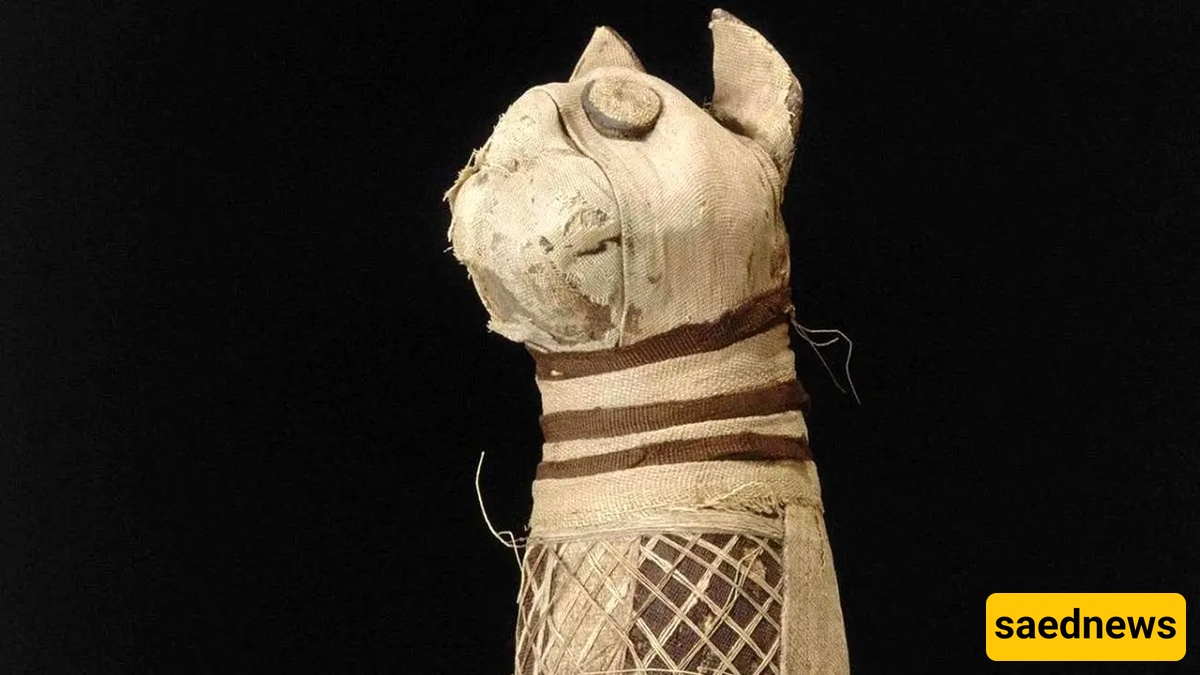
According to the Saed News analytical website, quoting Rokna, in 2017 French scientists scanned a 2,500-year-old mummy and expected to see the skeleton of an ancient Egyptian cat. However, what they discovered was the image of several ancient Egyptian cats. Given that cat biology has not changed much since the 5th century BCE, the presence of a cat with three tails and five legs appeared very strange.
This mummy is kept in France at the Museum of the city of Rennes. Researchers from the French National Institute for Preventive Archaeological Research (INRAP) performed a CT scan to examine the inside of the mummy without opening it, and then reconstructed its skeleton in 3D.
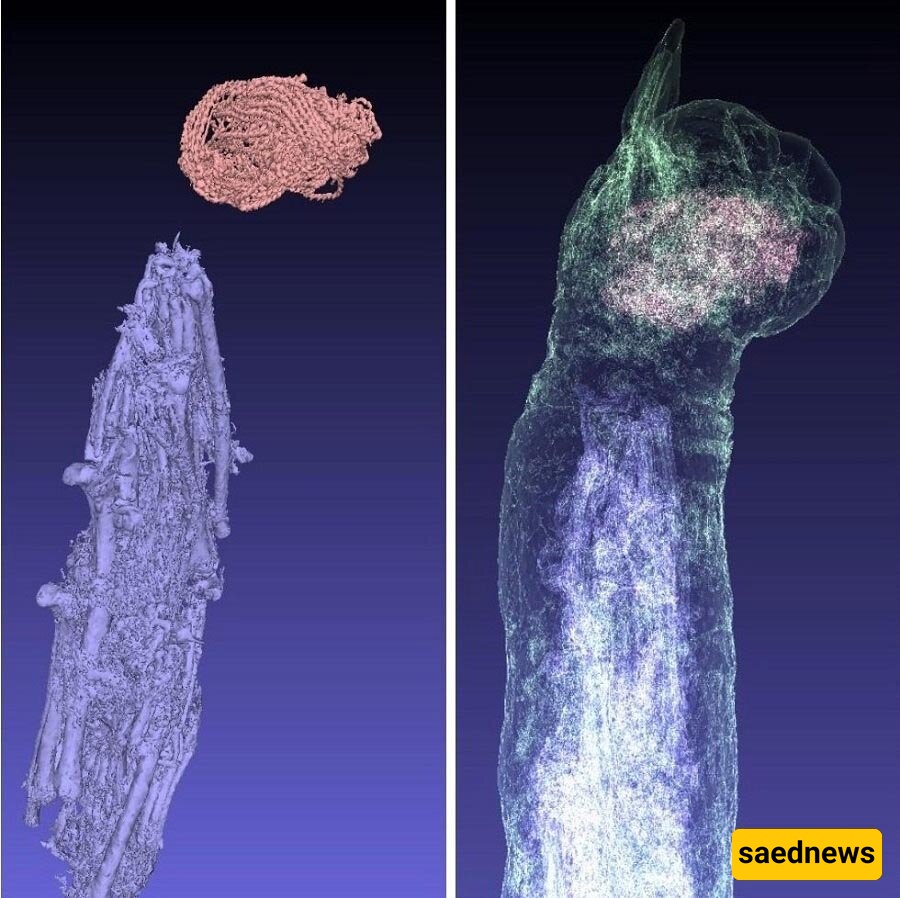
Théophane Nicolas, an INRAP researcher involved in the reconstruction, said:
“Some researchers believe we are dealing with an ancient fraud organized by unscrupulous priests. This means that instead of mummifying a single cat, parts from several cats were placed together inside the mummy container.”
According to Salima Ikram, professor of Egyptology at the American University in Cairo, although a five-legged, three-tailed mummy may seem like a strange creature, it is actually a “composite” mummy, which is not that unusual. In the case of mummies, the packaging does not always reflect the contents. There are various explanations for this phenomenon.
Archaeologists studying mummified cats and cat body parts in several tombs at the Bubasteion temple in Saqqara, Egypt (a major burial site for cats), identified 184 cat mummies and 11 bundles containing large numbers of cat bones. Some of these bundles contained the bodies of two to six cats, which were easily recognizable due to their relatively large size.
Regarding this five-legged, three-tailed cat mummy, Ikram proposed several theories. First, it may have been the work of Egyptian priests who defrauded pilgrims purchasing mummies, since the mummies did not actually contain what their external appearance suggested.
Second, the mummy may reflect the Egyptian concept of “part-for-the-whole,” meaning that a part of something symbolized the whole, and that proper rituals could transform incomplete bones of any cat into a complete cat in the afterlife.
A third theory is that these cats may have died in a sacred place and were therefore mummified together as sacred beings.
Another theory suggests that sometimes an incomplete skeleton is simply the result of human error. Ikram said: “When you mummify something, parts of it can fall out of your hands.”
Fortunately, the Rennes mummy may contain a clue that could solve the mystery. Nicolas wrote in an email that the dried flesh and bones had already decomposed before mummification, and there were holes in them caused by flesh-eating insects.
Given this, Ikram believes the Rennes mummy is a clear example of her third theory: the cats likely died around a tomb, were found in a state of decomposition, and then mummified. She said: “In this particular case, they collected remains of dead animals in a sacred space to bring them joy in the afterlife.”
Ikram notes that in recent years, the contents of animal mummies have been studied far more than human mummies, since their smaller size makes them easier to scan. As more mummies are examined, more surprises emerge. Two-thirds of cat mummies collected at the Bubasteion show evidence of violent death, suggesting that priests often bred cats for slaughter and eventual mummification.
Ikram is skeptical of the fraud hypothesis. Zivie and Lichtenberg write in their book Divine Creatures that it is possible priests did not intend to deceive pilgrims with mummies made from incomplete skeletons, but rather faced high demand for cat mummies and a limited supply of cats. Perhaps it should be said that what is inside the mummy does not always matter.