SAEDNEWS: A large white marble statue of the Greek goddess Athena has been discovered in the western theater of ancient Laodicea in modern-day Denizli, western Turkey. Standing about two meters tall, the statue’s head was found broken off. Experts date it to the early 1st century AD, during the Augustan period.
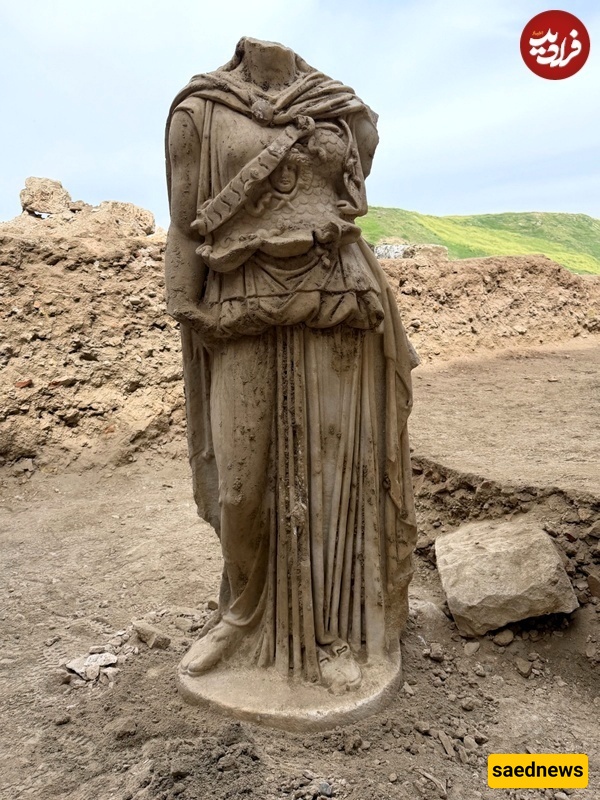
According to the Society section of Saed News, a recently uncovered statue of Athena stands on a circular base and depicts the goddess wearing a long peplos—a sleeveless garment fastened at the shoulders. The dress is cinched at the waist with a belt, and the excess fabric is drawn upward, creating a pleated and puffed effect. She also wears a chlamys, or cloak, fastened at the neck with a pin. The way the folds of the fabric are rendered—with variation in width and depth—demonstrates the sculptor’s high level of skill, while the presence of the chlamys is considered relatively rare in depictions of Athena.
According to Fardid News, on her chest is an aegis, an armor-like covering decorated with serpent scales. Its edges are adorned with small snakes, and at its center lies the head of a Gorgon—Medusa’s severed head. This representation closely resembles Virgil’s description in Book 8 of the Aeneid, where he describes a terrifying armor adorned with golden serpent scales and the image of the Gorgon with its severed neck and fixed gaze placed upon the goddess’s chest.
The statue is damaged: both the head and the left arm, as well as the right hand, are broken, and the missing parts have not yet been recovered. Based on other depictions of Athena, it is likely that she originally held a spear in her left hand, while her right hand either held a small statue of the winged goddess of victory or rested on a shield.
The Hellenistic city of Laodicea was founded in the mid-3rd century BCE by Antiochus II, the Seleucid king, and named after his wife Laodice. In 133 BCE, when Attalus III, king of Pergamon, bequeathed his kingdom to the Roman Republic, the city became part of Roman territory. During the early Imperial period, Laodicea grew into an important city in the Roman province of Asia, benefiting from its position along major trade routes in Asia Minor.
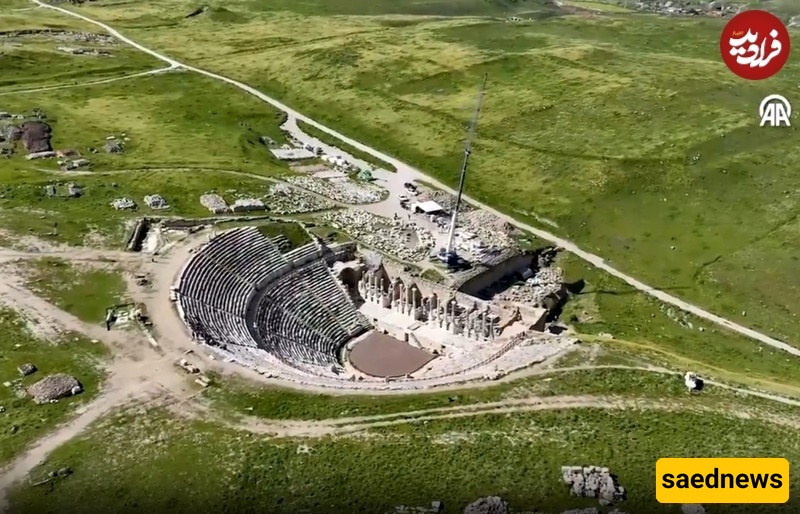
The western theater of the ancient city was first constructed in the late Hellenistic period (2nd century BCE). Its stage building originally had three levels, each decorated with sixteen columns. Between these columns stood statues of gods and scenes from Homeric epics. Many fragments of these sculptures have been recovered in recent excavations. The theater, rebuilt from scattered stone remains, was reopened in 2023 after centuries and hosted its first performance since the 7th century CE.
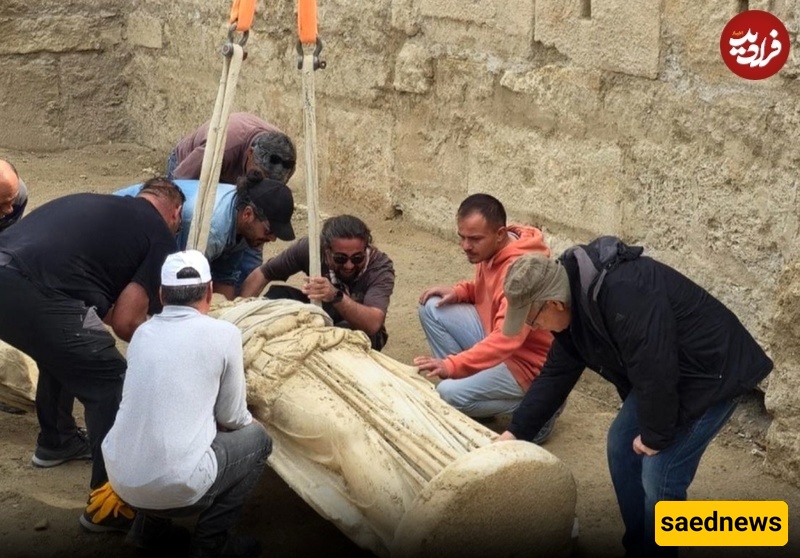
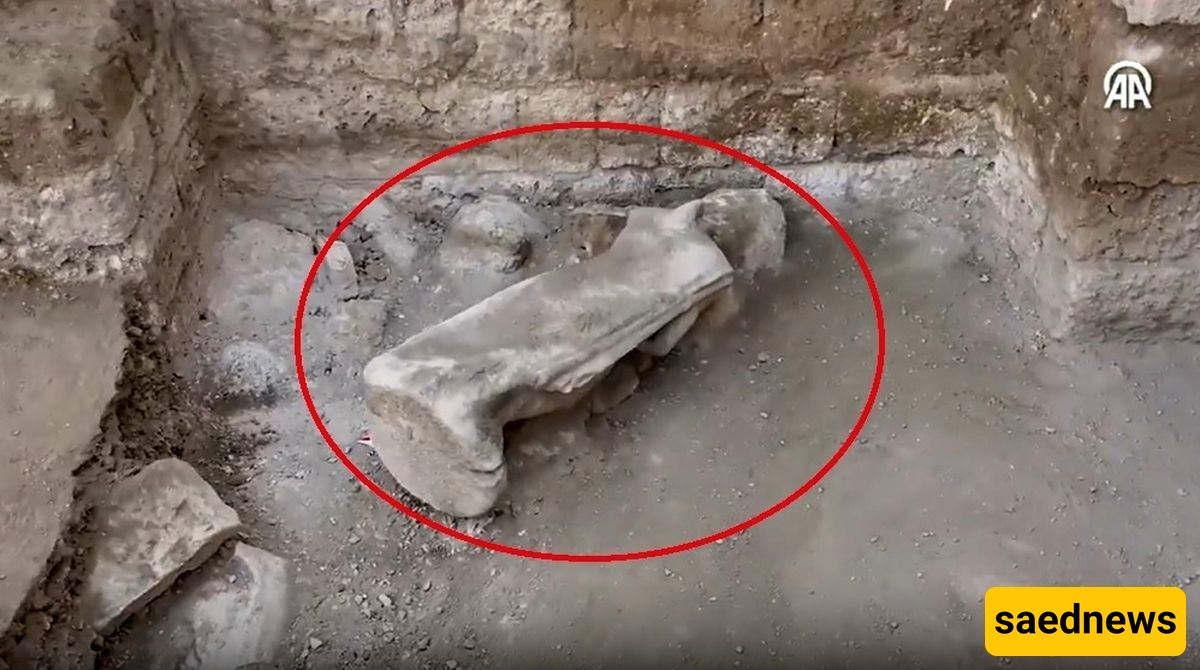
Excavations in the western theater area are still ongoing. The statue of Athena was discovered lying upside down near the back wall of the stage. Athena, as the goddess of weaving, was worshipped in this theater during festivals dedicated to one of the city’s major industries.