SAEDNEWS: Iran’s Judiciary Chief says the country has maintained strategic resilience despite U.S. attacks, backed by strong public support.
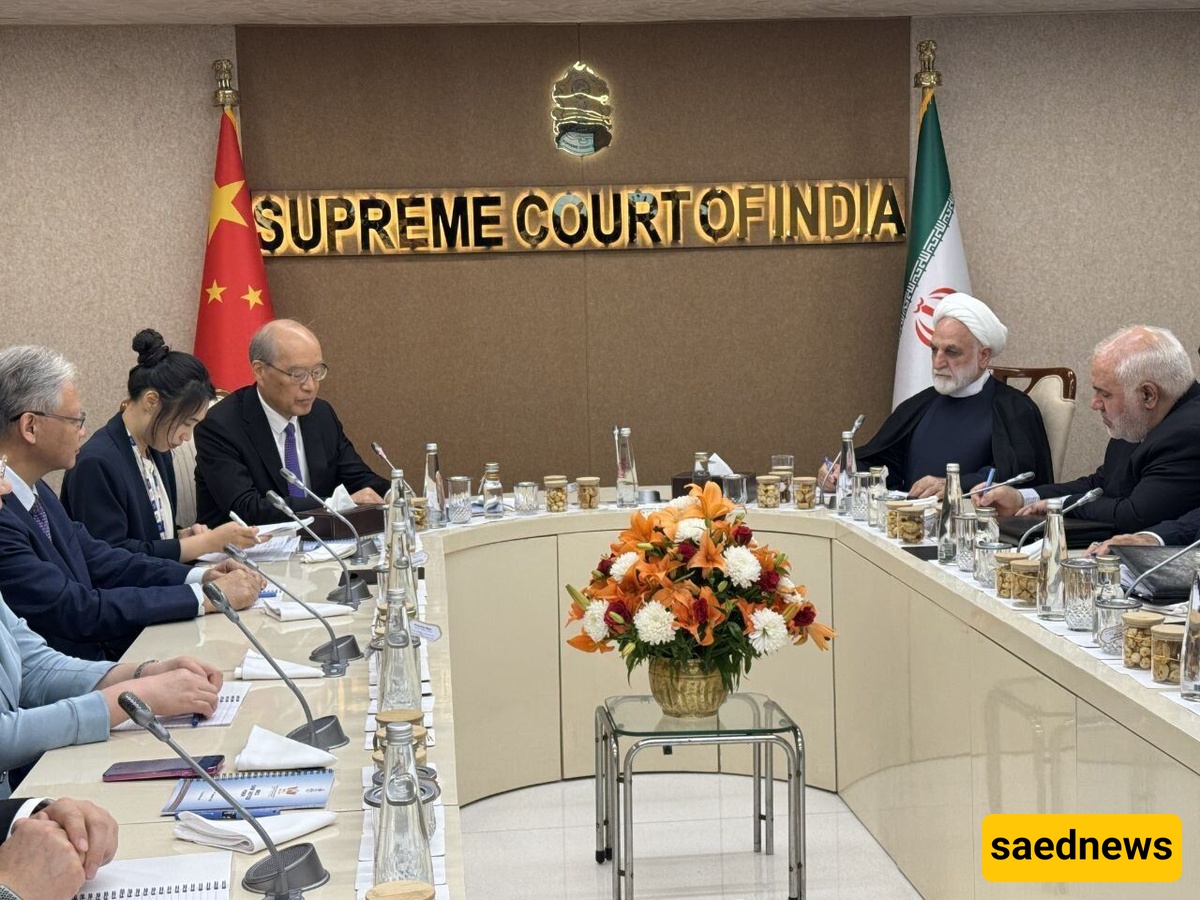
According to Saednews, Iranian Judiciary Chief Gholam-Hossein Mohseni-Ejei has called for stronger judicial and legal cooperation between Iran and China, saying closer ties in this area could support the broader strategic relationship between the two countries.
Mohseni-Ejei made the remarks during a meeting with Zhang Jun, President of China’s Supreme People’s Court and the country’s highest-ranking judicial official. The meeting took place on the sidelines of Mohseni-Ejei’s visit to New Delhi for a BRICS meeting.
Emphasizing the close relationship between Tehran and Beijing, Mohseni-Ejei said judicial cooperation should develop alongside the two countries’ expanding strategic ties. He described stronger communication between judicial institutions as a potential “supporting arm” for cooperation in other important areas.
He also highlighted the need for BRICS members to exchange legal knowledge and judicial experience. According to Mohseni-Ejei, Iran could benefit from China’s experience while also contributing its own expertise, helping create a strong network of judicial cooperation focused on shared interests among BRICS countries.
Mohseni-Ejei reiterated Iran’s “firm determination” to further expand relations with China. Referring to major changes in global affairs, he said the international system is moving toward a new global order in which China has an increasingly important role.
Against this backdrop, he said Iran was prepared to make full use of its available resources to ensure the effective implementation of bilateral memoranda of understanding.
The Iranian judiciary chief also urged greater cooperation in science and technology, particularly in the application of artificial intelligence to judicial processes.
He said China’s technological and scientific achievements, combined with Iran’s domestic capabilities, could open the way for “a new leap” in bilateral cooperation and help both countries develop their shared technological potential.
Zhang Jun, for his part, congratulated Mohseni-Ejei on his reappointment as head of Iran’s Judiciary and expressed his appreciation at meeting him again.
Referring to their previous meeting in China in April last year, Zhang recalled that the two officials had engaged in “deep and constructive discussions,” which he said had left a lasting impression on him.
Zhang noted that China and Iran had maintained stable and positive relations despite changes and challenges in the regional and international environment. He said the two countries had continued to support and cooperate with each other over the years.
He also praised the resilience of the Iranian people during recent conflicts and expressed hope that cooperation between Iran and China would continue to grow and expand across a wide range of fields.