SAEDNEWS: An Israeli airstrike on Syria’s Abu Zuhur air base in Idlib has raised fresh concerns in Ankara, particularly over the possibility of a Turkish military presence at the site. Turkey and Syria condemned the attack, while the Israeli side said Damascus was nearing a breach of an agreed security status quo.
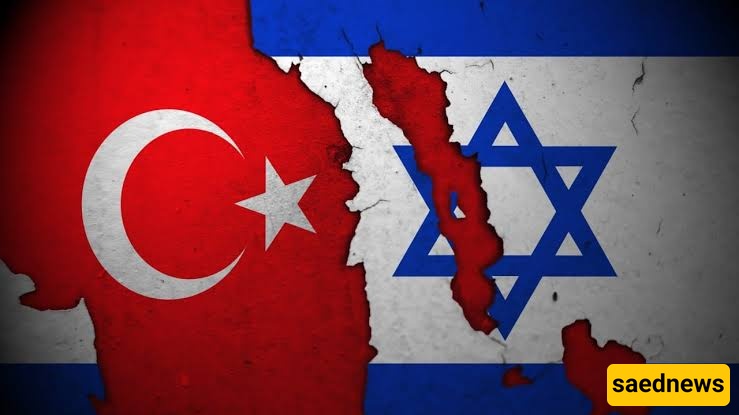
According to SaedNews: Israel’s latest military activity in Syria has created another source of tension, after Israeli fighter jets launched a serious attack on the Abu Zuhur air base in Idlib province. The base has been inactive for more than a decade, but Israel reportedly viewed the possibility of its repair and reconstruction as a potential threat.
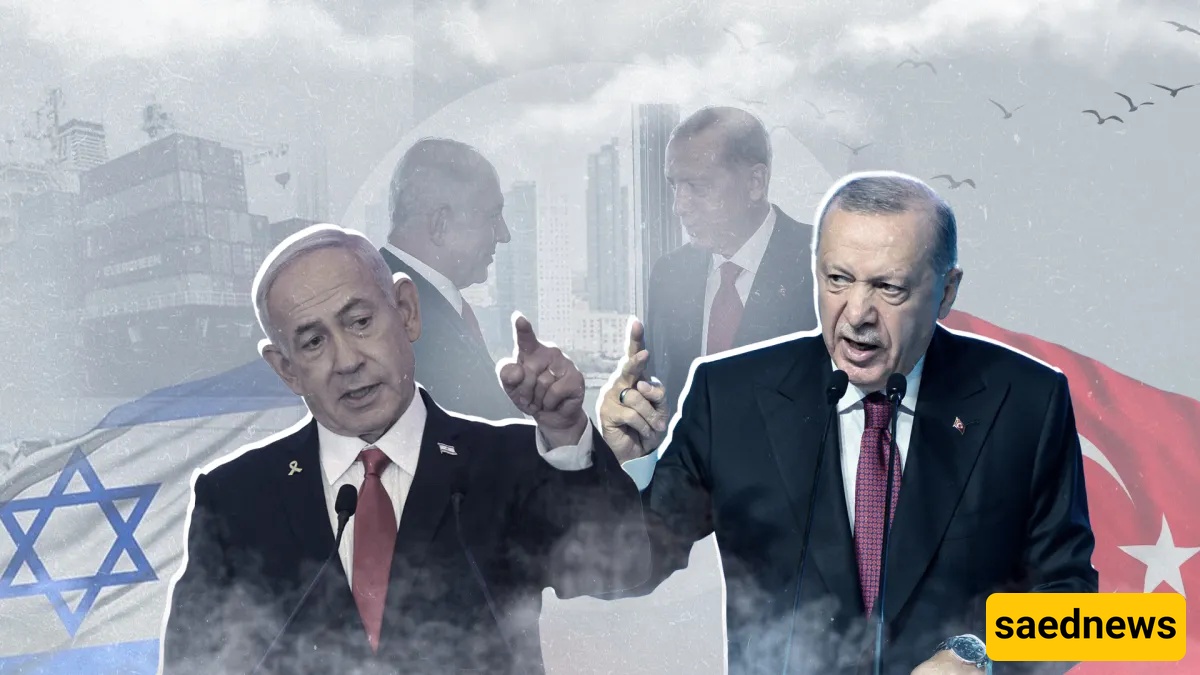
The strike damaged the runway and parts of the facility. Because Abu Zuhur is located close to the Turkish border, the attack has become a new concern for political and security officials in Ankara. Turkish President Recep Tayyip Erdogan raised the issue during a phone call with U.S. President Donald Trump and asked him to prevent further actions by Israeli Prime Minister Benjamin Netanyahu.
Israeli media reported that the main reason for the strike was the recent visit of two Turkish military and technical delegations to the old base and the possibility of an agreement between Damascus and Ankara to rebuild it.
Abu Zuhur is located in Idlib, roughly 70 kilometers from the Turkish border. Turkey’s Foreign Ministry strongly condemned the attack, saying Israel had violated Syria’s territorial integrity and sovereignty and calling on the international community to take a firmer position against Israeli attacks on Syria. Syrian Foreign Minister Asaad al-Shaibani likewise described the strike as an unjustifiable provocation and a violation of Syrian sovereignty.
Turkey’s Yetkin Report argued that officials in Ankara have not forgotten earlier warnings from Netanyahu and Israeli Security Minister Israel Katz that Turkey would become Israel’s next target after Iran. The report also said Ankara believes Netanyahu may intensify attacks on Palestinians to avoid defeat in Israel’s October 27 general election, which comes only a week before the November 3 U.S. midterm elections, an election considered vital to Trump.
Yetkin Report further argued that Trump wants to end the war with Iran as quickly as possible, but an agreement is becoming increasingly difficult because of Israel’s continuing demands. It said Trump, who entered the war with Iran by following Netanyahu, is caught between his own needs ahead of the U.S. election and those of the Israeli lobby before Israel’s election.
The report questioned whether Netanyahu might take another reckless step. It said Erdogan’s request that Trump restrain Israel was therefore only a mild statement, adding that since the Gaza ceasefire agreement of October 10, 2025, which Turkey also guaranteed, 1,265 Palestinians have been killed in Israeli attacks. It also raised the possibility that Netanyahu could intensify Israeli attacks on Syria and Lebanon alongside operations against Palestinians to improve his electoral prospects. According to the report, Trump is unlikely to take effective action against Netanyahu’s demands because of Israel’s powerful lobby in Washington.
Officials in both Damascus and Ankara argue that Israel effectively broke the security agreement by striking the Idlib base. Netanyahu’s office, however, claims that Damascus was on the verge of violating the agreed “security status quo” by allowing Turkish forces to deploy at the base, and says Israel had already warned Syria about the issue.
In other words, Israel says it carried out a preemptive strike after previously defining a Turkish military presence in Syria as a red line and communicating that position to members of the negotiating team of President Ahmed al-Sharaa’s government. From this perspective, the attack was not simply directed at Syria; it also carried a direct message for Turkey.
The Israeli claims are significant because preliminary talks aimed at preventing tensions and promoting normalization between Syria and Israel had previously taken place with Turkish encouragement. Several rounds of discussions were held in Baku, Azerbaijan, as well as Paris and London. Although those talks reduced Israeli activity concerning Syria’s Druze issue, they produced no specific defense or security guarantees. The latest attack, according to the source, once again demonstrated the seriousness of the Israeli threat to Syria.
One of the most important aspects of the latest tension involving Syria, Israel and Turkey concerns remarks by Tom Barrack, the U.S. ambassador to Turkey and Trump’s special envoy on several regional files, including Iraq, Syria and Lebanon.
Barrack said that no warning had been given to Turkey or Syria before Israeli fighter jets flew toward and attacked Idlib. He also said Turkey’s air-defense center detected the Israeli aircraft very quickly and that, had Turkish officials not remained calm and restrained, they could have responded much sooner. Barrack said a coordination mechanism between Israel, Turkey and Syria was necessary.
The sensitive Turkish-Syrian border is therefore facing a new reality. Ahmed al-Sharaa’s efforts to normalize relations with Israel and reduce Israeli threats have not produced the desired result, while Netanyahu’s latest strike appears intended to show Ankara that a Turkish military presence in Syria is a red line for Israel.
Barrack ultimately proposed establishing a mechanism for passing messages between the sides so that Turkey and Syria would avoid escalation and retaliation. The situation reflects two different forms of competition between Turkey and Israel inside Syria.
On one side, Turkey is seeking more than political and intelligence influence. Its activities, according to the source, extend toward Syria’s army and security institutions, defense industries, consumer market, energy sector, construction and contracting.
On the other, Israel is continuing to occupy several sensitive areas of Syria while seeking to ensure that the country has a weak defense structure and that no large or medium-sized military power is present there.
Turkish journalist Asli Aydintasbas had previously highlighted this rivalry in a report for the European Council on Foreign Relations. Writing in June 2025, she said that after the fall of Assad, Turkey and Israel had entered an increasingly intense competition over Syria’s future.
According to Aydintasbas, Ankara wants a unified and stable Syria under Turkish influence, while Israel is concerned about both the growth of Syrian power and expanding Turkish influence in the country.
For Turkey, Syria is therefore more than a neighboring state. Strategically, it has become a southern strategic depth, a Kurdish issue, a matter involving refugee returns, a reconstruction market, a trade route, a border-security concern, a source of regional influence and an opportunity to strengthen Turkey’s geopolitical position.
Turkey consequently cannot easily allow Israel to destroy Syria’s military infrastructure whenever it chooses.
The source also points to earlier remarks by Syrian President Ahmed al-Sharaa to Al Jazeera, reportedly made on Ankara’s advice, that Syria was seeking a security agreement with Israel. He said such an agreement could pave the way for broader peace, provided Syria’s rights regarding the Golan were not abandoned.
For now, however, both Damascus and Ankara have chosen caution and accommodation in dealing with Israel. The source also notes that the door to the Mecca defense pact remains open to Egypt, but cannot include Syria and is not expected to take on an anti-Israeli character.