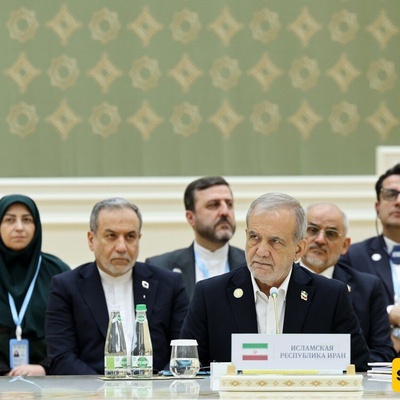
SAEDNEWS: Donald Trump’s retreat from threats against Iran’s critical infrastructure may have reflected more than diplomatic pressure from U.S. allies. The calculation may have centered on deterrence, the potential cost of Iranian retaliation, and the risks Washington would face in a broader war.
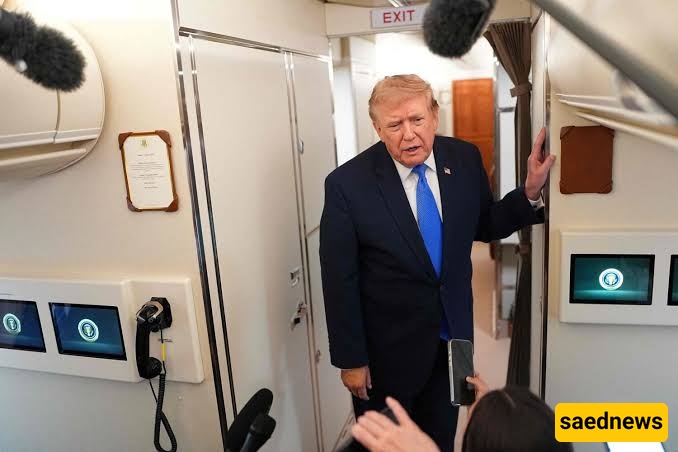
According to SaedNews: The most revealing moment in the latest confrontation between Washington and Tehran may not have been a missile launch or a new military operation. It may have been the moment the threat of escalation stopped short of becoming reality.
Donald Trump moved toward the possibility of attacking Iran’s critical infrastructure, raising the prospect that an already dangerous confrontation could expand into a much broader conflict. Yet the threat ultimately receded.
The question is why.
One explanation offered publicly was that U.S. allies in the region had asked Washington not to take such a step. That may have played a role. But from a strategic perspective, another possibility is harder to ignore: Washington may have concluded that Iran still possessed the ability to respond and that a larger war could expose the United States and its regional partners to significant vulnerabilities.
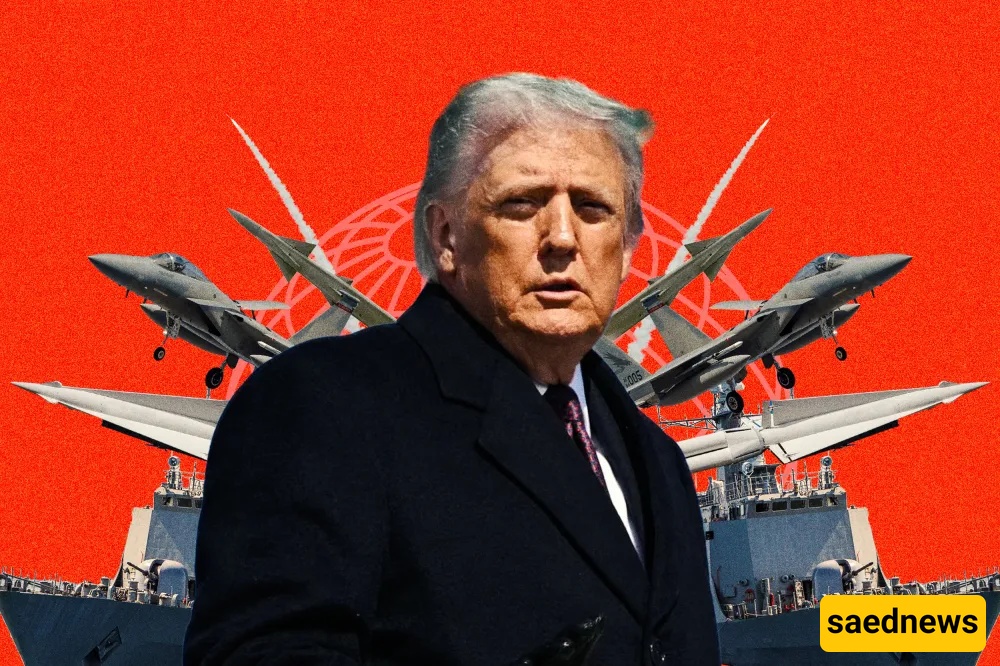
That is the essence of deterrence.
Deterrence does not depend simply on how many weapons a country possesses. It works when an adversary believes that using force will produce consequences serious enough to make the original action unattractive.
In this confrontation, Iran appears to have tried to communicate precisely that message: Tehran did not seek war, but if war were imposed upon it, the attacker would not be able to determine the conflict’s scope and cost alone.
That distinction matters.
A threat can be powerful only if the other side believes it can be carried out without unacceptable consequences. Once the expected price becomes too high or too uncertain, the calculation changes.
For Washington, the prospect of a wider confrontation with Iran carries a complicated set of risks. A direct attack on critical infrastructure would not necessarily remain a contained military episode. It could create pressure for retaliation and produce consequences extending beyond the immediate battlefield.
That is where the logic of brinkmanship becomes important.
The confrontation can be understood as a game in which both sides move toward a dangerous boundary while trying to convince the other that they are willing to go further. But brinkmanship becomes increasingly dangerous when both parties possess the capacity to impose serious costs on one another.
Trump ultimately stepped back from the threat.
That decision can be interpreted in several ways. Politically, Washington can point to the concerns of its regional allies. Diplomatically, it can present restraint as an effort to avoid a wider conflict. Strategically, however, the outcome suggests that the threat itself did not force Tehran into retreat.
Instead, the possibility of a costly Iranian response may have raised the price of crossing the line.
This does not necessarily mean that the United States has abandoned pressure on Iran, nor does it prove that Washington has accepted Tehran’s broader strategic objectives. It does, however, underline a more limited but important point: threats do not automatically produce political concessions when the threatened side retains the ability and willingness to respond.
For Iran, that may be one of the most significant elements of the episode.
The objective of deterrence is not necessarily to start a war. In many cases, its greatest value lies in preventing one.
Iran’s message, as presented in the source analysis, was built around a delicate combination of resistance and restraint. Tehran sought to demonstrate that it would not be intimidated into surrender while keeping the door to diplomacy open.
That combination is particularly important because the alternative could be a conflict in which neither side can fully control the consequences.
If Washington has indeed concluded that Iran remains capable of imposing substantial costs and that the United States itself has vulnerabilities in a prolonged regional war, strategic logic would argue against testing the same boundary again.
That leaves diplomacy as the remaining path.
But diplomacy in such circumstances is not simply about negotiations at a table. It can also provide a mechanism for reducing tensions without requiring either side to portray itself as having surrendered.
For Washington, that could mean finding a politically defensible way out of a dangerous confrontation. For Tehran, it could mean maintaining its position without having to pay the price of a prolonged war.
The most consequential outcome, therefore, may not be that Iran avoided another attack or that Trump withdrew a particular threat. It may be that the confrontation demonstrated the limits of coercion when the opposing side can credibly threaten retaliation.
This is where the concept of “winning without war” becomes relevant.
A country does not necessarily strengthen its position by entering every confrontation. Sometimes the more difficult achievement is to convince an adversary that escalation will not deliver an easy victory.
Iran’s challenge now is to translate that deterrent position into a sustainable political and diplomatic strategy. Military resilience can change the calculations of an adversary, but it cannot by itself resolve the underlying political dispute.
The same applies to Washington. If the United States concludes that escalation could generate costs disproportionate to its objectives, diplomacy becomes more than an alternative. It becomes the rational mechanism for exiting the confrontation.
The critical question is whether both sides can use that space.
Trump’s retreat from the threat, regardless of the precise combination of political and strategic factors behind it, illustrates a familiar reality of high-risk confrontation: once the costs of crossing the line become credible, stepping back can become more rational than taking the final step.
For Iran, the message is equally significant. Deterrence is most effective when it prevents war rather than merely surviving it.
The episode may therefore be remembered less for the attack that did not happen than for the strategic calculation that prevented the confrontation from moving one step closer to a much wider conflict.
And if diplomacy now has room to operate, the real test will be whether that opening can be used to build a more durable way out of the crisis—without either side believing that restraint means weakness.