SAEDNEWS: The region’s crisis is not simply a choice between war and negotiations. At its core is a struggle over timing and control of the battlefield. Facing electoral pressure, Trump and Netanyahu are under growing constraints, while Iran seeks to limit its rivals’ options through calculated moves.
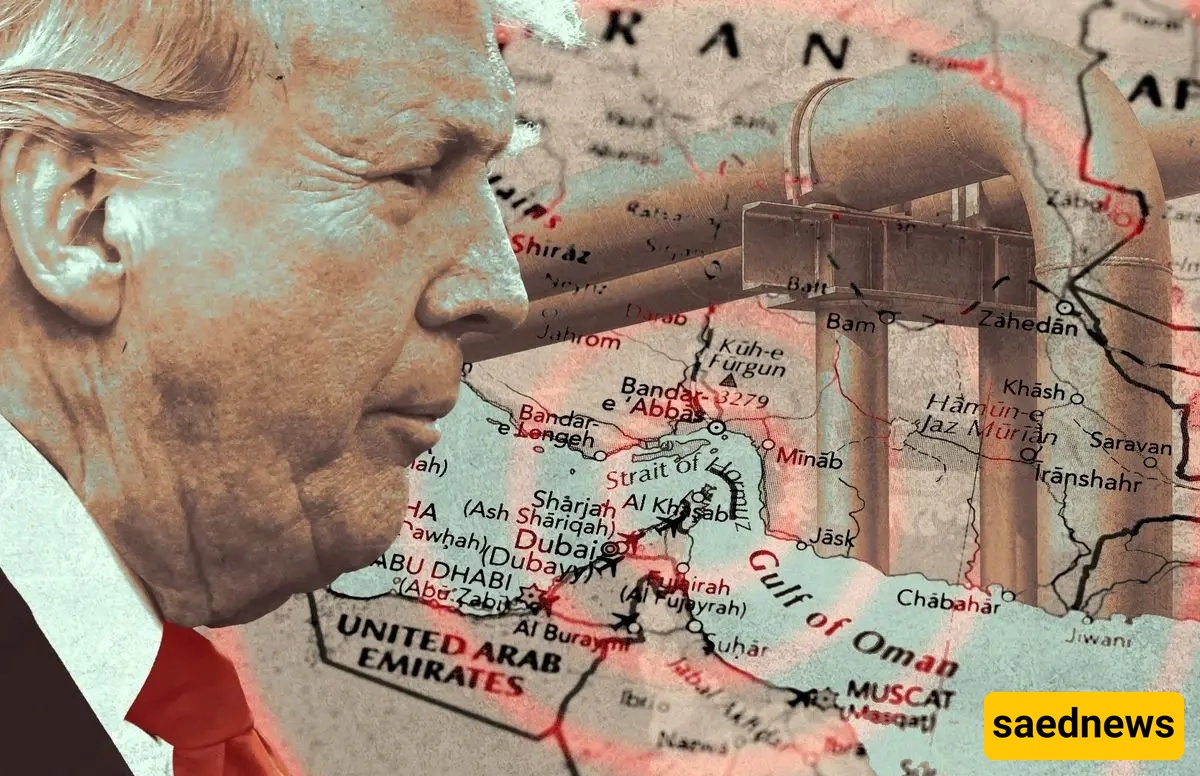
According to Saed News’ Political Service, recent developments in the region cannot be analyzed simply by asking whether the path ahead will lead to war or an agreement. Although this binary appears straightforward, it conceals an important part of the reality on the ground. The central issue today is the competition over “designing the playing field”—determining which actor can create conditions in which its rival is forced to make decisions at a time, in a place, and within a framework that does not serve its interests.
Against this backdrop, time has become a strategic variable. Iran, the United States, and Israel are all attempting to manage time to their advantage. The key difference, however, is that Washington and Tel Aviv face pressure from electoral calendars, while Tehran can potentially use those constraints to influence and reshape their decision-making calculations.
The recent conduct of the U.S. administration, particularly Donald Trump, toward technical negotiations between Iran and Oman over arrangements for managing and monitoring maritime traffic through the Strait of Hormuz should also be viewed within this framework. Washington’s effort to create the impression that a possible Iran-Oman agreement would amount to the “reopening of the Strait of Hormuz” appears to be an attempt to move rapidly beyond one stage of the process and portray a technical, preliminary measure as a political achievement.
A potential agreement between Iran and Oman on mechanisms for managing and monitoring maritime traffic could serve as a necessary condition for entering a new phase, but it would by no means constitute a comprehensive agreement or resolve all outstanding issues. The sufficient condition would be the implementation of commitments accepted by the American side under the Islamabad understanding, including commitments concerning the return of Iranian assets, the consolidation of the ceasefire in Lebanon, and provisions related to Iran’s role in ensuring the security of the Strait of Hormuz.
From this perspective, Trump’s apparent eagerness to move beyond the Iran-Oman technical negotiations and present them as a final success could indicate that the U.S. administration is facing growing time pressure. Washington needs a foreign-policy achievement that can both reduce domestic criticism and be presented as evidence of governmental success ahead of the congressional elections. However, attempting to separate one part of the agreement process from the broader package of reciprocal commitments demonstrates that the central issue remains the management of timing and the sequence in which obligations are fulfilled.
Israel is also experiencing one of the most complicated political and security periods in its recent history. The prolonged war, continued fighting on the Lebanon front, pressure on reserve forces, economic costs, and growing social concerns have shifted the problem of attrition from the military sphere into the political arena.
A recent Channel 13 poll in Israel is significant in this context. According to the survey, Netanyahu’s right-wing coalition would win 51 seats, the anti-Netanyahu opposition 58 seats, and Arab parties 11 seats. These figures do not represent a definitive prediction of an election outcome, but they indicate that Netanyahu’s political position remains fragile and that any major security development could influence the political balance.
Under Israel’s parliamentary system, forming a government requires at least 61 of the Knesset’s 120 seats. Winning 51 seats would leave Netanyahu’s right-wing and religious coalition 10 seats short of the threshold. This suggests that even if the right-wing camp remains dominant, forming the next government would require difficult coalition-building and careful management of internal divisions.
Netanyahu needs a political achievement that can be presented to the public, but he faces a difficult paradox. Continuing the war without a clear outcome could deepen his political erosion, while ending the war without a tangible achievement could weaken his claim to victory. As a result, time has become less an opportunity for the Israeli prime minister than a source of pressure.
The United States faces its own constraints. The U.S. midterm congressional elections on November 4 will force the Trump administration to balance support for Israel, the need to avoid being drawn into a costly war, and the preservation of an image of foreign-policy success.
Trump has so far faced a two-sided dilemma: he has neither obtained a clear wartime achievement that can be presented to the American public as a victory nor secured a definite diplomatic outcome that can be promoted as a success. At the same time, a significant part of his political base within the anti-war “MAGA” movement—which supports the “America First” approach and opposes costly foreign interventions—is strongly resistant to the United States entering another major war.
Under these circumstances, Washington’s interests do not fully align with those of Tel Aviv. Israel may require a major security operation to reshape its domestic political environment, while Trump must calculate the regional and domestic costs of such an action.
Any assessment of these developments, however, remains incomplete without considering Iran as an active and influential player. One common analytical mistake is to portray Iran merely as a responder to decisions made by the United States and Israel. Tehran, by contrast, is an actor with multiple political, security, diplomatic, and economic tools at its disposal and can attempt to shape the environment in which its rivals make decisions.
Iran’s strategy could therefore be based on combining effective measures on the ground, diplomacy, and the strategic use of regional capabilities to increase the costs of high-risk choices for its rivals. The objective in such an approach is not simply to prevent war or achieve an agreement. It is also to restrict the other side’s freedom of action and alter its calculations.
The Strait of Hormuz is one of the clearest examples of this logic. Hormuz is important not merely because of the energy shipments or maritime traffic passing through it. The strait is also a strategic variable in the region’s broader security and economic calculations. The Iran-Oman discussions over how maritime traffic through the waterway should be managed and monitored demonstrate that maritime security must be viewed within a framework that extends well beyond a purely technical issue.
Within this framework, Tehran is attempting to balance two principles: first, demonstrating responsibility toward regional security and maritime navigation; and second, preventing a limited technical measure from becoming a tool for disregarding reciprocal commitments. In other words, managing the Strait of Hormuz is part of a much larger equation in which confidence-building, fulfillment of obligations, and a balance between rights and responsibilities all matter.
The value of a strategic lever does not always lie in using it immediately. Sometimes its most important function is the influence it exerts on an opponent’s behavior and calculations. Lebanon, negotiations, and other regional files should likewise not be viewed as isolated issues. They are interconnected components of a broader competition over who can shape the conditions under which decisions are made.
From this perspective, the coming months should be viewed as a period of competition over time. Netanyahu will seek to alter the security equation before the elections; Trump will attempt to balance the demands of U.S. domestic politics with his foreign commitments; and Iran will seek to preserve the initiative while narrowing the options available to its rivals.
Under such circumstances, the winner will not necessarily be the actor that takes the first step or makes the final proposal. Rather, it will be the actor capable of changing the rules of decision-making so that its rival faces fewer options and higher costs.
For this reason, the key question facing the region may not ultimately be whether war breaks out or an agreement is reached. The more important question is who will succeed in controlling the timing and shaping the playing field.