SAEDNEWS: The Islamic Revolutionary Guard Corps has issued a statement marking Iran’s Journalist Day and the anniversary of journalist Mahmoud Sarami’s death, portraying media work as a crucial front in the country’s recent conflicts.
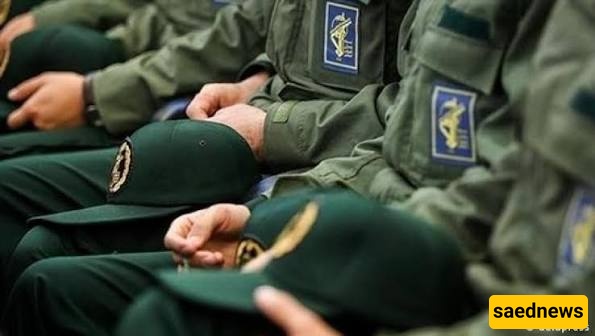
According to SaedNews: The Islamic Revolutionary Guard Corps has used Iran’s Journalist Day to deliver a forceful message about the growing importance of journalism, information warfare and competing narratives during periods of military confrontation.
The statement, issued on the occasion of August 8, which Iran marks as Journalist Day and which also commemorates the death of journalist Mahmoud Sarami, presents journalists as participants in what the IRGC describes as a broader struggle over truth, public confidence and national unity.
The statement opens by addressing Iranian journalists and media professionals as members of what it calls a committed and revolutionary media community. It praises those who, according to the IRGC, continued reporting during some of the country’s most difficult circumstances and describes their work as a source of awareness and hope.
But the most politically charged section of the statement focuses on the role of the media during recent conflicts involving Iran, the United States and Israel.
The IRGC argues that the conflicts have not been fought only with military weapons. In its assessment, the United States and Israel have also relied heavily on media operations, cyber capabilities and what it calls hybrid warfare in an effort to influence how events are understood by the public.
The statement claims that despite military and media efforts, Washington and Israel failed to achieve the objectives that the IRGC says had been declared for the conflicts. It further argues that the confrontations have exposed what it describes as strategic difficulties, divisions among Western allies and a decline in Western influence.
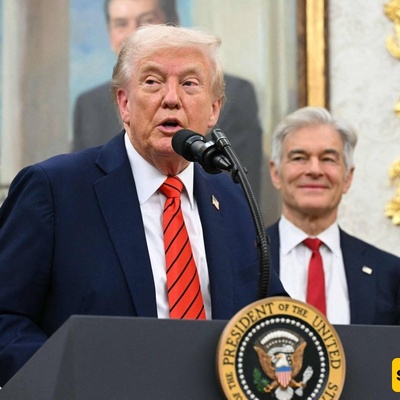
The IRGC also points to what it describes as admissions by international media regarding the outcome of the confrontation. According to the statement, some foreign outlets have referred to what it characterizes as a “defeat” and a “self-created trap” for former U.S. President Donald Trump in the conflict with Iran.
The statement further claims that agreements reached during the process represented what it calls a form of American capitulation to realities on the ground and Iran’s negotiating position.
These are political claims made by the IRGC in its own statement and are presented as its assessment of the conflict.
The organization then turns its attention to the media battle itself.
According to the statement, modern conflicts increasingly involve sophisticated combinations of cyber operations, artificial intelligence and information campaigns. The IRGC says hostile actors seek to distort facts, create divisions between the Iranian population and the political system, and weaken what it describes as national social cohesion.
One of the key ideas in the statement is the importance of controlling the initial narrative.
The IRGC argues that recent domestic unrest and what it describes as the events of January 8 and 9, 2026, demonstrated how important the media dimension of a crisis can become. The organization says the side that communicates first, more accurately and more intelligently can gain an important advantage in shaping public understanding.
That assessment forms the basis for the statement’s praise of Iranian journalists who worked during the recent conflict.
The IRGC says journalists and media organizations aligned with its political outlook played an important role in producing what it considers accurate and timely narratives. It credits them with documenting the activities of Iranian forces, the presence and resistance of civilians, the experiences of families of those killed, and what it describes as an unusually strong display of national solidarity.
The statement also emphasizes the circumstances in which some journalists worked.
According to the IRGC, reporters remained active while facing threats and operating under fire during what it describes as the second and third imposed wars. It says some journalists worked alongside emergency responders, security forces and civilians and that some ultimately lost their lives while carrying out their reporting responsibilities and what the organization describes as defending the truth.
That portion of the statement shifts the focus away from technology and geopolitical confrontation and toward the human dimension of reporting during conflict.
For the IRGC, journalism is not simply a means of transmitting information. The statement portrays the media as another arena in which a conflict can be won or lost—particularly when public perception, morale and social cohesion are at stake.
The reference to artificial intelligence is also notable. The statement argues that modern information operations are becoming increasingly sophisticated and that AI can be incorporated into efforts to manipulate or distort narratives.
That warning reflects a broader argument running throughout the document: military strength alone is not enough to determine how a conflict is remembered or understood.
In the IRGC’s view, journalists can influence that process by documenting events quickly, presenting competing claims and preserving accounts of what happens on the ground.
The statement ultimately uses Journalist Day as an occasion to honor what it calls the “front-line fighters of awareness and the pen.” It praises journalists and media workers who, in the organization’s view, protected the “stronghold” of truth and narrative during a particularly sensitive period.
The IRGC also commemorates Mahmoud Sarami and other journalists who were killed while carrying out their work, presenting their deaths as symbols of commitment to journalism and national causes.
The broader message is unmistakable: the IRGC considers the information battlefield to be inseparable from the military and political dimensions of modern conflict.
Whether one accepts the organization’s assessment of the recent confrontations or not, its statement highlights a reality that has become increasingly visible in contemporary wars: battles are fought not only over territory and military capabilities, but also over information, images, public confidence and the first explanation of what happened.
For Iranian journalists, the statement frames that responsibility as a form of national service. For the IRGC, controlling and defending the narrative has become an essential part of confronting what it describes as hostile military, cyber and media campaigns.
The statement concludes with congratulations to Iranian journalists and media professionals on Journalist Day, along with a tribute to those it identifies as martyrs in the pursuit of truth and awareness.
It also expresses hopes for what it describes as the dignity and ultimate victory of the Iranian people and the broader “front of truth against falsehood.”