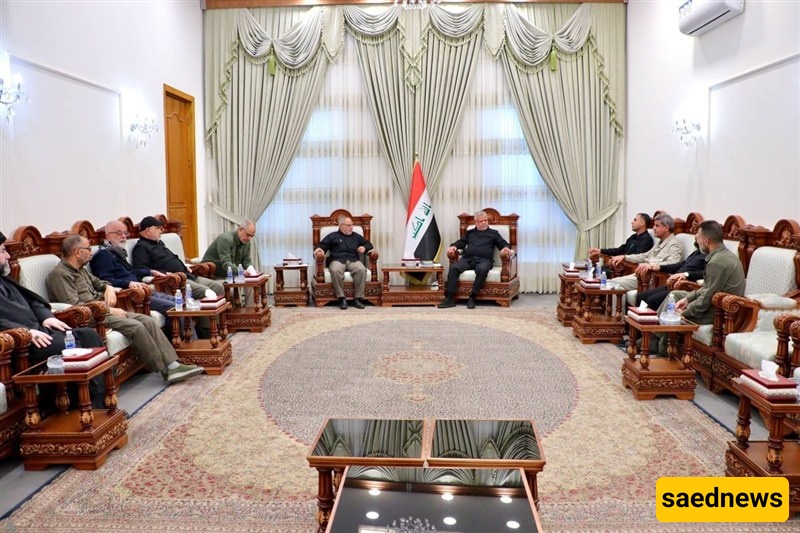
SAEDNEWS: Hadi al-Amiri held a meeting in Baghdad with a number of Hashd al-Shaabi leaders, with discussions focusing on the latest field developments, the requirements of the current phase and ways to strengthen operational capabilities and readiness.
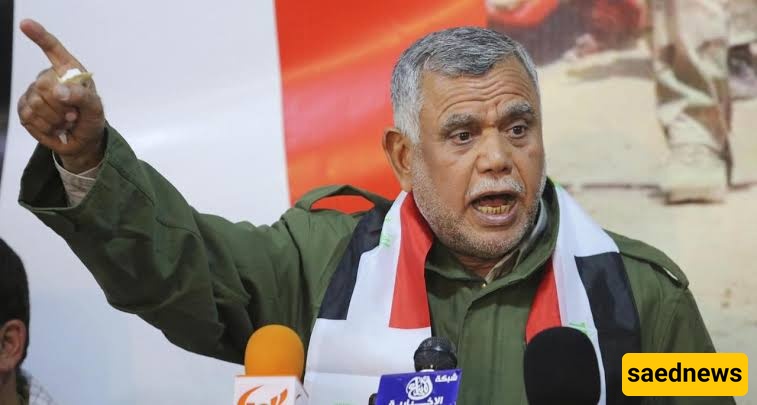
According to SaedNews: Hadi al-Amiri, secretary-general of the Badr Organization, has held talks with a number of leaders of Iraq’s Hashd al-Shaabi in Baghdad, placing field coordination and preparedness at the center of the meeting.
The meeting, according to a statement issued by the Badr Organization’s media office and published by Iraq’s official news agency, was devoted to reviewing the latest developments on the ground and assessing what is required during the current phase.
While the statement did not announce a new operation or identify a specific security threat, its emphasis on readiness, coordination and field performance highlights the importance being attached to maintaining the capabilities of Iraq’s security forces.
The discussions reportedly covered several connected issues. Participants examined recent field developments, considered the demands of the current period and discussed ways to improve the capabilities and overall capacity of the Hashd al-Shaabi and security forces.
One of the central themes was the need to preserve a high level of preparedness.
For security organizations operating in a changing environment, readiness is not limited to having personnel or equipment available. It also involves coordination, assessment of performance and the ability to maintain an effective level of operational organization. Those themes were reflected in the priorities outlined after al-Amiri’s meeting.
The statement also highlighted the importance of strengthening coordination among the relevant parties. That point was presented alongside calls to review current field performance and raise the level of efficiency and preparedness.
Rather than focusing on a single issue, the meeting appears to have addressed readiness as a broader process involving several elements at once: understanding field developments, evaluating current performance, coordinating between the concerned sides and improving capabilities.
The involvement of Hashd al-Shaabi leaders in the discussions also places the organization within the broader security-readiness framework addressed during the meeting. The statement did not provide details about which commanders attended or specify particular units, locations or operations under review.
That absence of operational detail is notable. The announcement focused on general preparedness and coordination rather than disclosing specific plans or field activities. As a result, the central message emerging from the meeting is one of maintaining and strengthening readiness rather than announcing a particular military move.
The timing and context of the meeting were also described in broad terms. The Badr Organization’s statement referred to the “current phase” and its requirements, without publicly detailing those requirements. This leaves the emphasis on preparedness and coordination as the clearest information available from the announcement.
For the security forces involved, the review of field performance is another important component of the message. Maintaining readiness requires more than preparation for future developments; it also requires examining how forces are performing under existing conditions and identifying ways to improve efficiency.
That is why the statement linked field performance with the broader objective of increasing readiness. The two issues were presented as connected parts of the same effort.
Al-Amiri’s meeting therefore sends a straightforward institutional message: coordination should remain strong, field performance should continue to be assessed, and security capabilities should be maintained at a high level.
The statement did not announce specific changes to the structure of the Hashd al-Shaabi or security forces, nor did it disclose details of any forthcoming operation. It instead emphasized the principles that the participants considered important during the current period.
The focus on coordination is particularly significant because the meeting involved leaders from the Hashd al-Shaabi alongside al-Amiri, who heads the Badr Organization. According to the statement, the discussions were aimed at reinforcing cooperation among the relevant parties and improving overall efficiency.
Ultimately, the meeting in Baghdad was less about a single headline-making decision and more about maintaining preparedness as an ongoing priority. The review of field developments, assessment of performance and push for stronger coordination all point to an effort to ensure that security capabilities remain effective and ready.
For observers, the key takeaway is therefore the emphasis rather than a newly announced operation: Iraqi security preparedness, according to the statement, remains a subject requiring continued review, coordination and improvement.
The details released publicly are limited, but the message is clear enough. Al-Amiri and the Hashd al-Shaabi leaders used the meeting to underline the importance of staying prepared, improving coordination and strengthening performance during the current phase—an approach that could remain closely watched as developments on the ground continue.