SAEDNEWS: Brig. Gen. Hasan-Zadeh, commander of the IRGC’s Muhammad Rasulullah Corps in Tehran, said the United States and Israel had completely failed to achieve their objectives against Iran’s Islamic system.
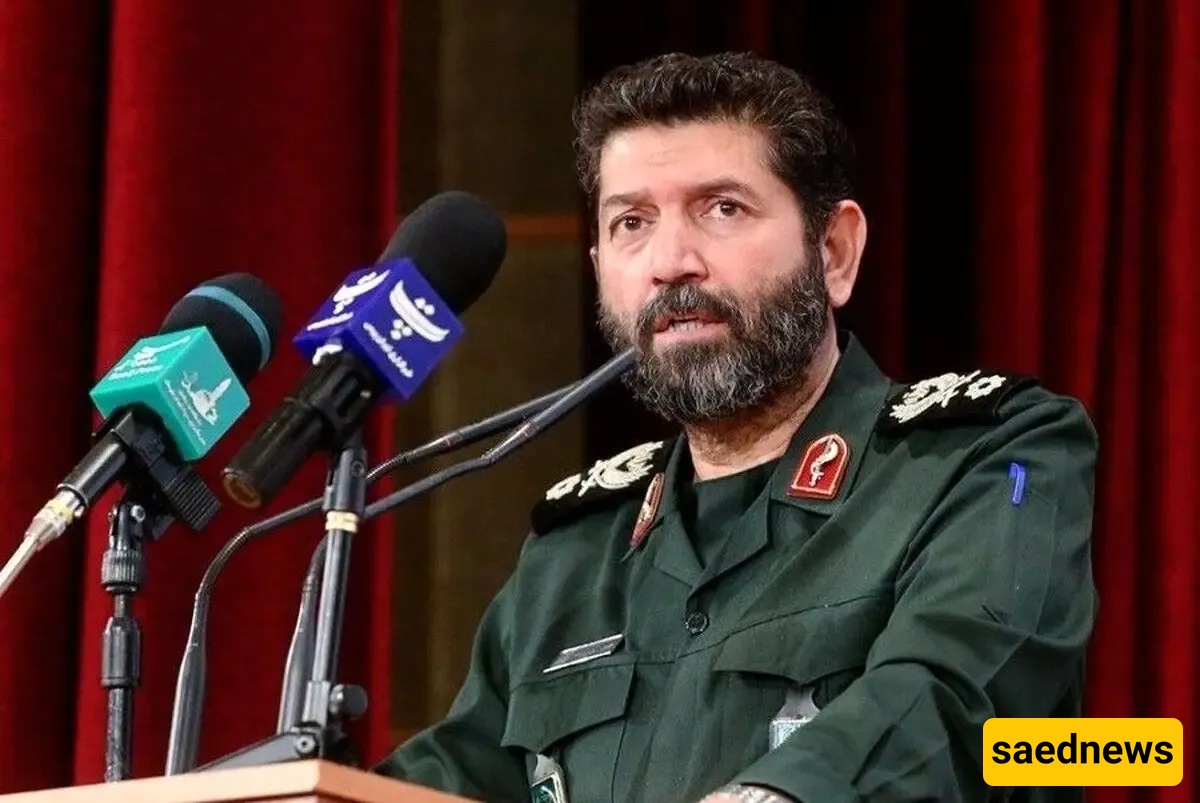
According to SaedNews: A senior Iranian commander has declared that the United States and Israel failed to achieve their objectives against Iran, while using an inspection of air-defense units in Tehran to highlight what he described as the country’s extensive military preparedness.
Brig. Gen. Hasan-Zadeh, commander of the Islamic Revolutionary Guard Corps’ Muhammad Rasulullah Corps in Tehran, made the remarks while visiting upgraded air-defense battalions belonging to the 27th Muhammad Rasulullah Division.
The visit was focused on assessing the units’ operational readiness. But Hasan-Zadeh’s message went beyond the immediate inspection, framing the military preparedness on display as part of a broader confrontation involving Iran, the United States and Israel.
According to Hasan-Zadeh, Washington and Israel had completely failed to achieve their objectives against Iran’s Islamic system.
The statement represents his assessment of the outcome of the confrontation. He did not provide additional details in the reported remarks about the specific objectives he was referring to, but he presented the failure as a significant development in the wider regional contest.
Hasan-Zadeh also placed particular emphasis on what he described as Iran’s popular strength and the readiness of the Basij forces.
He said the combination of popular power and the Basij’s comprehensive preparedness had turned Iran into one of the major powers in the region and the world.
The commander’s comments therefore linked military readiness with public support, portraying the two as complementary elements of Iran’s ability to withstand external pressure.
The air-defense inspection in Tehran provided the immediate setting for that message.
Hasan-Zadeh visited upgraded air-defense battalions of the 27th Muhammad Rasulullah Division and assessed their readiness. He stressed that what had been shown during the visit represented only a portion of the division’s capabilities and preparedness.
That claim was among the most striking elements of his remarks.
Rather than portraying the displayed forces as a complete picture of the division’s military capacity, Hasan-Zadeh said only part of its capabilities had been put on display in the field.
The statement suggests that the inspection was intended not only as an assessment of readiness but also as a public demonstration of military capability.
Hasan-Zadeh further argued that the leaders of the United States and Israel currently have no response to explain their repeated failures to their own publics, intellectuals and broader audiences.
His remarks framed the issue as extending beyond the battlefield into the realm of public perception and political accountability.
The commander’s assessment comes against the backdrop of heightened regional tensions and continued focus on military preparedness. In that environment, displays of air-defense readiness can carry significance beyond the units directly involved, particularly when accompanied by claims about the failure of opposing powers to accomplish their objectives.
At the same time, the information released about the inspection remains limited. The reported statement does not specify the precise capabilities demonstrated by the air-defense units, nor does it provide operational details about the equipment or readiness levels that were assessed.
Instead, Hasan-Zadeh emphasized the broader message: Iran maintains what he described as substantial military preparedness, and the capabilities displayed in Tehran represented only part of that readiness.
His reference to the 27th Muhammad Rasulullah Division is also notable because the visit centered on upgraded air-defense battalions. The focus on readiness indicates that defensive capabilities remain a prominent part of the military posture being presented by Iranian commanders.
The remarks also combine two themes that frequently appear in Tehran’s security messaging: the role of military preparedness and the importance of public support.
Hasan-Zadeh argued that Iran’s popular strength, together with the readiness of the Basij, has contributed to the country’s position as a major regional and global power. He presented this combination as an important factor in the country’s ability to confront external challenges.
For now, the most direct message from the Tehran commander is his assertion that the United States and Israel failed to reach their objectives against Iran. Alongside that claim, he sought to draw attention to the scale of Iran’s military readiness, emphasizing that the forces shown during the inspection represented only part of the capabilities available to the 27th Muhammad Rasulullah Division.
Whether such assessments will influence perceptions of the broader regional security balance remains a matter for observers to debate. But Hasan-Zadeh’s remarks clearly place military preparedness and public support at the center of his assessment—and suggest that Tehran wants the latest display of readiness to be viewed as a message extending well beyond the units inspected.