SAEDNEWS: The U.S. vice president has taken a major political risk by promoting a potential agreement between Tehran and Washington — a deal that could either strengthen or damage his prospects on the path toward the 2028 election.
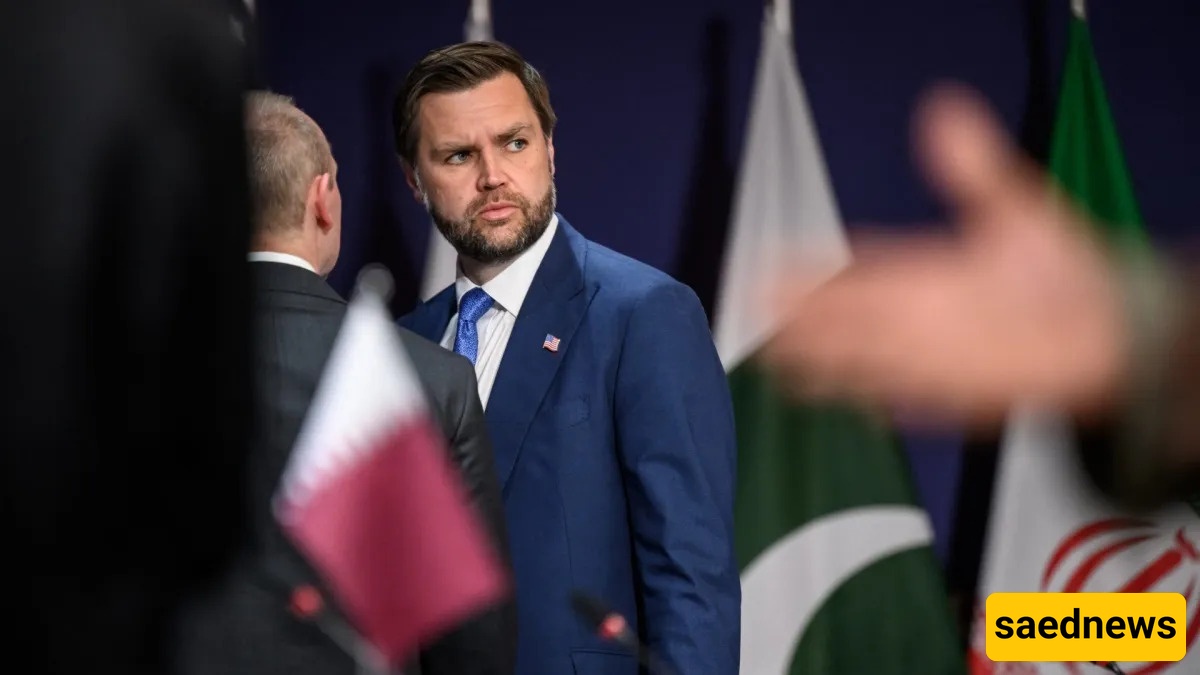
According to the political desk of Saed News, U.S. Vice President J.D. Vance has taken a leading role in defending an agreement he and Donald Trump signed with Iran to end the war, despite his previous opposition to foreign military interventions.
According to Fararu, citing the Associated Press, Vance was originally expected to spend this week promoting his new book — an opportunity that typically allows a vice president and potential future presidential candidate to discuss his personal life, beliefs, and values. However, the release of his second book, “Communion: Finding My Way Back to Faith,” was overshadowed by another issue: the agreement to end the Iran war, a deal now closely associated with Vance’s name.
The U.S. vice president has accepted the role of the agreement’s main defender. He has promoted the deal in several interviews, released a video supporting it, and answered questions about it during a White House press briefing. This new position is notable for a politician who has long been known for opposing foreign military involvement. When Trump launched the war in February, Vance appeared reluctant to comment publicly on the conflict.
J.D. Vance is now increasingly tied to the outcome of the war, as he is expected to help lead the next phase of negotiations with Iran, although the exact timing remains unclear.
Vance’s transformation into the public face of the agreement represents a major political risk. If he decides to run for president in 2028, he may hope voters view his role in ending an unpopular conflict as a major achievement.
However, if the agreement with Iran collapses, Vance could be blamed as the person most responsible for its failure.
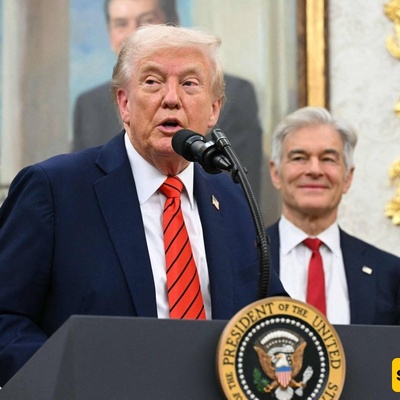
Donald Trump joked about this possibility on Wednesday, saying: “If it works, I’ll take the credit. If it doesn’t work, I’ll blame J.D.”
On Thursday, Vance described Trump’s comment as a joke and said he was not worried about such a scenario. He added: “The entire team has worked very well on this issue, and we have brought it to a very good point for the American people.”
The White House also described Vance in a statement as “the president’s right-hand man and a valuable member of the administration’s national security team.”
White House spokesperson Olivia Nuzzi said: “That is why the vice president was trusted to lead these negotiations alongside Steve Witkoff, the U.S. special envoy, and Jared Kushner.”
She added: “What President Trump and his team achieved on the battlefield and at the negotiating table is nothing short of remarkable and will strengthen America’s security for years to come.”
However, after the United States and Iran signed a digital memorandum of understanding on Sunday, the agreement faced growing criticism, including from conservative groups.
Luke Schroeder, Vance’s spokesperson, said in a statement: “It is unfortunate that some Republicans are attempting to undermine the president’s efforts to achieve peace in the Middle East and ensure that Iran never obtains a nuclear weapon.”
U.S. officials gave conflicting responses about when the full text of the agreement would be released. However, leaked draft versions sent to the media faced criticism and skepticism from several Democratic and Republican lawmakers, as well as Israel and pro-Israel groups.
Critics argued that the agreement, which is expected to create a two-month negotiation period, provides early concessions to Iran while offering limited guarantees in return. They also emphasized that Trump’s stated goal for starting the war — preventing Iran from obtaining nuclear weapons — remains unresolved.
Donald Trump has stated that “if the agreement fails, Vance is responsible.”