SAEDNEWS: An analysis of Iran's attacks on Kuwait over the past few days suggests that these actions go far beyond a purely military response. The developments indicate a complex and multi-layered strategy, reflecting broader political, security, and regional objectives rather than a simple act of retaliation.
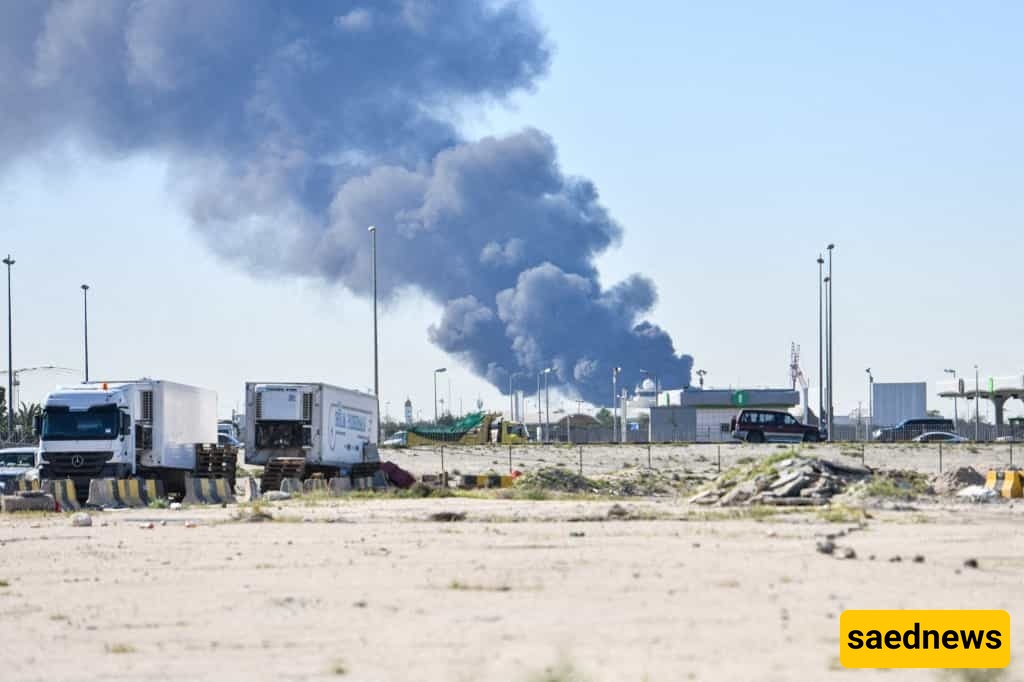
According to the political desk of Saed News, the Iranian newspaper Iran wrote: To understand the reasoning behind this strategy, one must first answer a fundamental question: Why has Iran allegedly focused more on Kuwait than any other country during this period? The article argues that the answer lies in a combination of military, geographic, economic, political, and psychological factors.
Kuwait is located less than 200 kilometers (about 125 miles) from Iran’s coastline. According to the article, this close proximity makes it an ideal target for relatively inexpensive but effective missiles and drones. It claims Iran could carry out strikes without directly confronting the U.S. Navy in the Persian Gulf, making Kuwait an "easier" strategic target.
The article states that Kuwait hosts more than 13,000 American troops and key military facilities, including Ali Al Salem Air Base and Camp Arifjan. It argues that by targeting Kuwait, Iran would effectively strike at the core of the U.S. military presence in the region while avoiding direct naval confrontation with U.S. forces.
The article notes that Kuwait relies on desalination plants for over 90% of its drinking water. It claims that attacks on such infrastructure, especially during the extreme summer heat, could severely disrupt daily life. According to the article, this would signal that if Iran's critical infrastructure were attacked, neighboring countries' essential services could also be placed at risk.
The article argues that, unlike Saudi Arabia or the United Arab Emirates, Kuwait has more limited military capabilities and relies heavily on U.S. protection. It suggests this imbalance makes Kuwait a lower-risk target for Iran because it is less likely to launch significant retaliatory action on its own.
According to the article, attacks on Kuwait would be intended to demonstrate that the U.S. security umbrella in the Gulf is neither absolute nor impenetrable. It adds that even Kuwait, which has generally maintained relatively balanced relations with Iran and opposed normalization with Israel, would not be exempt because it hosts American forces. The article portrays this as a warning that close military cooperation with Washington carries substantial security risks.
The article further claims that targeting Kuwait could create divisions among Gulf Arab states. It argues that Kuwait's traditionally moderate policy toward Iran places it in a difficult position, forcing it either to reconsider hosting U.S. forces or to accept the security costs associated with doing so. The article suggests this pressure could encourage other regional states to reassess their security relationships with the United States.
In conclusion, the article argues that this multidimensional strategy is intended to establish new rules in any confrontation with the United States. It presents attacks on Kuwait not only as military actions but also as a declaration that any strike on Iran's critical infrastructure would be met with similar or stronger attacks against key U.S. partners in the region. According to the article, Iran seeks to leverage Kuwait's geographic, economic, and political vulnerabilities to increase pressure on Washington and its regional allies, while raising the security costs for countries aligned with the United States. The article concludes that this approach could significantly increase regional tensions and make the future stability of the Gulf more uncertain.