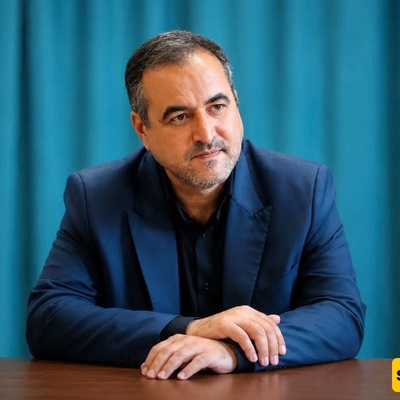
SAEDNEWS: U.S. Vice President J.D. Vance disclosed details of agreements with Tehran, confirming a $300 billion plan for Iran’s reconstruction and outlining Washington’s conditions for foreign investment. He also criticized Israel’s military actions, stating that U.S. interests do not always align with those of Tel Aviv.

According to the political news service of SaedNews, recent remarks by “J.D. Vance,” the Vice President of the United States, have shed new light on recent agreements and memoranda of understanding between Tehran and Washington. In an interview with the “Allie Beth Stuckey” podcast, he directly addressed issues that had previously remained unclear—from details of a massive investment package for rebuilding Iran’s economy to an unfiltered critique of Israel’s interference in the negotiation process.
One of the most important parts of Vance’s remarks was his official confirmation of a $300 billion financing plan for Iran. According to him, under Article 6 of the recent agreement, the United States is obligated to work with Gulf countries to secure this amount for a “program of reconstruction and economic development in Iran.”
The U.S. Vice President claimed that Washington has no objection to other countries investing in Tehran, provided that Iran changes its behavior. He stressed:
“If Iran behaves like a normal country, we will allow countries such as Qatar and the UAE to invest inside Iran. Otherwise, we will not even allow a one-billion-dollar investment for building a power plant.”
Key points of this financing plan include:
Preventing a repeat of the JCPOA experience: This clause is specifically designed to prevent sudden capital withdrawal or U.S. obstruction after sanctions relief.
Role of regional countries: Ongoing negotiations with Qatar and the UAE are part of this framework, and there is also the possibility of China joining this economic consortium.
Compensation funding: A significant portion of war-related damages and reconstruction costs will be financed through this mechanism.
Another part of the interview focused on maritime and field developments. During the “third imposed war,” Iran reportedly closed the Strait of Hormuz to hostile ships in response to attacks, while making passage for other vessels conditional on payment and full coordination.
However, Vance stated that under Articles 4 and 5 of the new memorandum of understanding, the alleged illegal maritime blockade by the United States has been lifted, and Iran has also reopened the Strait of Hormuz. He described the outcome of this agreement as vital for the U.S. economy, saying:
“The reopening of the Strait of Hormuz caused oil prices to fall from $126 to around $75. Also, for the first time since March, gasoline prices in the U.S., which averaged $4.60, dropped below $4.”
Vance added, with a hint of irony toward critics of the agreement:
“Critics said Iran would never allow the Strait to remain open without a cost, but in recent days the highest volume of oil since the start of the conflict has passed through this waterway, and Iranians neither attacked any ship nor imposed fees. The critics were wrong.”
Perhaps the most controversial part of J.D. Vance’s remarks was his firm stance on Israel’s actions. While acknowledging Israel as a close partner like the United Kingdom or France, he emphasized that U.S. interests must remain independent.
Vance stated:
“Israel is a good partner like the UK or France, but that does not mean our interests will always align. When we make decisions, they must be based on American interests, not others’. Israel’s opinion matters, but ultimately they are separate from us.”
He also revealed deep disagreements between Donald Trump and Tel Aviv regarding Lebanon. According to Vance, Israeli attacks on Lebanon repeatedly disrupted U.S. efforts in negotiations with Iran:
“Sometimes we were on the verge of a major breakthrough in negotiations when suddenly a large explosion occurred in a civilian center in Beirut and unrelated individuals to Hezbollah were killed. This greatly frustrated Trump. This is unacceptable, and Israelis must respect the peace process that is good for the entire region.”