SAEDNEWS: An Israeli missile attack on Beirut’s Dahiyeh district and the assassination of a Hezbollah commander, carried out on the very day of the announcement of an Iran–U.S. agreement that was described as a key condition for ending the war, has pushed the Middle East to the brink of explosion.
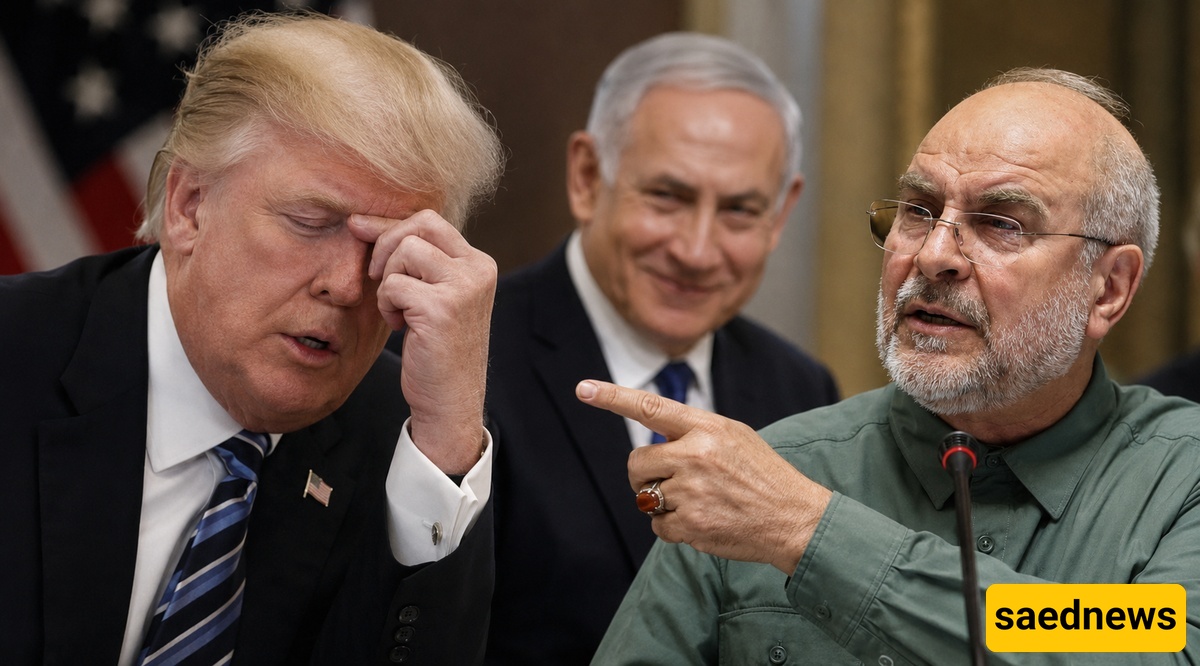
According to the political service of Saed News, on a day when global media were awaiting a possible key diplomatic agreement between Washington and Tehran aimed at ending regional conflicts, Israeli Air Force fighter jets struck the heart of Beirut’s Dahiyeh district, disrupting the situation. The attack once again violated the ceasefire and triggered a wave of military alert across the region.
According to reports from field journalists in Lebanon, Israeli forces targeted the al-Ghobeiry area in southern Dahiyeh, Beirut. In the attack, a five-story residential building was bombed, which according to initial figures has so far resulted in one death and four injuries.
Israel’s Channel 12 explicitly claimed that the target of the strike was one of the key figures of the resistance:
“The individual targeted in this airstrike is a senior commander and head of Hezbollah’s communications system.”
The Israeli army, in a joint statement with Netanyahu and the defense minister, also claimed that the attack was carried out in response to Hezbollah drone flights over northern occupied Palestine, and that a Hezbollah command and planning center had been destroyed.
The strategic point of this incident is its timing. The attack took place precisely on the day when diplomatic understandings between Iran and the United States—considered the main condition for ending the war—were expected to enter an implementation or official announcement phase.
Hebrew-language media, including the newspaper Maariv, revealed that this action by Israel was not accidental and was intended to send the message that Israel does not accept any restrictions in Lebanon. This move, described as highly escalatory, has severely challenged the policies of U.S. President Donald Trump, who has been pushing for an agreement with Tehran, and may overshadow ongoing negotiations. Reports indicate that the Israeli military informed only the U.S. Central Command (CENTCOM) shortly before the strike.
The aftermath of the attack immediately affected senior Israeli officials. Israeli media reported that Tel Aviv is preparing for a potential and possibly heavy response from Iran involving a wave of missile strikes. Accordingly:
Alert levels across all military units and structures in Israel have been raised to the highest level.
Prime Minister Benjamin Netanyahu reportedly canceled a public appearance for security reasons and out of fear of a possible missile response from Iran or Lebanon, and went to a secure shelter.
With the increasing risk of a renewed full-scale regional war, diplomatic sources report intensive emergency efforts by several regional countries. In this context, strong diplomatic pressure from Qatar and Pakistan has begun in order to control the situation and prevent the collapse of ongoing agreements and negotiations.
It remains to be seen whether Trump’s diplomacy can contain the consequences of this strike, or whether the region will enter a new phase of direct confrontation.