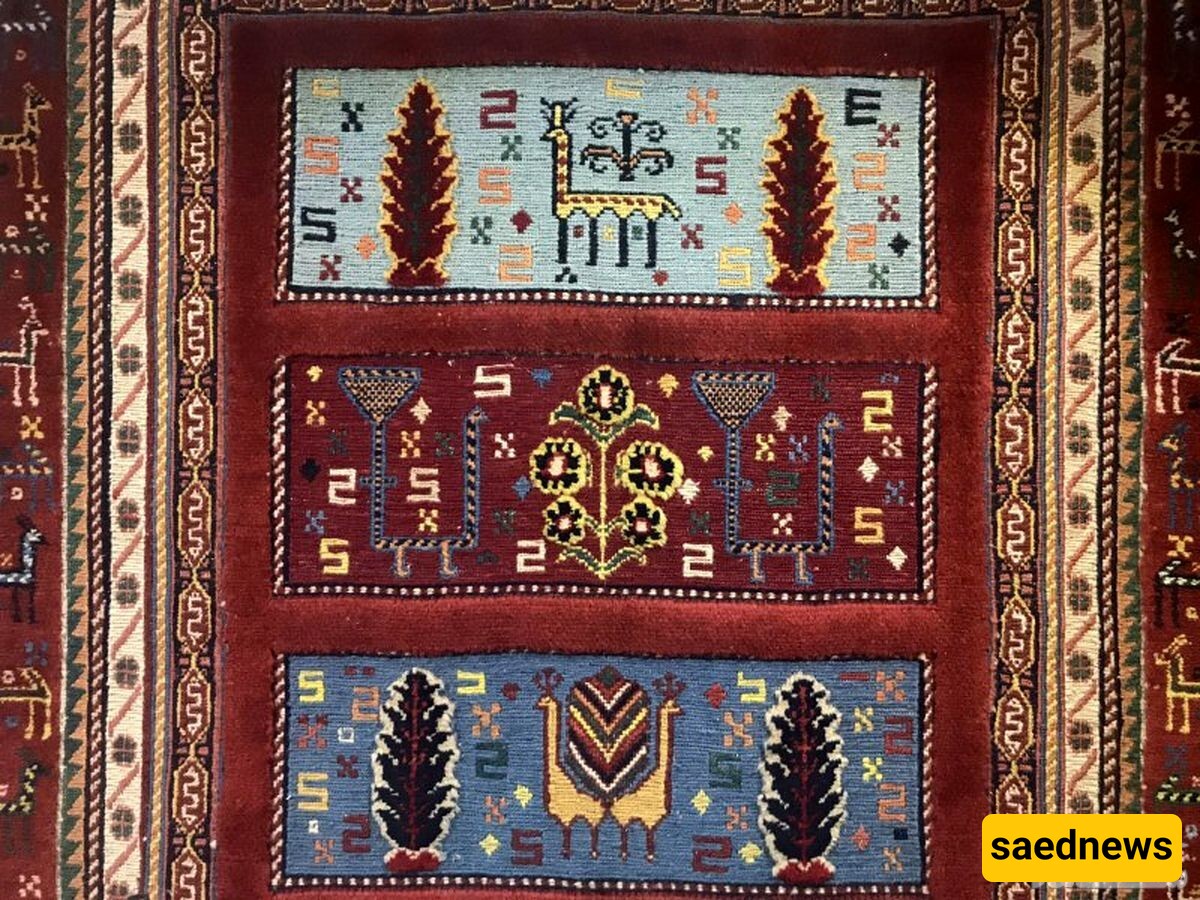
SAEDNEWS: **Shiriki Pich** is a type of rug woven in the Gilan province. Stay with Saed News to get acquainted with this art.
According to SAEDNEWS, Rug weaving is one of the ancient crafts in Iran, with historical evidence dating back over 5,000 years. A rug, in essence, is a flat-woven mat without knots. Rug weaving has been predominantly a profession of nomadic tribes, especially in southern Iran, since ancient times. Today, Sirjan in the southwest of Kerman province is best known for its rug weaving, and the quality, excellence, and innovation in the designs and colors produced in this city led to its registration as a Global City of Handwoven Rugs by the World Council of Handicrafts.
Shiriki Pich
Shiriki Pich is a type of rug woven in Iran, falling under the category of practical handicrafts in the woven fabrics group. It is also known as "Shirki Pich Rug" and locally, its finer version is called "Needle Rug." Shiriki Pich, or Needle Rug, which is famous in Sirjan, differs from traditional rugs in that it is a knotted woven piece and is considered a hybrid between a carpet and a rug. The weaving of Shiriki Pich dates back to the arrival of the Afshar and Bojaghchi tribes to Kerman during the Safavid era and later in the Afsharid period.
There are many theories about the name Shiriki Pich. Some suggest that "Shiriki Pich" refers to a saddle blanket, possibly indicating its first use. "Pichbafi" is a type of rug weaving, and "Shiriki" may refer to the knotting technique, which is done in pairs or "shared" by two weavers. This woven piece is made from wool yarn, and its weaving frame is similar to that of a regular rug, but its weaving technique resembles that of a carpet. Two main types of knots specific to Sirjan rugs are the base knot and the "Abduzi" knot.
Tools and Materials
As with other woven fabric techniques, specific tools are used. The weaving frame measures 2.5x1.20 meters or 3.5x2 meters, made from two parallel wooden or metal beams with vertical beams placed in between. Two perpendicular sticks called "Gord" and "Pas Gord" separate the warp and weft threads. Wool yarn is used, and in some cases, a silk yarn is also used for the fine weft. The weaving frame resembles that of a rug, and tools such as a "Daftin" and "Shaakh" (used to adjust the warp threads) are also employed. The main material used is wool, and the yarn used for the weft is either wool or colorful silk.
Color in Shiriki Pich
The colors used in Shiriki Pich rugs are typically deep and rich tones, including:
Lacquer Red (from madder root, poppy, cherry, and red seed)
Blue (indigo and eggplant peel)
Yellow (saffron, turmeric, and pomegranate peel)
Orange (dyed with pomegranate peel)
Dark Green (walnut leaves, yellow + indigo)
Brown (natural, tobacco, walnut peel, sumac)
Black (natural, walnut peel)
Designs and Techniques
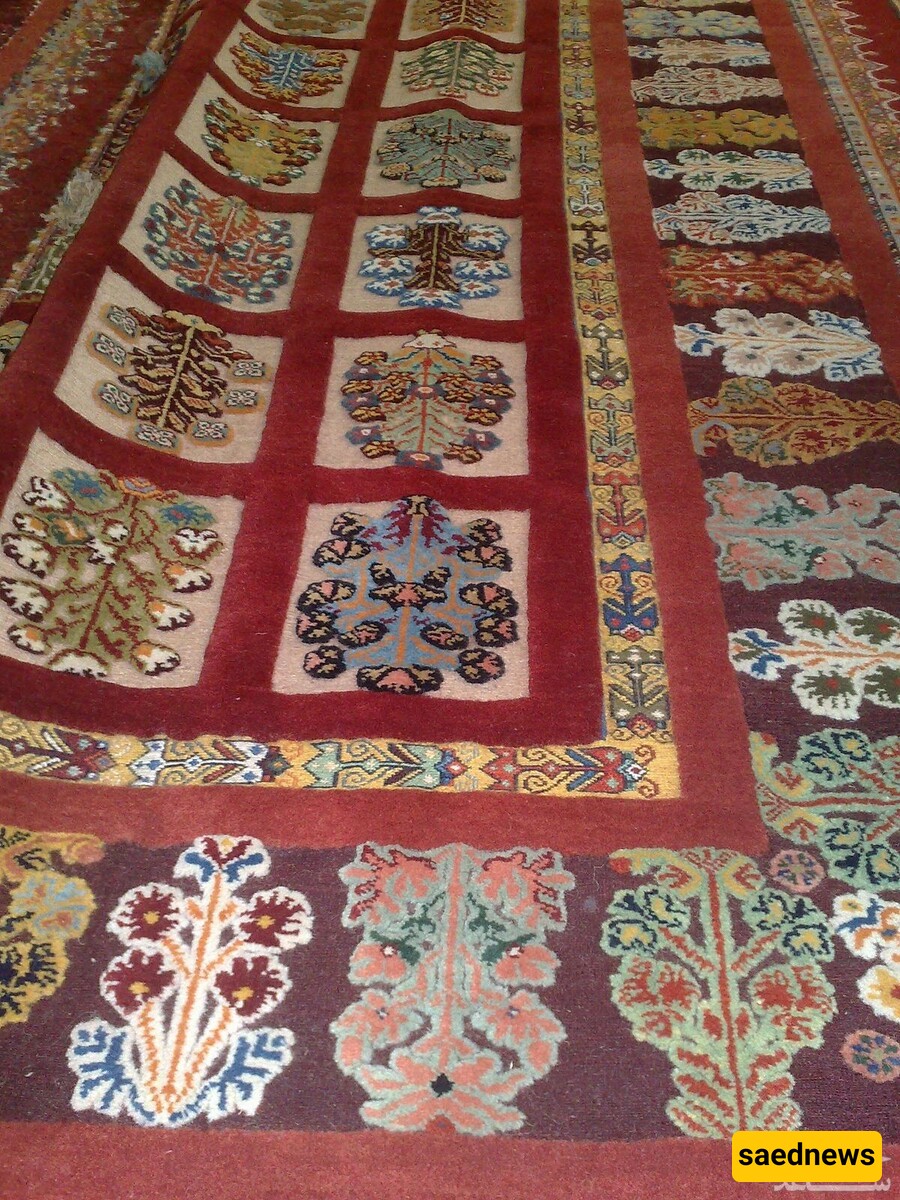
At first glance, Shiriki Pich rugs are known for their dense, small designs. They are highly detailed and often use mixed patterns. The weaving of these rugs is fine and even, and one can see the knots on the back. Unlike other rugs, the Shiriki Pich is not pile woven, and the weft threads are visible on the back.
Weight and Density
When you pick up a Shiriki Pich rug, it is noticeably heavier compared to other types of rugs like Jajim. This rug is the only one woven symmetrically and with knots. Unlike Jajim or Shahsavan rugs, which are often double-sided, the Shiriki Pich is primarily used as a mat and not for other purposes like bags or coverings.
Weaving Method
In Shiriki Pich weaving, extra weft threads remain free at the back of the rug. The weaving method is most commonly found among nomadic tribes, who sometimes refer to these rugs as "Varni." The design is created without a plan, relying on the weaver’s memory. Unlike regular rugs, where the design is made by inserting the weft, in Shiriki Pich, the design is formed by wrapping the yarn around the warp threads. The rug's back reveals all the wefts, and these rugs are usually used as floor coverings.
Conclusion
Shiriki Pich is a handicraft from Kerman province, produced in Sirjan, Kerman city, and in rural and nomadic areas. It is taught in individual and group workshops focused on Shiriki Pich weaving.