SAEDNEWS: East Azerbaijan Province is home to beautiful tourist attractions and highly talented artisans. With their skilled hands, these artists create a wide variety of exquisite handicrafts.
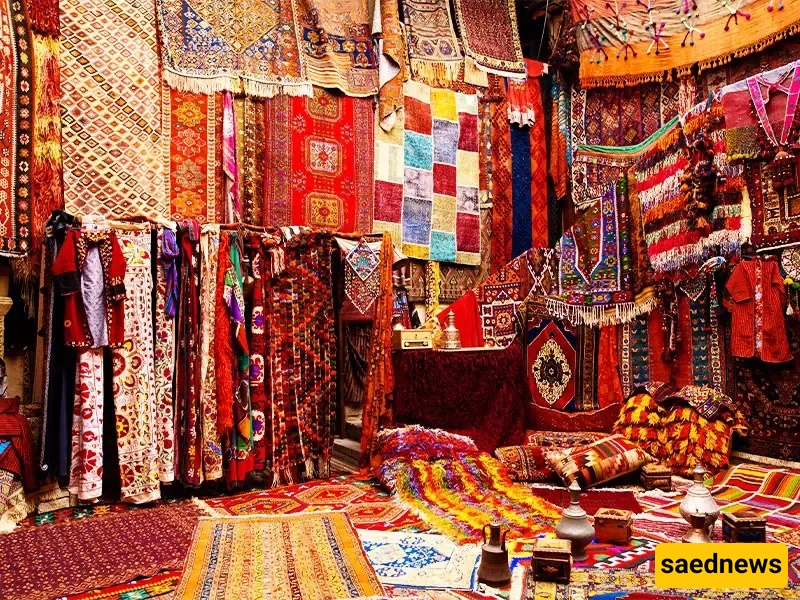
According to Saednews, Thanks to its distinctive climate and beautiful tourist attractions, East Azerbaijan Province welcomes many visitors from different parts of Iran throughout the year. The province is also one of Iran’s important centers for handicraft production, with around 80 different types of traditional crafts.
Among the region’s well-known handicrafts are shawls, jajims, rugs, saddlebags, kilims, woolen and silk fabrics, embroidery, crochet work, silverwork, towel and blanket weaving, floor coverings, shoemaking, pottery, ceramics, and various types of beautifully designed baskets. Below is an overview of some of the most notable traditional arts practiced by artisans in East Azerbaijan.
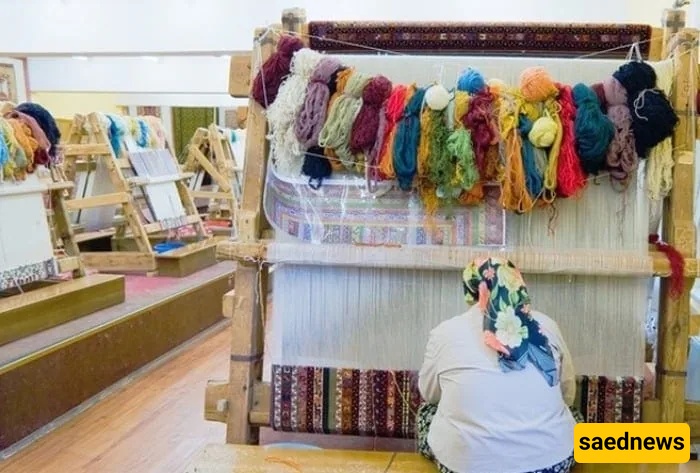
Carpet weaving is one of the oldest and most valuable handicrafts in the region, with a history dating back to the Median period. This art reached a particularly high level during the Timurid and Safavid eras. East Azerbaijan remains an important carpet-producing region, and many of its fine carpets are exported.
Local carpet weavers create intricate designs featuring Shah Abbasi flowers, floral and medallion motifs, prayer patterns, animals, and colorful silk details. Examples of these remarkable works can be found in major museums around the world.
Today, carpets from the province are commonly produced with designs such as Herati, Gol-e Farang, Qur’anic frames, landscape scenes, Kheshti patterns, Shah Abbasi, prayer niches, vase motifs, hunting scenes, and single-pattern compositions.
In traditional embroidery, colorful silk threads are stitched onto fabric to create designs that are often imagined and developed directly by the artisan. Some of the finest examples are produced in Mamqan, about 40 kilometers from Tabriz.
Knitting is also popular in the province. Traditional knitted products include hats, coasters, belts, shoes, and tablecloths.
Miniature painting is a traditional form of Persian art with a long history in Iran. It has been closely associated with philosophy, mysticism, and historical themes. One of its defining characteristics is its careful attention to detail and the artistic representation of the subject.
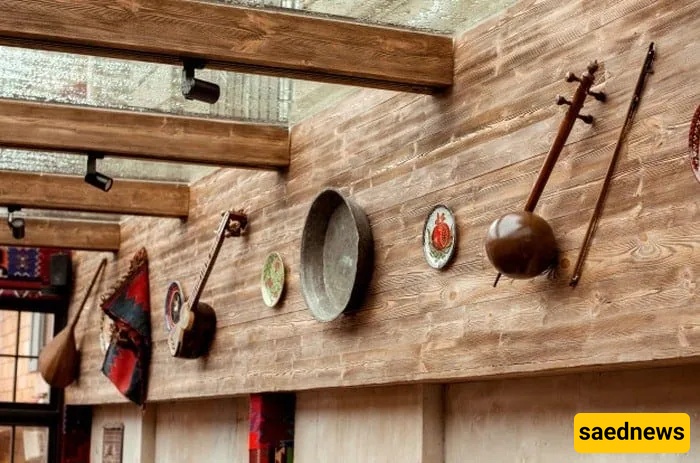
Music in Azerbaijan has roots extending back thousands of years, and the region has produced many skilled musicians and instrument makers. Traditional instruments are often made from woods such as mulberry and walnut.
Among the instruments traditionally crafted by local masters are the ashik instrument, choghur or qopuz, kamancheh, balaban, tar, qara ney or clarinet, garmon or accordion, naghara, ghaval or frame drum, dohol, sorna, and various forms of traditional accordion.
Leather production has a long history in Tabriz. Traditionally, leather has been used to make clothing, containers, footwear, and other everyday products. The production process involves animal hides treated with various natural and chemical materials.
Different types of leather include verni, light, medium-heavy, heavy, chrome-tanned, and vegetable-tanned leather. The first leather factory in Tabriz was established in 1931.
Stone carving has a very long history. The process involves cutting and shaping stones, engraving decorative designs onto their surfaces, and then polishing the finished work.
Stone carving has been used in many ancient civilizations, and historic monuments such as Persepolis and the Egyptian pyramids demonstrate the long-standing importance of stone craftsmanship.
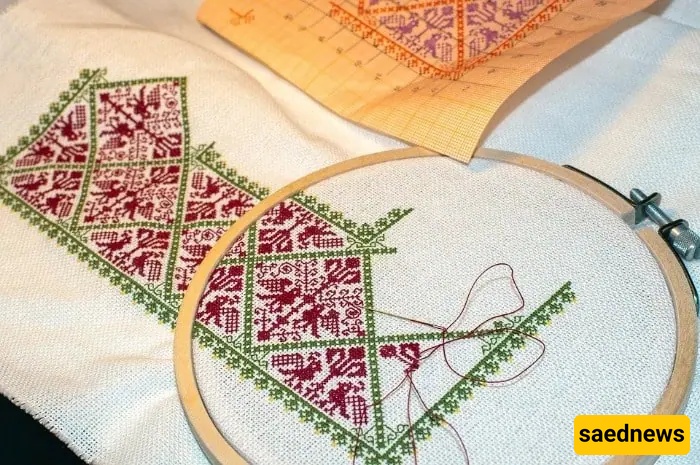
Needlework is another highly valued textile art in East Azerbaijan. Mamqan is known for its skilled female artisans, who use small needles and silk threads to create products such as tablecloths, belts, shoes, coasters, and cushions.
The patterns are often inspired by nature and are traditionally embroidered on fabrics such as calico and dabit.
Silver craftsmanship has traditionally been practiced in Tabriz. During the past several decades, numerous workshops and more than a hundred artisans were involved in this delicate craft. However, the traditional silverworking industry has gradually declined and is now less widely practiced than in the past.
Baskets are mainly used for carrying fruit, bread, and other goods. They are traditionally made from flexible branches and wood from trees such as jujube, elm, cherry, and quince.
In Maragheh and its surrounding villages, attractive baskets are also made from local wood. In areas such as Marand, Bonab, Bahram, and Khoshkesari, wheat stalks are traditionally used to weave baskets.
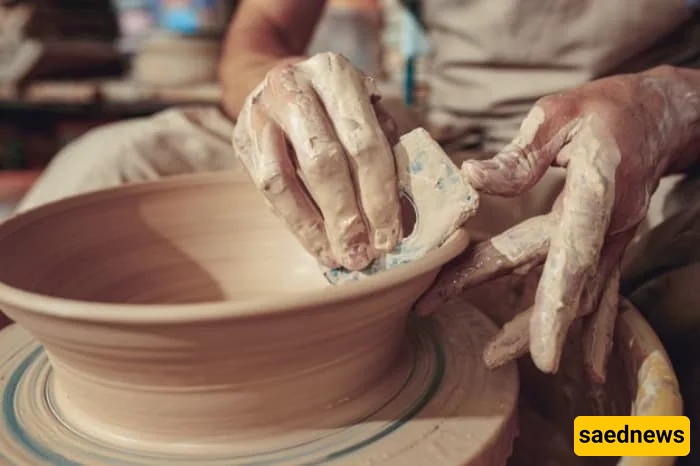
Pottery and ceramic production has developed particularly in Tabriz and Zonuz because of the availability of kaolin, or china clay, as well as the presence of experienced craftsmen.
Kaolin is also used to produce porcelain substitutes that resemble traditional porcelain tableware.
Gemstone cutting is another distinctive handicraft practiced in the region. Artisans first select a suitable rough stone and determine the desired design. Modern three-dimensional processing and photography can be used to identify the most suitable cutting pattern while minimizing material loss.
The selected rough stone is then attached to a specialized holder, known as a dop, using a mostly plant-based wax. The artisan subsequently shapes and cuts the stone according to the chosen design.
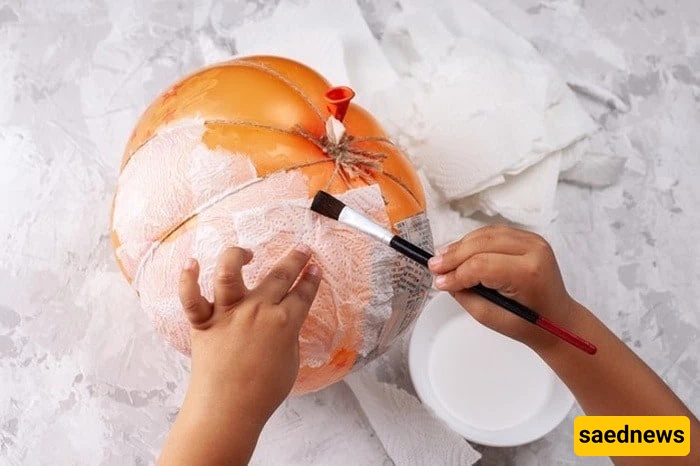
Papier-mâché and lacquer work are traditional arts that have been practiced for centuries. In the past, these techniques were commonly used to decorate pen cases and small boxes.
Today, the craft is also applied to decorative objects such as combs, mirrors, picture frames, and book covers.
Kolahgee, also known as batik printing, is a traditional textile art practiced in several Asian countries, including India, Sri Lanka, Indonesia, and Thailand. A local form of this craft is particularly associated with Osku and Tabriz.
In this technique, patterns and colors are applied to fabric using wax and dyeing processes. One of the distinctive characteristics of Kolahgee printing is the creation of colorful vein-like patterns. These appear when the wax cracks and dye penetrates the fabric through the resulting lines during the dyeing process.
Tabriz has long been regarded as a center of artists and miniature painters and played an important role in the development of Persian miniature art. The city was associated with prominent masters such as Kamal al-Din Behzad.
In 1522, Shah Tahmasp traveled from Herat to Tabriz with Behzad and other young artists, helping initiate an important transformation in the region’s miniature-painting tradition.
In this artistic school, human figures became more inward-looking, while their proportions were somewhat enlarged. Greater attention was also given to landscapes, including rocks, skies, and trees, creating a distinctive visual style within Persian miniature painting.