SAEDNEWS: The Turkmen people are considered one of the most artistic and tasteful ethnic groups in Iran, and their handicrafts and artworks are rooted in the history and unique traditions of the Turkmen culture.
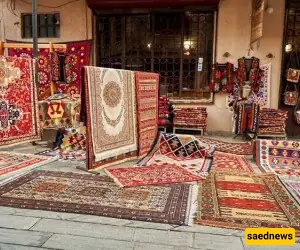
According to Saednews, The Turkmen people are one of the oldest ethnic groups in Iran, mainly residing in Golestan Province. They have a distinct culture, lifestyle, and set of traditions. The Turkmen people possess a strong sense of taste and artistic skill, which is clearly reflected in their handicrafts. These crafts are created with great precision and craftsmanship by skilled artisans and represent years of cultural heritage and civilization in the region. The following section introduces the handicrafts of Turkmen Sahra.
In Turkmen villages, women can often be seen weaving kilims. Turkmen women skillfully use wool, silk, and cotton along with tools such as looms, scissors, needles, and rods to weave beautiful kilims. They decorate them with various motifs such as chessboard patterns, animals, objects, plants, and sun designs. Turkmen kilims come in different types, including small kilims and door coverings. Products made through kilim weaving include horse coverings, bags, saddle bags, prayer rugs, doormats, and other items.
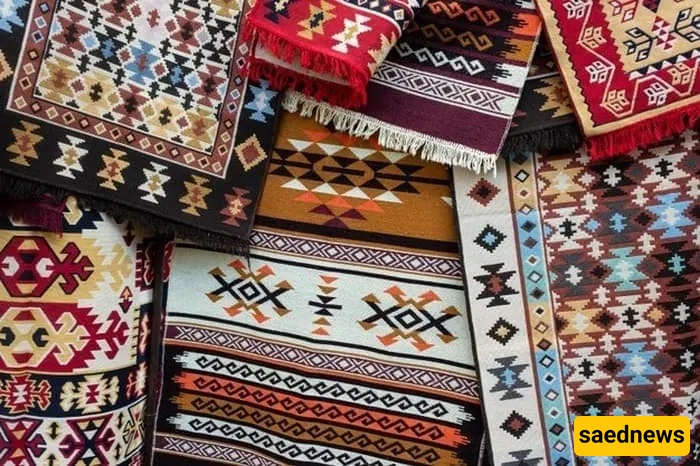
Another Turkmen handicraft is decorative cushions similar to small carpets, known as “qarchin.” These are decorated with red, gold, and white colors and come in sizes such as half a meter, one meter, and one and a half meters. They are sewn into a bag-like form and filled with materials like cardboard or similar fillers, then used as backrests while sitting. These cushions feature beautiful traditional patterns inspired by nature.
Traditional jewelry is highly popular among both Turkmen men and women. Men use it as decoration for clothing, while women use it to enhance their dresses and hair. It is believed that these ornaments have protective powers. In the past, they were made from gold, silver, and precious stones, but today they are mostly crafted from brass and other alloys. Heavy, intricately designed jewelry is especially popular and symbolizes pride, inner strength, and independence among Turkmen women.
The “törba” is a traditional Turkmen handicraft similar to a handbag. It is often hung inside traditional homes and used to store personal or kitchen items, or it is worn around the neck using a woven strap.
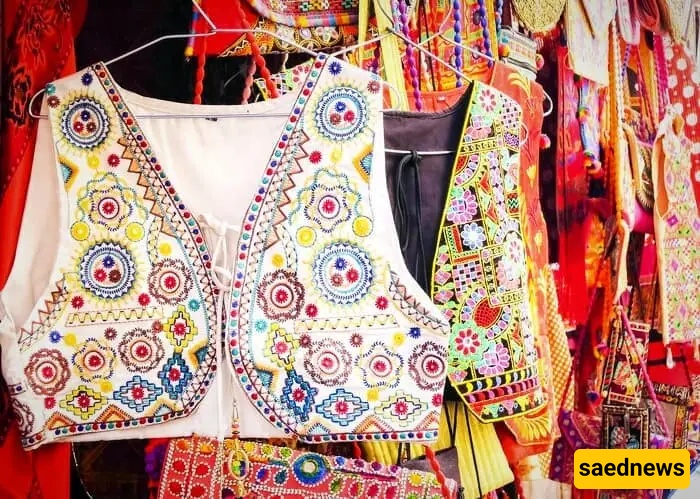
Turkmen women practice delicate embroidery during their free time and gatherings. This fine needlework is used to decorate hats, collars, cuffs, the front of dresses, sleeves, and the lower parts of trousers. It is one of the most refined forms of Turkmen handicrafts.
“Palas,” locally known as “Oydime,” is a type of woven floor covering similar to a carpet. It is usually used as a rug in rural homes. It is made from wool yarn and does not transfer ground moisture upward, which makes it especially suitable for traditional houses.
The Turkmen hat is an important part of traditional clothing for both men and women. For women, it symbolizes marriage and is worn under the headscarf, creating a slight raised appearance. Men’s hats are typically made from white sheep wool. These hats are recommended souvenirs when visiting Turkmen regions.
Turkmen people, like other Iranian ethnic groups, have their own traditional clothing. Men’s attire includes garments such as tunics, trousers, hats, and shoes. The “don” is a traditional long robe reaching below the knees, traditionally made from silk. Women historically wore silk dresses, often in raspberry red, known as “qermez koinek.” All Turkmen clothing is decorated with distinctive traditional patterns.
Carpet and rug weaving is one of the most important handicrafts of the Turkmen people, mostly performed by women. It is not only an art form but also a source of livelihood. Turkmen carpets use Turkish-style knots and feature traditional motifs, each representing a specific tribe. Their geometric patterns reflect historical events such as wars, migrations, and victories experienced by the Turkmen people.
Silk weaving is one of the most beautiful Turkmen handicrafts, dating back to the Safavid era. Silk threads are produced from silkworm cocoons and used to make scarves, carpets, towels, and silk fabrics. These textiles are colorful and widely used in traditional clothing.
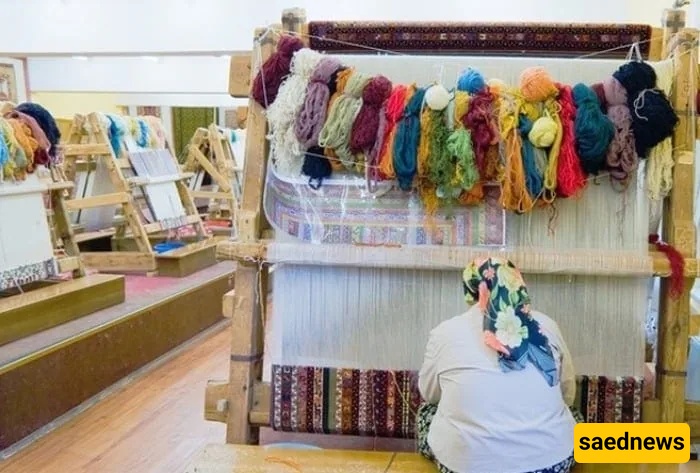
Another traditional craft is the weaving of a high-quality fabric called “Keteni,” known for its durability. It is often used in bridal clothing due to its strength and beauty.
Wooden tools and household items are also part of Turkmen handicrafts. Traditional wooden objects include various household utensils used in rural Turkmen homes.
Felting is one of the simplest forms of carpet-making and a well-known traditional craft. Although its everyday use has decreased, it remains an important cultural symbol and is still widely displayed in handicraft exhibitions. It is also used as prayer mats and decorative items.
If you want, I can also turn this into a shorter travel article or a brochure-style version.