Saed News: The United States Department of the Treasury announced that it has imposed new sanctions on oil sales linked to the Iranian military; a move that, according to Washington, is aimed at preventing the rebuilding of Iran’s armed forces and curbing threats from the country against the United States and its allies in the region.
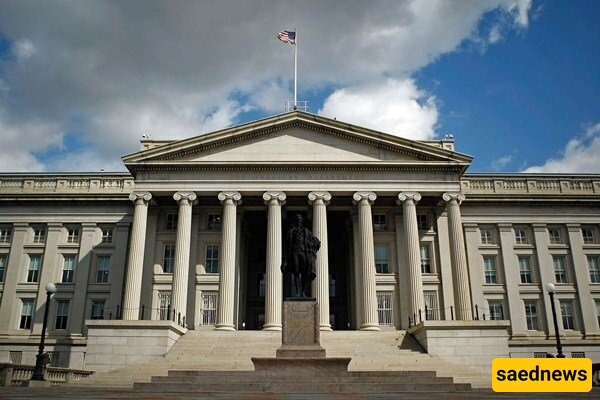
According to SAEDNEWS, Anadolu Agency wrote: “In a statement issued by the U.S. Treasury Department on Thursday, it was said that the Office of Foreign Assets Control of this ministry has taken further actions against Iran’s military oil sales network.”
The statement alleged: “Revenue from these sales enables Iran to rebuild its military capabilities and continue threatening the United States and its regional partners.”
The U.S. Treasury claims that the Iranian military generates income through crude oil sales using a network of shell companies. In this context, the company “Sepehr Energy Jahan” was mentioned, which, according to Washington, acts as the oil sales arm of the General Staff of Iran’s armed forces.
In this statement, only the name “Jahan Energy Company” is mentioned as a sanctioned entity, and no other affiliated companies were named.
U.S. Treasury Secretary Scott Bessent claimed in response to this decision that the department will continue to increase pressure on Iran’s oil sales so that, according to him, Iran and its military are deprived of the financial resources needed to threaten U.S. allies in the Middle East.
In another part of the report, reference is made to recent tense developments between Iran, the United States, and Israel, claiming that clashes occurred in recent months and led to a temporary ceasefire. It also mentions restrictions imposed on energy routes and developments related to the Strait of Hormuz.
At the end, it refers to recent statements by the U.S. President regarding progress in negotiations with Iran, according to which a large part of the agreement is being finalized and the issue of reopening the Strait of Hormuz is also on the agenda of talks.