Saed News: A psychological look at rationality shows how the social pressure to remain calm and manage others’ emotions gradually becomes a hidden cost to mental health.
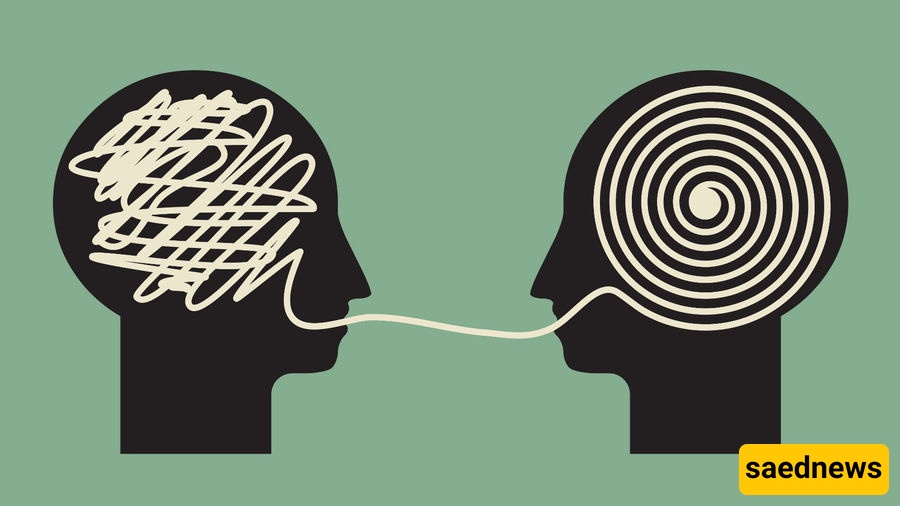
According to SAEDNEWS, citing Psychology Today, we all know at least one person who is always described as “rational.” Someone who stays calm under pressure, reduces tension, and in any situation at work, home, or elsewhere, tries to make sure “nothing shakes the water.” They anticipate others’ needs, apologize before expressing their own requests, and silently absorb psychological pressure so that no one else becomes upset.
Being a “rational person” appears to be a compliment. But in reality, it is often a hidden demand: stay quiet, stay calm, and adapt—regardless of what it costs you. Over time, this continuous self-restraint can lead to exhaustion, resentment, and a feeling of being ignored.
In common definitions, being rational means behaving fairly, thoughtfully, and logically. But in practice, it often means unconditional compliance, constant support, and excessive adaptability to maintain peace. The “rational person” is the one who calms others, resolves conflicts, and takes on the role of peacekeeper at work, among friends, and within families.
However, rationality often comes with unwritten rules: don’t express your emotions, don’t cause trouble for others, don’t escalate conflict, and don’t let your feelings disturb anyone. These rules appear to preserve peace, but in reality they often lead to self-suppression.
“Chronic rationality” is not a formal psychological disorder and has no clinical diagnosis. However, related concepts exist in psychology, including “over-control,” “emotional suppression,” “conflict avoidance,” and even “people-pleasing” or “excessive appeasement.” The common thread among these patterns is the belief that being acceptable or appearing correct matters more than being authentic. Importantly, such behavior is often socially rewarded.
In contrast, being “irrational” is typically defined as being difficult, demanding, problematic, or troublesome. This label may simply result from expressing emotions such as anger, frustration, pain, anxiety, or grief—or even from expressing an honest opinion. In many cases, the phrase “be rational” is actually a disguised accusation, signaling that your emotions are seen as inconvenient or threatening to others.
There is a clear double standard in emotional expression, especially between men and women. Research shows that women are far more likely than men to be criticized for expressing anger, while men’s anger is often interpreted as “passion” or “assertiveness.” Empirical studies have shown that when women express anger, their social influence often decreases, whereas the same behavior in men may maintain or even increase their influence.
As a result, calm, non-threatening, and controlled behavior is more rewarded in women than in men. Thus, rationality becomes a gendered burden. Women are expected not only to manage their own emotions but also to regulate the emotional atmosphere around them—an unspoken but heavy responsibility.
Although rationality seems like a social virtue, it requires a large amount of “invisible psychological labor.” This role places a silent but heavy burden on individuals who must always remain calm, flexible, and self-controlled. Over time, this self-restraint can lead to emotional fading, where individuals gradually lose touch with their own feelings and needs.
Chronic rationality often overlaps with people-pleasing. The person becomes a “yes-sayer,” expected to solve problems, reduce tension, always be available, and help others—while asking for very little in return. The unspoken message is: you should manage it, you should adapt, you should not ask for too much. And if you don’t do it, who will?
For some people, chronic rationality is a strategy of conflict avoidance rooted in early life experiences, such as fear of rejection or survival mechanisms formed in childhood that continue into adulthood. It may also reflect deeply ingrained gender norms that teach emotional restraint and caregiving from a young age, especially for girls.
But this role comes at a cost. Constant emotional suppression can lead to psychological fatigue, accumulated resentment, and delayed emotional outbursts. In the long term, it may even weaken one’s sense of identity. When someone is constantly focused on managing others’ needs and reactions, their own needs easily become marginalized or ignored. This imbalance can ultimately affect mental health, leading to chronic stress, anxiety, burnout, and depression.
If we recognize these patterns in ourselves, the next question is: what can be done? Seeking support from a therapist can help build healthier strategies and challenge automatic suppression-based reactions. Practicing assertive communication—setting clear boundaries with colleagues, family members, and friends—is an important step. Learning to say “no” is one of the most crucial skills.
Additionally, accepting imperfection is important. Having at least one safe space or person with whom one can be completely authentic without judgment can make a significant difference. Mindfulness and self-care can support this process, but sometimes something simpler and harder is needed: allowing ourselves to take up space, sometimes be inconvenient, and accept the full complexity of being human. Rationality has its place, but no one should have to disappear in order to prove their worth.