SAEDNEWS: Many children develop a strong emotional attachment to a favorite doll or familiar soft object. Known in psychology as a transitional object or comfort object, this attachment is a natural and universal phenomenon.

According to Saednews, Many parents have witnessed a familiar scene: a one-year-old gently rubs the corner of a soft toy between two fingers to soothe themselves; a toddler refuses to leave the house without their teddy bear; or a five-year-old secretly slips their old, faded blanket into their schoolbag. At first glance, these behaviours may seem like simple habits or signs of being overly dependent. However, developmental psychology recognises them as a phenomenon known as a Transitional Object or Security Object.
Children’s attachment to dolls and comfort objects is a natural and widespread phenomenon. Researchers have reported that more than 60% of children under the age of seven across different cultures develop attachments to such objects.
This article explores the deeper aspects of childhood attachment, from its neurological and emotional foundations to the distinction between healthy dependence and potential warning signs. If you want to understand why children become attached to their dolls, when this bond is beneficial, when parents should be concerned, and how to encourage independence without causing emotional distress, read on.
A child's attachment to a doll is an enduring emotional connection with a familiar, soft, and tangible object that serves a purpose beyond ordinary play. This object may be a doll, teddy bear, old blanket, small pillow, or even a piece of fabric with a distinctive smell.
What makes these objects different from ordinary toys is their consistent sensory qualities: their softness, scent, weight, and familiar appearance.
Common signs of this attachment include:
Strong reactions to separation: Crying, restlessness, or refusing to sleep or eat when the object is unavailable.
Personal rituals: Rubbing the doll's ear, smelling it, or placing it in a particular position before bedtime.
Resistance to washing: Hiding the doll during washing to preserve its familiar scent.
Rapid emotional soothing: Becoming calm within minutes of hugging the object during stressful situations.
Nurturing behaviour: Putting the doll to sleep, feeding it, or comforting it during periods of family tension.
These behaviours generally emerge as part of normal development, and their intensity may be associated with the level of stress in the child's environment.
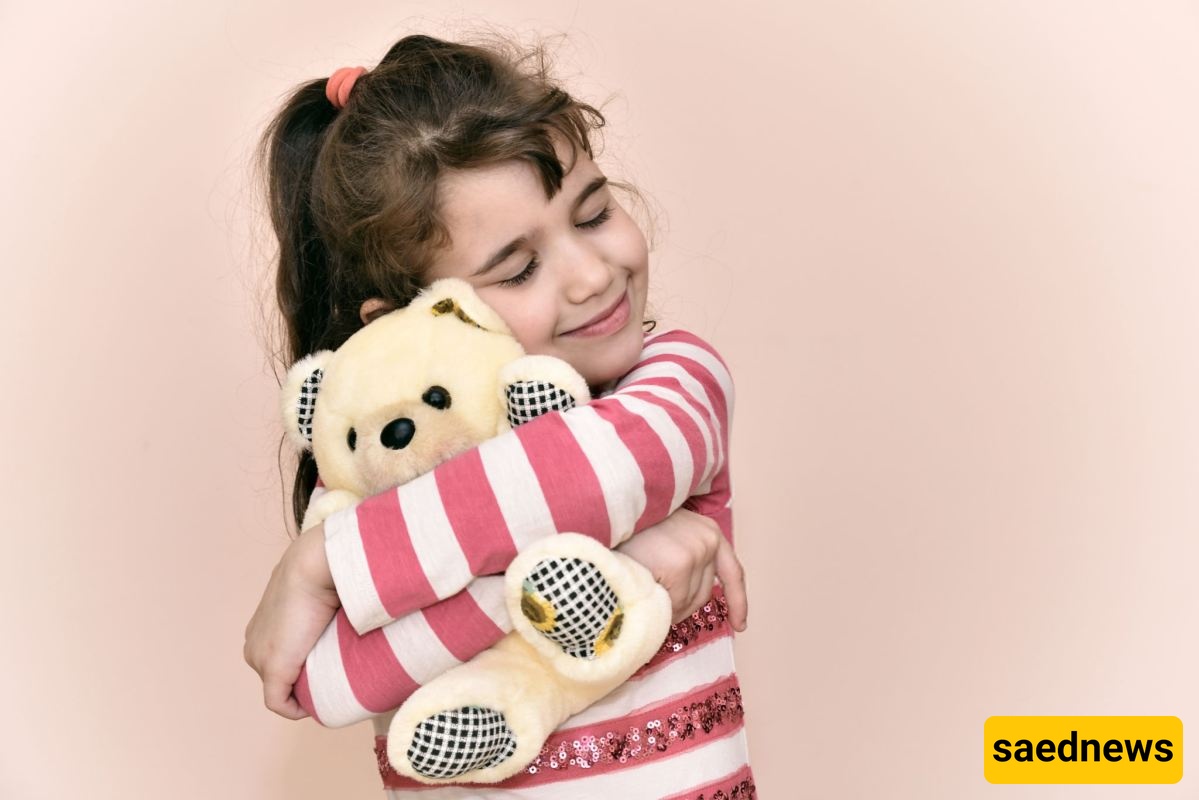
Research suggests that children typically select a security object between the ages of six and twelve months. However, their emotional attachment to it often reaches its peak between 18 and 24 months.
This timing is not coincidental. During this developmental period, children experience two major changes simultaneously: learning to walk and move independently, and beginning to develop emotional separation from their primary caregiver.
There is no significant difference in this attachment between boys and girls. Although some older studies reported minor gender differences, more recent research has not consistently confirmed these findings.
To understand why children become attached to their dolls, it is important to revisit the classic work of British psychoanalyst Donald Winnicott, particularly his 1953 paper, Transitional Objects and Transitional Phenomena. In this work, he introduced a concept that has since become an important part of developmental psychology.
Winnicott believed that infants initially cannot distinguish clearly between their internal world and the external world. In the infant's mind, the mother is experienced as an extension of the self.
However, between approximately four and six months of age, babies gradually begin to recognise that their mother is a separate person who can be absent and is not always available. This realisation represents one of the child's earliest experiences of anxiety.
At this stage, the child may choose an object that belongs to the external world but gives it a deeply personal, emotional meaning. This object exists in an intermediate space between reality and imagination.
That is why a child may regard a doll as entirely their own while also responding to it as though it has a meaningful presence in the outside world.
Winnicott considered symbolic representation the primary function of a transitional object. The doll becomes a symbolic substitute for the mother's presence. By holding it, the child learns to tolerate the mother's temporary absence and gradually develops an internal capacity to cope with being alone.
This ability eventually contributes to what we understand as emotional regulation in adulthood.
An important detail in Winnicott's theory is that the transitional object should be treated with respect. Parents should not interrogate children about what the object means to them, wash it against their wishes, or use it as a disciplinary tool. It should neither be excessively glorified nor dismissed.
One question parents frequently ask is: "If I am here, why does my child still seek comfort in their doll?"
The answer lies in the concept of predictability.
Mothers and fathers sometimes feel tired, talk on the phone, or become occupied with household responsibilities. They are human beings whose availability and responses naturally vary.
A doll, however, is always familiar and predictable. It has the same smell, texture, and appearance, and it never becomes upset or unavailable because of its own emotions.
Research by Richard Passman at the University of Wisconsin found that children who had access to security objects cried less, settled more quickly, and learned more effectively in educational and laboratory situations.
These findings suggest that a security object does not compete with the mother. Instead, it serves as a complementary tool that helps regulate emotional distress when direct parental comfort is temporarily unavailable.
Put simply, a comfort doll can function like a portable source of reassurance: a familiar and consistently available reminder of safety.
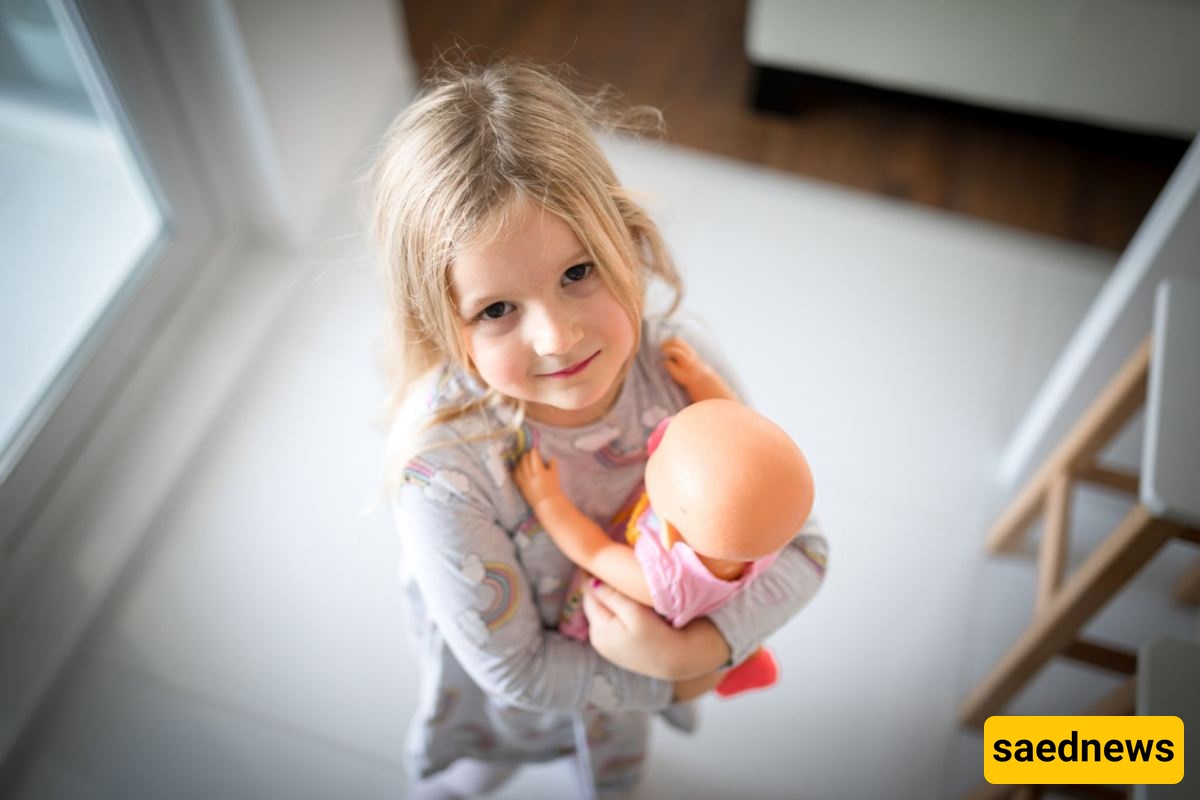
In recent years, developmental psychology has become increasingly connected with neuroscience, providing deeper insight into why children become attached to comfort objects.
Holding a familiar, soft object can stimulate the C-tactile afferent system, a pathway also activated by gentle, affectionate touch on the skin.
Such sensory experiences are associated with increased oxytocin activity and reduced cortisol levels, the latter being a hormone involved in the body's stress response.
In other words, a soft toy can function as an external emotional regulator.
A young child's prefrontal brain networks, which are responsible for self-regulation, are not yet fully developed. Consequently, children rely on external sources of comfort, including their mother's embrace, familiar voices, and security objects.
As the prefrontal cortex develops, children gradually internalise these regulatory abilities. Until then, a comfort object can serve as an emotional support tool, helping them manage feelings they cannot yet regulate independently.
In addition to Winnicott's theory and neurological findings, several psychological factors help explain why children become attached to their dolls.
Separation anxiety is one of the most common reasons behind strong attachment to comfort objects.
A doll helps children cope with temporary separation from their mother or primary caregiver.
However, if attachment to a doll is accompanied by severe separation anxiety, such as repeatedly refusing to attend school, being afraid to sleep alone, or experiencing physical complaints, professional assessment may be helpful.
Children live in a world filled with rules, restrictions, and instructions about what they can and cannot do.
A doll is one of the few things over which a child feels they have complete control. They can hug it, give it instructions, discipline it, or forgive it.
This sense of control can strengthen the child's feelings of autonomy and independence.
Research suggests that attachment to security objects may become stronger in children experiencing family tension, relocation, the arrival of a new sibling, or parental separation.
In these circumstances, a familiar doll or blanket can provide emotional stability and serve as a coping mechanism during periods of uncertainty.
Around the age of two, children begin developing symbolic play.
During this stage, a doll may become a playmate, student, patient, or even the child's imaginary baby.
This type of attachment is a natural part of cognitive development and can contribute to the development of empathy and social skills.
If a doll has repeatedly been associated with comfort, sleep, and parental affection, the child's brain gradually learns to associate that object with safety.
This is similar to how a particular blanket's scent can remind adults of the comfort and familiarity of their childhood home.
In most cases, attachment to a doll or comfort object is healthy and temporary.
However, certain behaviours may indicate that a child needs additional support:
Persistent, intense attachment beyond the age of seven, particularly when it interferes with social interaction.
Complete refusal to separate from the doll, even for a few minutes at home.
Extreme emotional reactions, such as prolonged crying, aggression, or physical symptoms when the doll is being washed.
Replacing relationships with parents and peers with the comfort object, rather than using it alongside normal social interactions.
Returning to intense dependence after a period of independence, which may indicate the presence of new stressors.
In these situations, consulting a child psychologist is recommended.
It is important to remember that a warning sign does not automatically indicate a psychological disorder. In many cases, it simply means that the child needs additional emotional support.
Parents play an important role in helping children develop a healthy relationship with their comfort objects while gradually building emotional independence.
Allow free access: Keep the doll or comfort object available, particularly at bedtime and during unfamiliar situations.
Respect the attachment: Never ridicule the child, hide the object, or use it as a threat or punishment.
Be a reassuring role model: Before leaving the child, explain where you are going and when you will return, even if the separation is brief.
Encourage gradual independence: If you want to reduce dependence, introduce short periods of separation rather than removing the object suddenly.
Create alternative sources of comfort: Strengthen emotional bonds through hugs, consistent bedtime routines, and shared playtime.
Do not shame the child: Saying things like "Stop behaving like a baby" may increase anxiety and insecurity.
Do not use the doll as a bargaining tool: Threatening to take it away if the child does not behave can damage trust.
Do not force washing: Allow the child to participate in decisions about when and how their comfort object is cleaned.
Do not remove it overnight: Suddenly taking away a child's source of emotional security can cause unnecessary distress.
A child's attachment to a doll or comfort object is much more than a simple childhood habit. It reflects an important developmental process through which children learn to manage emotions, cope with separation, experience security, and gradually develop independence.
Rather than viewing this attachment as a sign of weakness or excessive dependence, parents should recognise it as a potentially valuable part of emotional development.
With patience, understanding, and consistent emotional support, children will generally learn to rely less on their comfort objects as their ability to regulate emotions and feel secure independently develops.
The goal is not to take away the child's source of comfort, but to help them gradually discover that the sense of safety they experience through their favourite doll can eventually become part of their own inner emotional resources.