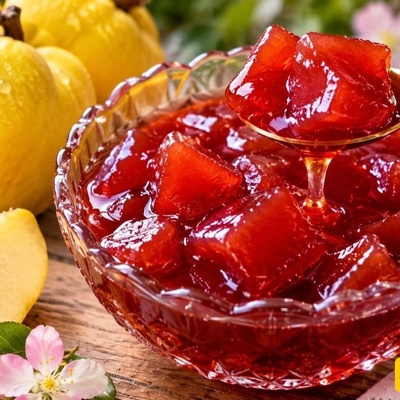
SAEDNEWS: Why Does Quince Jam Become Sugary or Turn Black? Tips for Making Perfect Quince Jam, Achieving Its Beautiful Red Color, and Preventing It from Becoming Too Hard, Mushy, or Runny.

According to Saednews, Making delicious quince jam with a beautiful color and rich flavor requires more than simply following a recipe. Knowing a few important techniques can help you avoid common problems such as crystallized sugar, darkening, excessive firmness, or a jam that becomes too thick. In this article, we explore the secrets to making quince jam, achieving its signature reddish color, preventing the fruit from becoming mushy, and fixing common problems.
If you are wondering why your quince jam is not turning red, follow these tips:
After preparing the quince, water, and sugar mixture and bringing it to a boil, place a clean kitchen towel over the pot lid. Reduce the heat to low.
After approximately 5 minutes, place a heat diffuser under the pot and allow the jam to cook over very low heat for 1–2 hours.
Check the jam every 30 minutes. If the syrup level becomes too low, carefully add a little boiling water along the sides of the pot.
Keep the pot covered until the quince jam develops its characteristic red color.
Another trick for achieving a deep red or burgundy color is to let the jam cool overnight after cooking.
Once cooled, transfer the jam into clean glass jars and store them in the refrigerator.
Using a copper pot may also help enhance the jam's color.
For the best color, choose fully ripe, healthy quinces with a bright yellow skin.
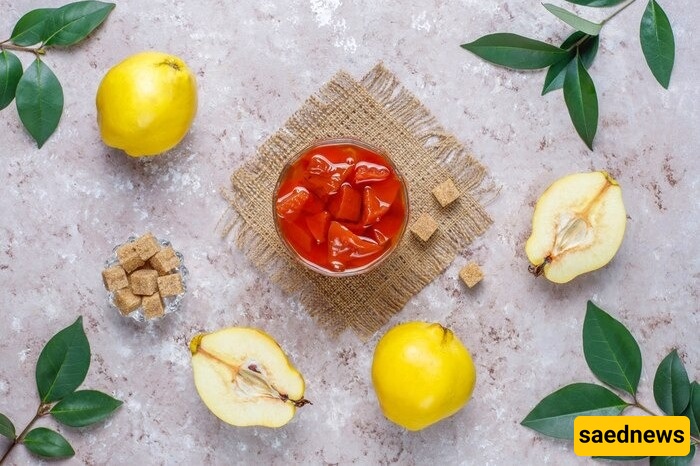
To make sure your quince jam has reached the right thickness and consistency, you can use a simple test. This method helps you determine whether the syrup is ready and when to stop cooking.
After approximately one hour of cooking, take a drop of syrup using a clean, dry spoon and drop it into a glass of cold water.
If the syrup drop sinks to the bottom without dissolving or spreading in the water, the jam has reached the desired consistency.
If the syrup disperses in the cold water, the jam needs more cooking time.
In this case, continue cooking for another 15–30 minutes and repeat the test.
This simple technique can help prevent sugar crystallization and ensure that your jam reaches the desired thickness.
Quince jam may become too hard after cooling for several reasons. One of the main causes is cooking it for too long.
When quince jam is overcooked, the sugar concentration becomes too high, which can cause crystallization and make the jam excessively firm.
To prevent this problem:
Monitor the cooking time carefully.
Avoid boiling the jam longer than necessary.
Use fresh, high-quality quinces.
Maintain an appropriate cooking temperature.
Quince jam may fail to reach the desired consistency because of an incorrect sugar ratio or cooking method.
If your jam is too watery, try the following solutions:
1. Adding Gelatin
Gelatin can help improve the consistency of quince jam. You can add it in either of these ways:
Soften gelatin sheets in hot water and add them to the jam while it is cooking.
Dissolve powdered gelatin in warm water and stir it into the cooking jam.
2. Re-cooking the Jam
If your quince jam has already cooled but is still watery, pour it back into a pot and bring it to a boil again.
Continue cooking until some of the excess liquid evaporates and the jam becomes thicker. This process is known as re-cooking jam.
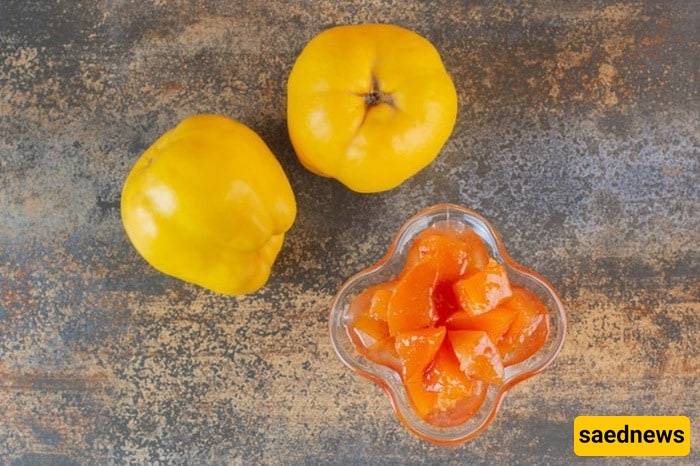
Maintaining the right balance between quince and sugar is essential for achieving delicious flavor and the perfect consistency.
As a general guideline, use approximately:
1 kg of quince
1 kg of sugar
Maintaining the correct balance between quince and sugar, adding sugar after the fruit has softened, and using lemon juice can help improve the quality of the jam and prevent sugar crystallization.
Here are some useful tips:
1. Add Sugar at the Right Time
Add sugar after the quince pieces have softened. This can help reduce the risk of crystallization.
2. Use the Correct Quince-to-Sugar Ratio
Measure the sugar according to the amount of fruit and the recipe. Excessive sugar, especially when it has not completely dissolved in the syrup, can increase the likelihood of crystallization.
3. Add Lemon Juice
Adding one tablespoon of lemon juice can help regulate the pH of the jam and reduce sugar crystallization.
4. Use Boiling Water to Fix Crystallized Jam
If your quince jam has crystallized, add a little boiling water and gently simmer it over low heat. This may help restore its consistency.
Quince jam usually becomes too dark because of excessive heat, prolonged cooking, or excessive evaporation of its liquid.
To preserve its beautiful color, follow these tips:
Control the Heat: Cook quince jam over low heat. High temperatures can cause the jam to stick to the bottom of the pot and become excessively dark.
Monitor Cooking Time: Prolonged cooking can make the jam too dark. Turn off the heat once it reaches the desired color and consistency.
Maintain Enough Liquid: Check the syrup regularly and avoid allowing too much liquid to evaporate. An overly concentrated syrup can cause the jam to burn and turn black.
Choose the Right Pot: Use a clean, suitable cooking pot that distributes heat evenly and reduces the risk of burning.
Store Properly: Use clean glass jars with suitable lids. Once the jam has cooled, store it in sealed containers in the refrigerator.

Quince jam usually becomes mushy because of overcooking, using overly ripe and soft quinces, or stirring the mixture too frequently.
To prevent this problem:
Choose healthy, relatively firm quinces.
Cut the fruit into evenly sized pieces.
Cook the jam over low heat.
Avoid stirring it continuously.
These techniques will help the quince pieces maintain their shape and prevent them from becoming mushy.