SAEDNEWS: Stainless steel frying pans are among the most versatile and durable cookware essentials. In this buying guide, discover the key features to consider when choosing a high-quality, long-lasting pan for professional cooking performance.
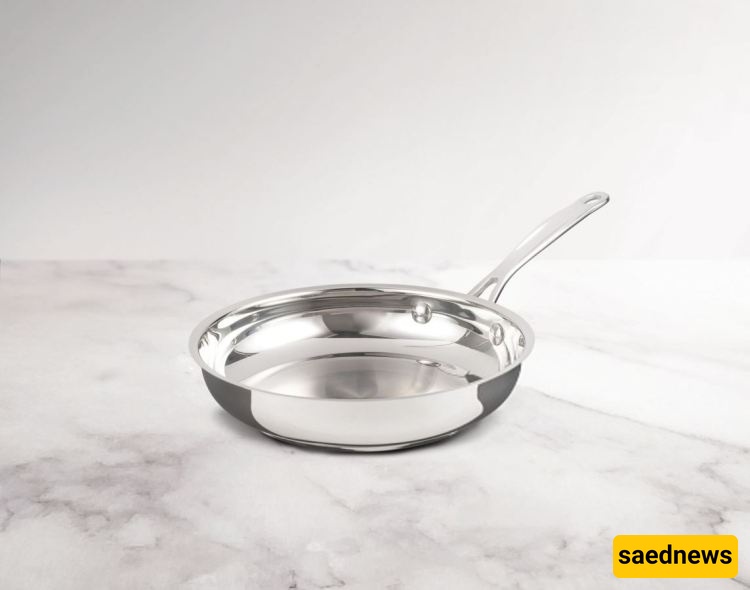
According to Saednews, A stainless steel frying pan is one of the most versatile and durable cooking tools, earning an important place in both home and professional kitchens. Although these pans may look simple, choosing the right one requires careful consideration of several factors, including material quality, stainless steel grade, thickness, compatibility with your stovetop, handle and lid quality, and, of course, your budget.
Making the right choice can provide years of reliable use and improve your overall cooking experience. However, choosing the wrong pan may result in food sticking, uneven heat distribution, or a shorter product lifespan.
In this comprehensive buying guide, we explore the most important factors to consider when purchasing a stainless steel frying pan.
Stainless steel frying pans are known for their excellent resistance to rust, corrosion, and physical damage, making them a highly durable option. Their cooking surfaces generally do not react with food, making them suitable for preparing a wide variety of dishes, from soups and stews to steaks and vegetables.
Many stainless steel pans can also be restored to their original shine with proper cleaning and maintenance.
However, uncoated stainless steel is not naturally nonstick. To prevent food from sticking, you need to follow a few basic techniques, such as preheating the pan, using enough cooking oil, and controlling the temperature.
If you are looking for a durable pan that maintains its quality over time, stainless steel can be an excellent investment, provided you understand its features and choose the right model.
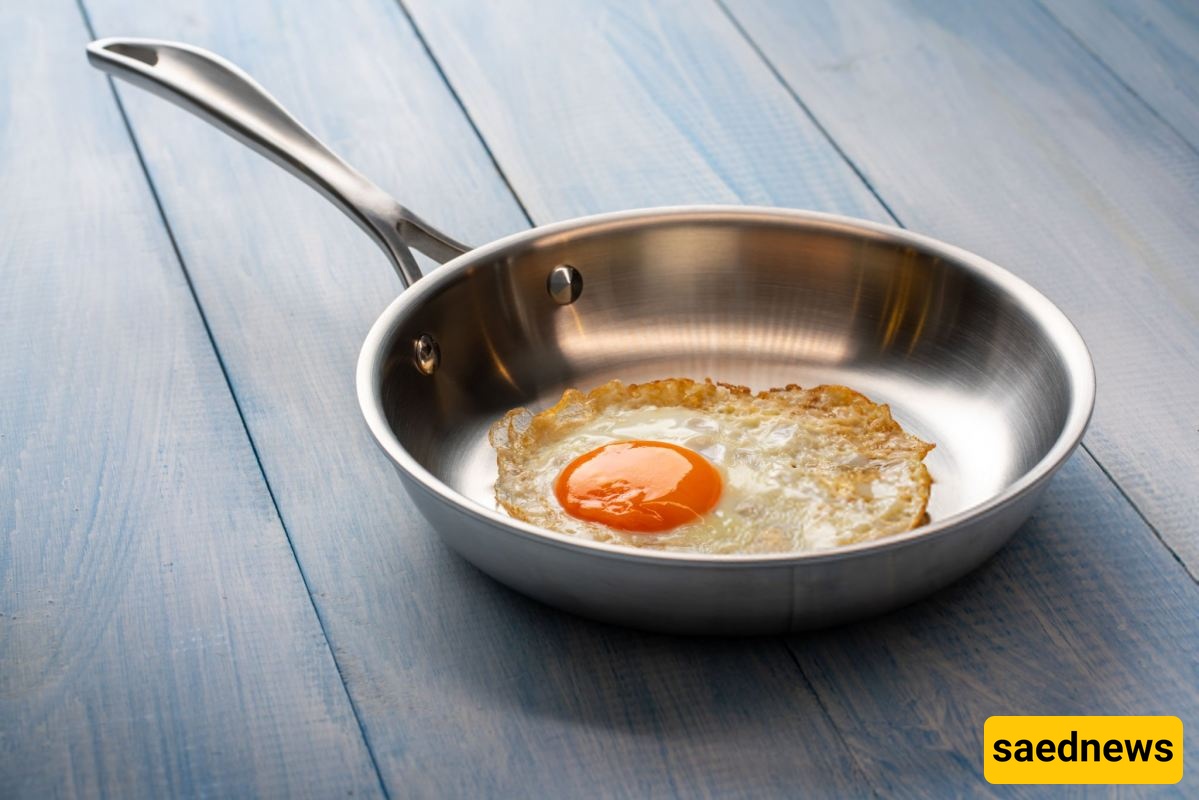
Stainless steel frying pans are available in various designs, and understanding their differences is the first step toward making the right purchase.
One common classification divides them into single-layer and multi-layer pans.
Single-layer pans are made from one layer of stainless steel. They are generally lighter and more affordable, but their heat distribution may be uneven, potentially creating hot spots during cooking.
Multi-layer or clad pans consist of several layers of stainless steel combined with a heat-conductive core, usually aluminum or copper. This construction provides better heat distribution, more stable cooking temperatures, and a lower risk of burning food.
Some stainless steel frying pans also feature specially designed induction-compatible bases. These pans contain a magnetic layer at the bottom that allows them to work with induction cooktops.
If you have an induction stove, always check the pan's compatibility before purchasing.
One of the most important factors when buying a stainless steel frying pan is the grade of stainless steel used in its construction.
You will commonly encounter labels such as 18/10, 18/8, 304, 316, and 430.
18/10 stainless steel: Contains approximately 18% chromium and 10% nickel. It generally offers excellent corrosion resistance and durability.
18/8 stainless steel: Another common grade that is suitable for everyday household cooking.
304 stainless steel: One of the most widely used grades in cookware, offering a good balance of durability, hygiene, and affordability.
316 stainless steel: Provides greater corrosion resistance and is often recommended for premium cookware and demanding environments.
430 stainless steel: A magnetic grade commonly used in induction-compatible cookware bases.
When purchasing a stainless steel frying pan, do not focus exclusively on the grade. Manufacturing quality, material thickness, and the manufacturer's reputation are equally important.
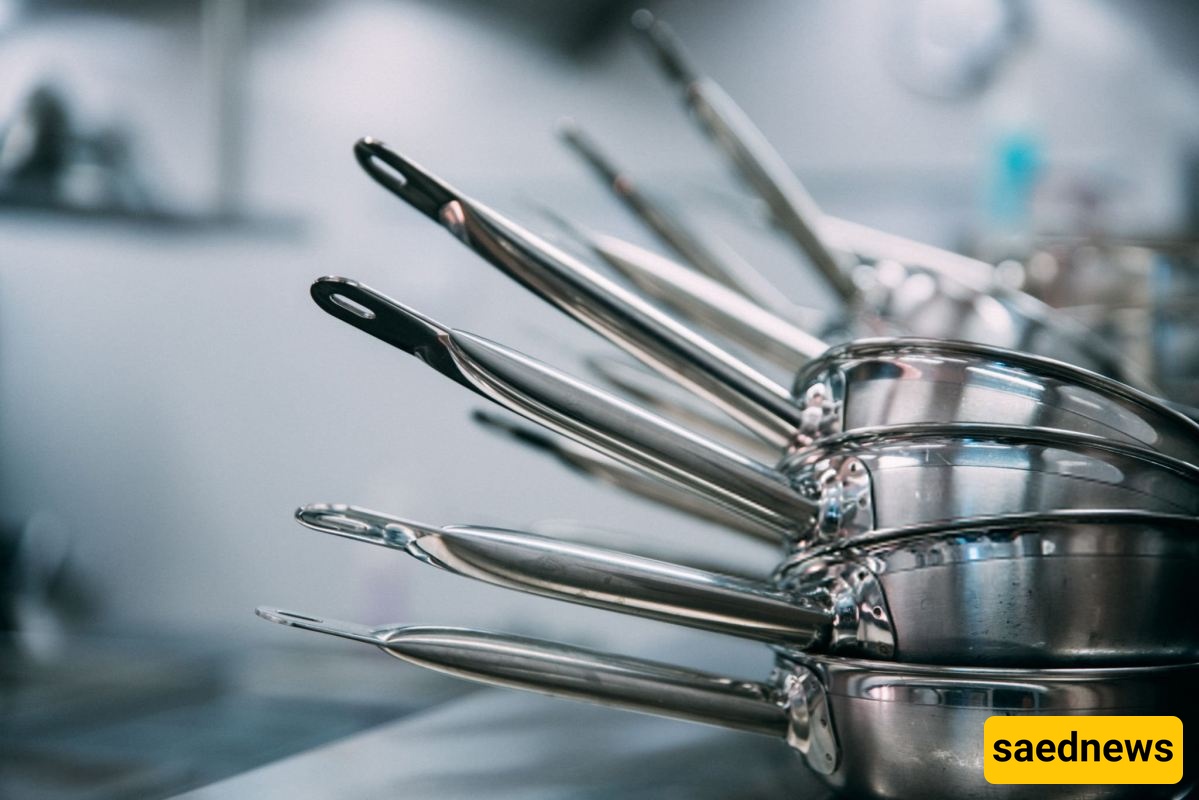
The thickness of a stainless steel frying pan's body and base directly affects heat distribution and overall durability.
Very thin pans heat up quickly but may distribute heat unevenly and become warped over time. Pans with appropriate thickness provide more consistent heat and perform better when preparing dishes that require stable temperatures.
The ideal pan diameter depends on how you plan to use it:
20–24 cm: Suitable for everyday cooking and smaller households.
26–28 cm: Ideal for preparing larger portions, cooking steaks, and serving bigger families.
Weight is another important consideration. An excessively heavy pan may be inconvenient for everyday use, while an unusually lightweight pan may indicate insufficient thickness and lower construction quality.
Look for a good balance between weight, size, and functionality.
Before purchasing a stainless steel frying pan, identify the type of cooktop in your kitchen.
Most standard stainless steel pans work with gas, electric, and halogen cooktops. However, induction cooktops require a magnetic pan base.
A simple way to check compatibility is to use a magnet. If it sticks to the bottom of the pan, the pan is likely suitable for induction cooking.
Also, make sure the base is completely flat and free from bumps or dents. An uneven base can make the pan unstable and interfere with proper heat transfer.
If you intend to use your pan on different types of cooktops, a multi-layer model with an induction-compatible base is generally a safer choice.
The handle of a stainless steel frying pan should be sturdy, ergonomic, and heat-resistant.
Riveted handles are generally very strong, but check that the rivets are smooth or minimally raised on the inside of the pan to make cleaning easier.
Heat-resistant handles are particularly useful during extended cooking sessions because they help prevent burns.
The lid is another important feature. A glass lid with a steam vent allows you to monitor the food while controlling moisture levels. It should fit securely and be made from heat-resistant materials.
Some pans come with stainless steel lids, which are generally more durable but make it difficult to see the food while cooking.
The choice between glass and stainless steel lids ultimately depends on your personal preferences.
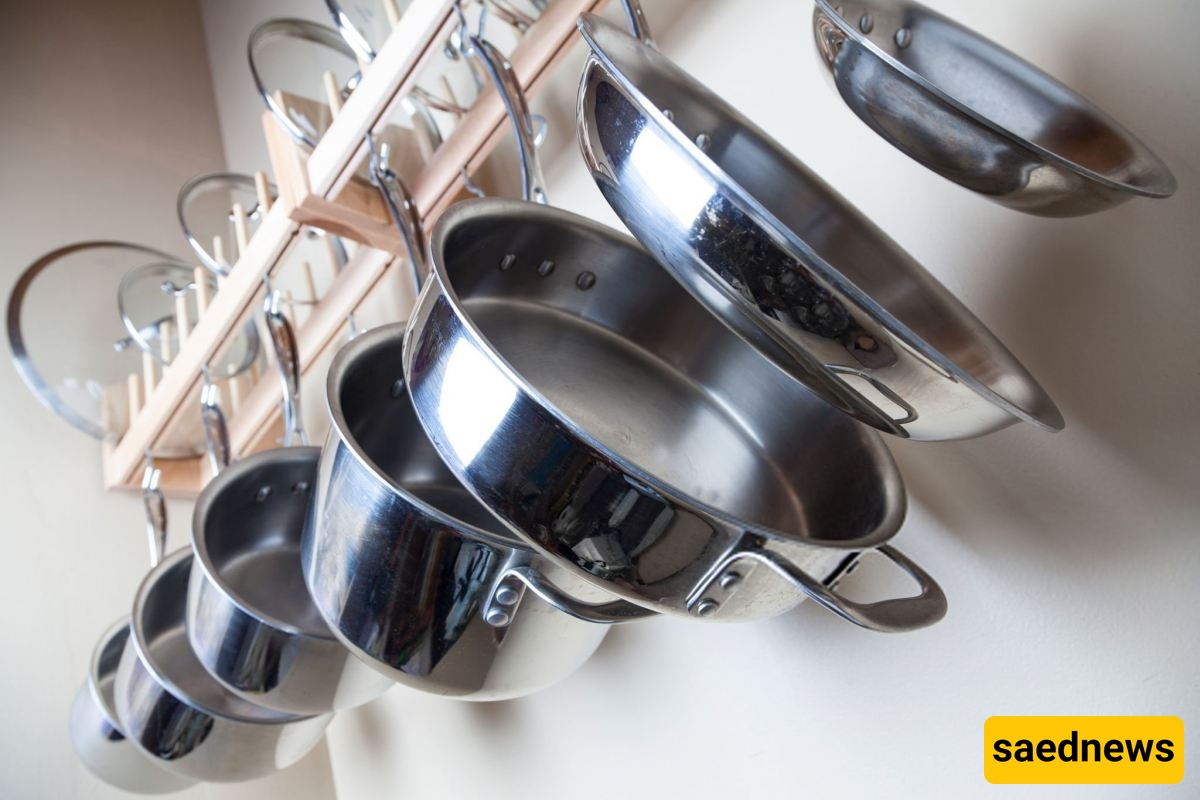
Some frying pans feature stainless steel bodies with a nonstick coating on the interior surface.
These models are suitable for people who want to combine the durability of stainless steel construction with the convenience of nonstick cooking.
When purchasing this type of pan, pay close attention to coating quality, avoid using metal utensils on the cooking surface, and follow the manufacturer's recommended temperature limits.
Nonstick coatings generally have a shorter lifespan than uncoated stainless steel and should not be exposed to excessively high temperatures or abrasive cleaning methods.
If long-term durability and compatibility with metal utensils are your priorities, an uncoated stainless steel frying pan is the better option.
However, if easy cooking and quick cleaning matter more to you, hybrid models with nonstick coatings may be worth considering.
The price of a stainless steel frying pan depends on several factors, including steel grade, number of layers, thickness, brand, dimensions, handle and lid quality, and warranty coverage.
Multi-layer pans with aluminum or copper cores are generally more expensive because they offer superior heat distribution.
Well-established brands may also charge higher prices because of their quality control standards and after-sales services.
When purchasing a stainless steel frying pan, do not focus solely on finding the lowest price.
An inexpensive pan may become warped, develop stubborn stains, or suffer from handle problems after just a few months of use.
A more sensible approach is to compare prices alongside technical specifications. A reliable warranty and a clear return policy can also reduce the risk of purchasing a poor-quality product.
When shopping in person, hold the pan and check whether its weight feels balanced. Place it on a flat surface to make sure it does not wobble.
Grip the handle firmly and inspect its connection to the pan. The rim should also be smooth and free from dents.
If you have an induction cooktop, use a magnet to test the base.
When shopping online, carefully review the following:
Actual product photographs.
Stainless steel grade and material specifications.
Body and base thickness.
Pan diameter and weight.
Customer reviews and ratings.
Warranty and return conditions.
Before placing your order, make sure the pan's dimensions and cooktop compatibility match your kitchen requirements.
Proper maintenance can significantly extend the lifespan of a stainless steel frying pan.
After each use, allow the pan to cool slightly before washing it with warm water and mild dish soap.
Avoid thermal shock, which occurs when cold water is poured directly onto a hot pan.
For burnt-on food or mineral deposits, you can use a mixture of baking soda and water or vinegar, followed by gentle cleaning with a soft sponge.
To maintain the pan's shine, occasionally clean it with a stainless steel cleaning powder or a small amount of white vinegar diluted in water. Always dry it thoroughly afterward.
Avoid the following:
Pouring cold water over a hot pan.
Using harsh steel wool on polished surfaces.
Storing wet pans on top of one another.
Thoroughly drying the pan after washing is one of the best ways to prevent water spots and surface corrosion.
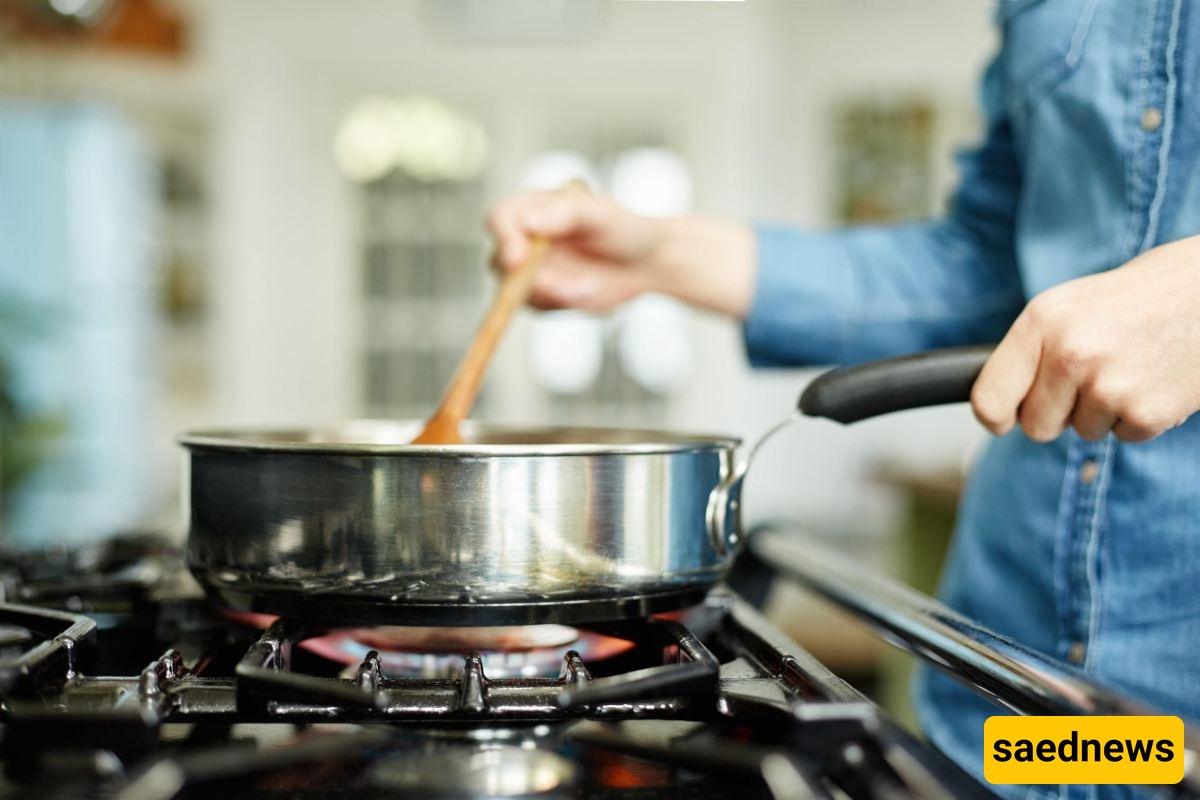
Never leave an empty stainless steel frying pan on a stove at extremely high temperatures. Doing so may cause discoloration, damage the base, or even create a fire hazard.
When cooking, position the handle toward the back or center of the stove to reduce the risk of accidentally hitting it.
If your pan has a glass lid, avoid exposing the lid to direct, excessive heat.
Metal handles can remain hot after cooking, so always use an appropriate oven mitt or kitchen towel.
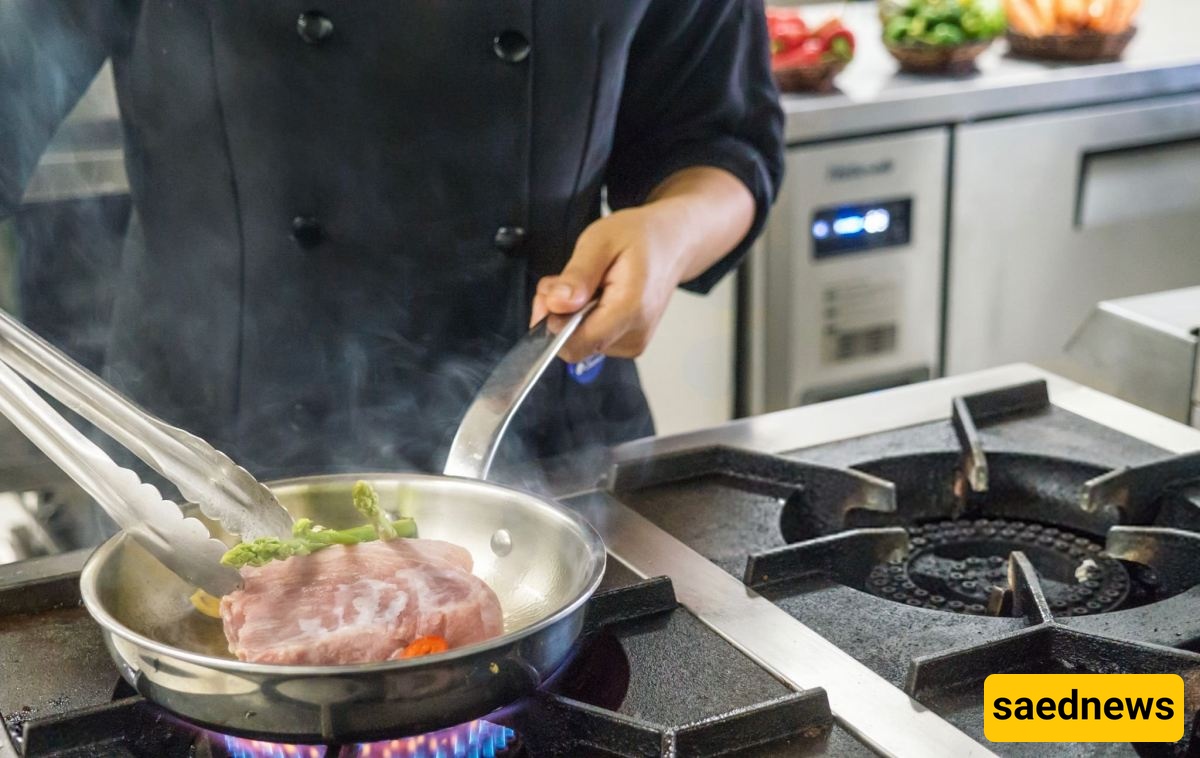
To prevent food from sticking to an uncoated stainless steel frying pan, follow these steps:
Preheat the pan over medium heat.
Add a small amount of cooking oil.
Allow the oil to spread across the cooking surface.
Add the food once the pan is properly heated.
Avoid moving the food too early; allow it to develop a seared surface before turning it.
Using metal spoons and spatulas on uncoated stainless steel is generally safe. However, utensils with rounded edges are preferable if you want to minimize surface scratches.
Stainless steel frying pans offer several advantages over other cookware materials, but each type has its own strengths.
Stainless steel vs. nonstick pans: Stainless steel is generally more durable and better suited to high-temperature cooking and metal utensils. However, it requires more cooking skill to prevent food from sticking.
Stainless steel vs. cast iron: Stainless steel is generally lighter and heats up faster, although it does not retain heat as effectively as cast iron.
Stainless steel vs. ceramic pans: Ceramic cookware offers a nonstick cooking surface, but its coating generally has a shorter lifespan than uncoated stainless steel.
If you want a versatile frying pan that can last for many years with proper care, stainless steel is often the more practical long-term investment.
Buying a stainless steel frying pan is a long-term investment in your kitchen.
To make the right decision, pay attention to the stainless steel grade, body and base thickness, number of layers, cooktop compatibility, handle and lid quality, and warranty coverage.
A multi-layer frying pan with a suitable induction-compatible base and balanced thickness is generally a reliable choice for everyday cooking.
If convenience is your priority, consider hybrid models with nonstick coatings. However, if durability and long-term performance matter most, an uncoated stainless steel frying pan is usually the better investment.
With proper maintenance and correct cooking techniques, a high-quality stainless steel frying pan can serve you for many years and make everyday cooking more enjoyable.
Are all stainless steel frying pans compatible with induction cooktops?
No. Not all stainless steel frying pans work with induction cooktops. The base must have magnetic properties. You can check this by using a magnet or reviewing the manufacturer's product specifications.
Why does food stick to my stainless steel frying pan?
Food usually sticks because the pan was not sufficiently preheated, the cooking temperature was incorrect, or not enough oil was used. Preheat the pan properly, add oil, and allow the food to develop a cooked surface before moving it.
What is the best way to clean a stainless steel frying pan?
Warm water, mild dish soap, and a soft sponge are usually sufficient. For stubborn stains, use baking soda, vinegar, or a specialized stainless steel cleaning powder. Avoid abrasive steel wool.
Are uncoated stainless steel frying pans suitable for everyone?
These pans are ideal for people who understand stainless steel cooking techniques or are willing to learn them. If you prefer easier cooking and faster cleanup, consider hybrid models with nonstick coatings.