SAEDNEWS: Discover how carnivorous plants use remarkable adaptations to capture insects. Explore the most fascinating species, their unique hunting mechanisms, and practical tips for growing and caring for these extraordinary plants.
According to Saednews, When we think of hunting in nature, predatory animals usually come to mind. However, the plant kingdom also contains a remarkable group of species that use sophisticated mechanisms to capture insects and other small arthropods. Known as insectivorous or carnivorous plants, these fascinating plants have developed specialized structures to attract, trap, and digest their prey.
Some of the best-known insect-eating plants include the Venus flytrap, sundews, pitcher plants, butterworts, bladderworts, corkscrew plants, rainbow plants, Portuguese sundews, and waterwheel plants.
These plants typically grow in soils that are poor in essential nutrients, particularly nitrogen, phosphorus, and certain minerals. Capturing insects allows them to compensate for these nutritional deficiencies. However, it is important to understand that carnivorous plants obtain most of their energy through photosynthesis, just like other plants. Insects serve primarily as a supplementary source of nutrients.
This article explores nine remarkable carnivorous plants, explaining how they capture their prey, where they grow, and what makes each species unique.
The primary reason carnivorous plants capture insects is the lack of essential nutrients in their natural environments. In many habitats, particularly wetlands and acidic bogs, nitrogen and phosphorus are not readily available in sufficient quantities.
Insects provide a valuable source of nitrogen and minerals. By capturing and digesting their prey, these plants can improve their growth, support flowering, and increase their ability to compete with surrounding vegetation.
It is worth noting that carnivorous plants do not generally feed on large animals. Most species capture small insects, including mosquitoes, flies, ants, tiny beetles, and spiders. However, some larger pitcher plants can occasionally trap small vertebrates, such as tiny frogs.
Discover some of the most fascinating insect-eating plants and learn how their unique trapping mechanisms work.
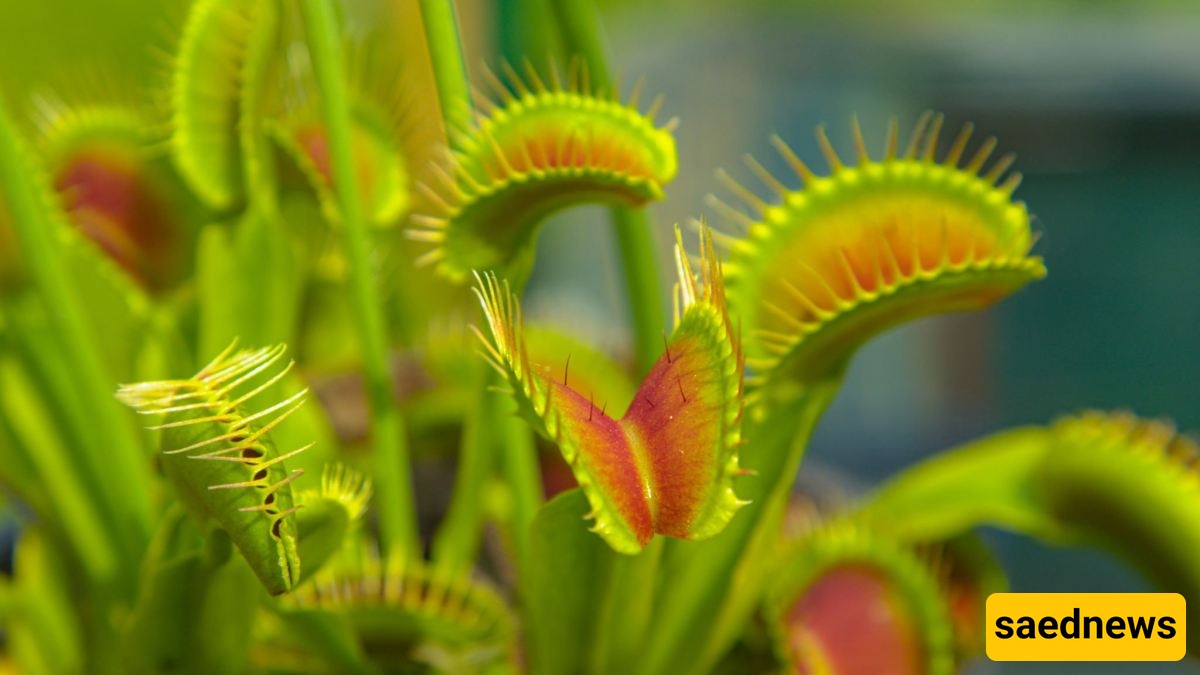
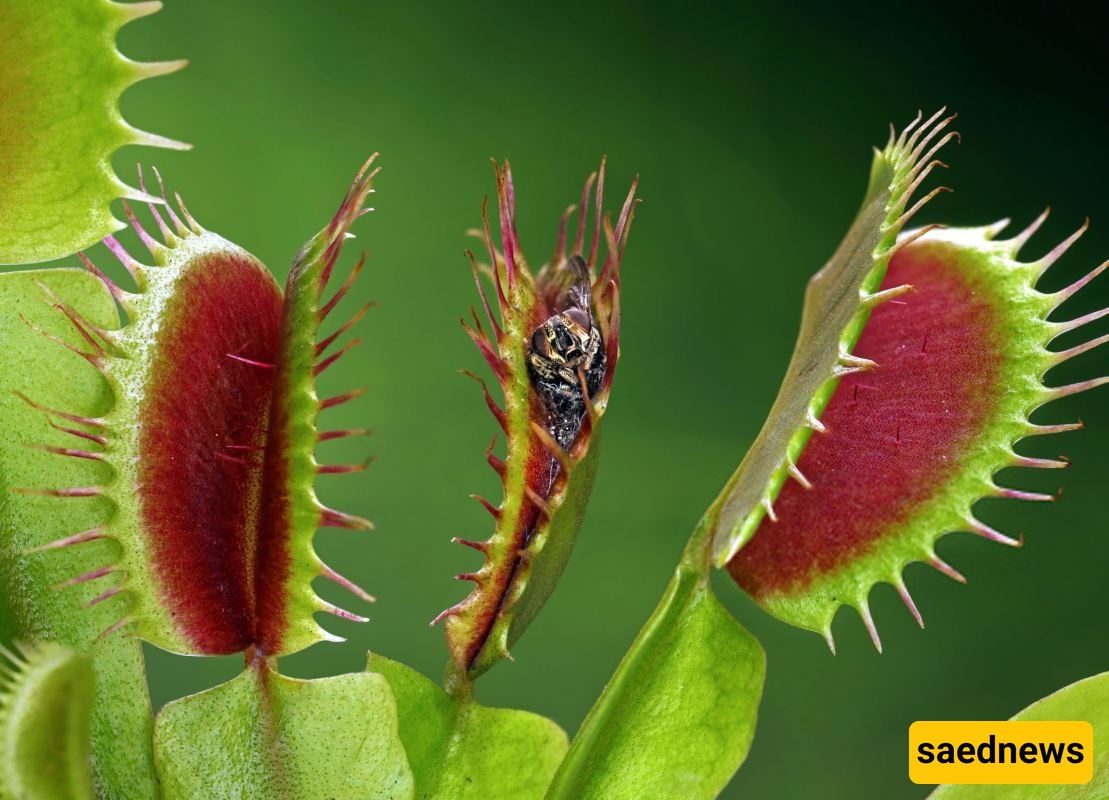
The Venus flytrap (Dionaea muscipula) is arguably the world's most famous carnivorous plant.
Its leaves are divided into two hinged lobes lined with small, tooth-like structures. The inner surfaces contain sensitive trigger hairs. When an insect touches these hairs several times within a short period, the two lobes snap shut, trapping the prey inside.
This mechanism helps the plant conserve energy because it does not respond to every accidental touch.
After capturing an insect, the Venus flytrap seals its trap and releases digestive enzymes to break down the prey and absorb its nutrients.
For successful cultivation, this plant requires plenty of sunlight, mineral-free water, and nutrient-poor soil. Tap water, conventional fertilizers, and ordinary potting soil should generally be avoided.
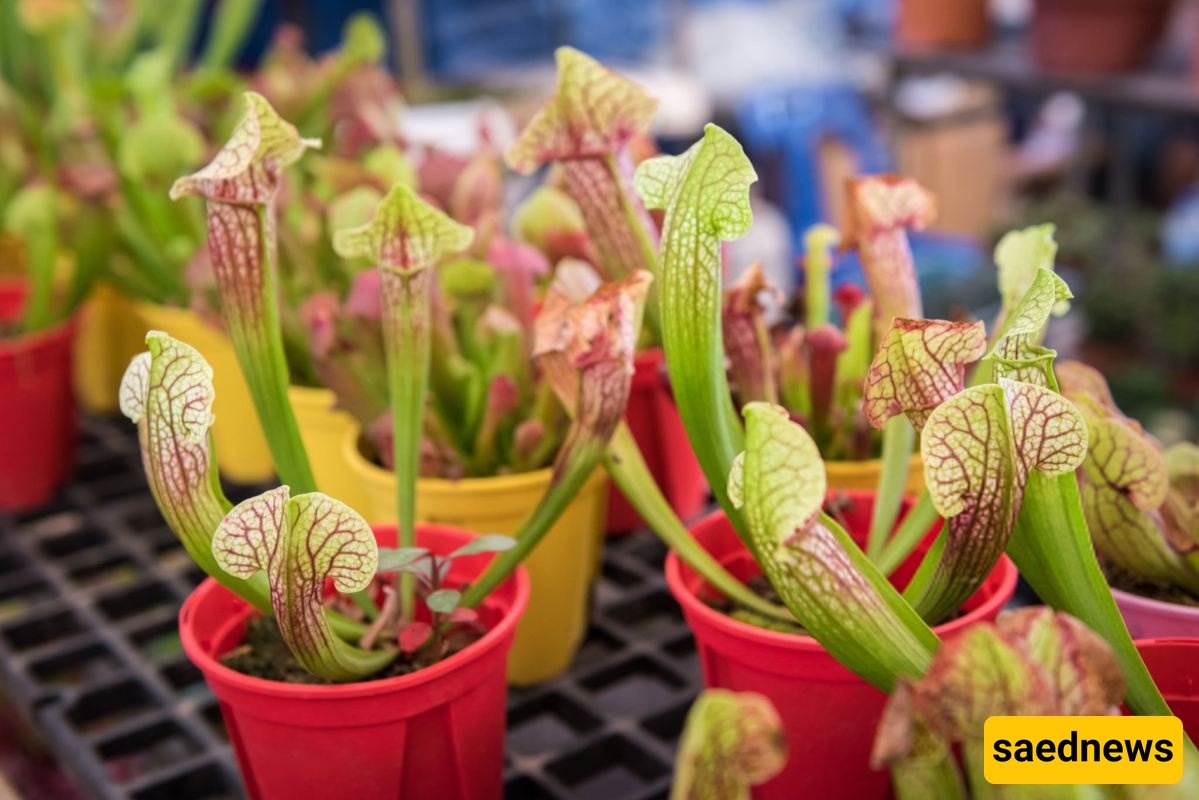
Pitcher plants are a diverse group of carnivorous plants that capture insects using specially modified, pitcher-shaped leaves.
Some of the best-known types include:
Asian pitcher plants (Nepenthes): Native to tropical regions of Asia, these plants include hundreds of fascinating species.
North American pitcher plants (Sarracenia): Native to wetlands and bogs across North America.
Australian pitcher plants (Cephalotus follicularis): A distinctive and relatively rare species native to southwestern Australia.
In these plants, the rim of the pitcher is often slippery. Insects walking along its surface may lose their footing and fall into a digestive liquid at the bottom.
Many species also attract insects through their bright colors, fragrances, and visual patterns.
Pitcher plants can capture flying insects, ants, and various small arthropods.
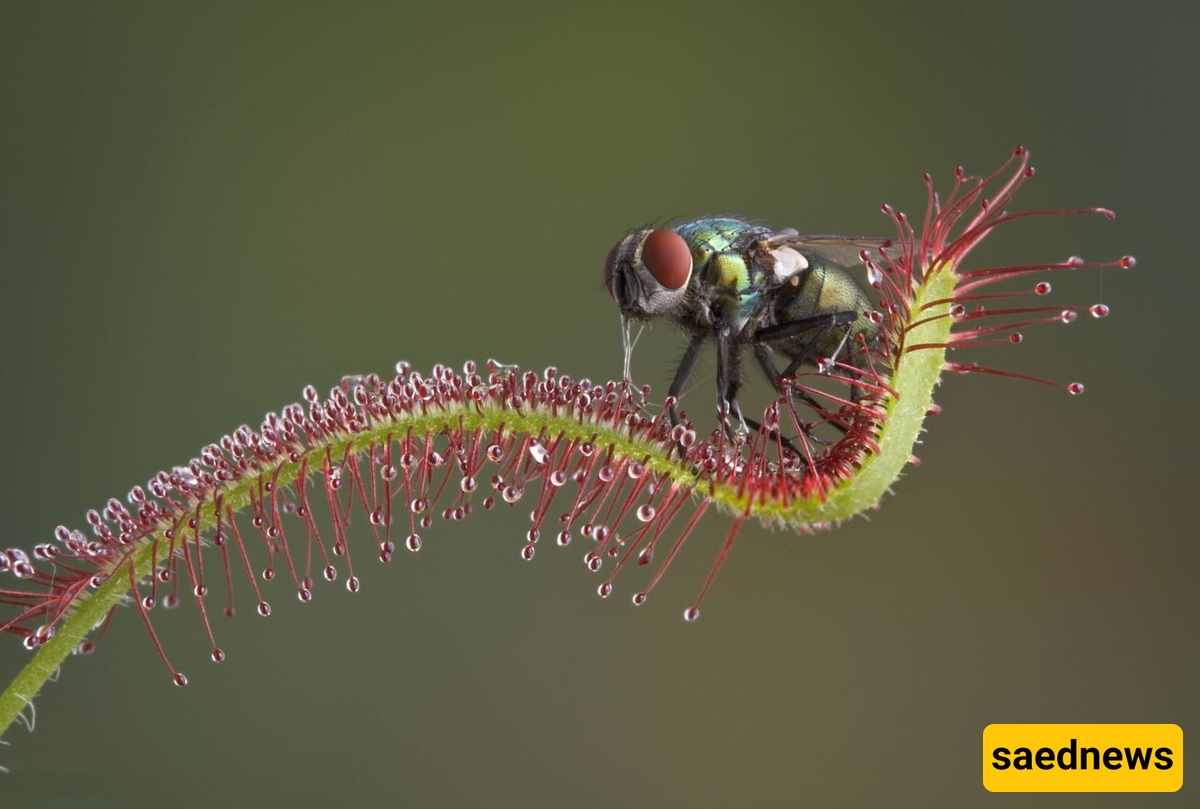
Sundews (Drosera) are among the most widespread groups of carnivorous plants.
Their leaves are covered with tiny tentacle-like structures that produce sticky droplets. These droplets resemble morning dew when illuminated by sunlight, making the plant appear particularly attractive.
When an insect lands on a leaf, it becomes stuck to the sticky secretion. The leaf may then slowly curl around the prey, increasing contact with the digestive enzymes released by the plant.
Sundews include numerous species found in different parts of the world, ranging from tropical wetlands to temperate environments.
Most species require mineral-free water, sufficient sunlight, and suitable humidity.
Butterworts (Pinguicula) have broad, flat leaves covered with tiny glands that produce sticky secretions.
When an insect lands on a leaf, it becomes trapped in the adhesive substance. The plant then releases digestive enzymes and absorbs nutrients from the captured prey.
Some butterwort species grow in colder climates, while others are native to tropical regions.
They are commonly found in moist environments with nutrient-poor soils.
Bladderworts (Utricularia) are among the most extraordinary carnivorous plants in the world.
Most species are aquatic or semi-aquatic and possess tiny specialized structures called bladder traps.
When a small aquatic organism touches the sensitive trigger hairs near a bladder, the trap opens rapidly. Water and the unsuspecting prey are sucked inside through a sudden change in pressure.
This is one of the fastest trapping mechanisms found in the plant kingdom.
Bladderworts commonly feed on microscopic organisms, tiny crustaceans, and other small aquatic invertebrates.
Corkscrew plants (Genlisea) use unusual underground traps to capture tiny organisms.
Their trapping structures consist of specialized, spiral-shaped tubes that guide microscopic prey inward. Once inside, the organisms become trapped and are digested by the plant.
These plants generally grow in wet, boggy environments and primarily capture microscopic organisms found in the surrounding soil and water.
Rainbow plants (Byblis) have slender leaves covered with sticky glandular hairs.
Similar to sundews, they use adhesive secretions to capture insects. Their glistening leaves can attract unsuspecting prey, which becomes trapped when it lands on the plant.
Native to Australia and New Guinea, depending on the species, rainbow plants are typically associated with seasonally wet habitats.
The Portuguese sundew (Drosophyllum lusitanicum) is an unusual carnivorous plant that captures insects using sticky glands.
Unlike many other carnivorous plants, which thrive in permanently wet environments, this species is adapted to relatively dry, sunny habitats.
Its long, narrow leaves are covered with sticky droplets that attract and trap flying insects.
This adaptation makes the Portuguese sundew particularly interesting among carnivorous plants because it can survive in conditions that would be unsuitable for many of its relatives.
The waterwheel plant (Aldrovanda vesiculosa) is an aquatic carnivorous plant equipped with rapid, snap-trap mechanisms.
Its traps resemble miniature versions of the Venus flytrap and close quickly when small aquatic organisms come into contact with their sensitive trigger structures.
It floats freely in shallow freshwater habitats and captures tiny aquatic animals, including small invertebrates.
Carnivorous plants have evolved several different trapping mechanisms. Each method is adapted to the plant's environment and the type of prey it captures.
The five main trapping mechanisms include:
Sticky traps: Plants such as sundews and butterworts use adhesive substances to hold insects in place.
Snap traps: The Venus flytrap and waterwheel plant use rapidly closing leaves to capture their prey.
Pitfall traps: Pitcher plants, including Nepenthes and Sarracenia, lure insects into deep, liquid-filled structures from which escape is difficult.
Suction traps: Bladderworts create a pressure difference that rapidly pulls small organisms into their bladder-shaped traps.
Spiral traps: Corkscrew plants use specialized underground tubes to guide and capture microscopic organisms.
This remarkable diversity demonstrates how carnivorous plants have evolved different strategies to overcome nutrient deficiencies and survive in challenging environments.
Most carnivorous plants naturally grow in bogs, marshes, acidic wetlands, and other environments with moist, nutrient-poor soil.
However, their habitat requirements vary considerably. Some species, such as bladderworts and waterwheel plants, are aquatic, while others, such as the Portuguese sundew, thrive in relatively dry and sunny conditions.
If you want to grow carnivorous plants at home, consider the following recommendations:
Use mineral-free water: Distilled water or clean rainwater is generally preferable.
Provide adequate sunlight: Venus flytraps and many sundew species require plenty of bright light.
Avoid conventional fertilizers: Rich soil and regular fertilizer applications can damage these plants.
Maintain suitable humidity: Many wetland species require consistently moist growing conditions.
Avoid excessive hand-feeding: Carnivorous plants can usually capture their own prey when kept in an appropriate environment.
Carnivorous plants are among the most fascinating examples of adaptation in the natural world. From the rapid snap of a Venus flytrap to the suction-powered traps of bladderworts, each species has developed a unique way to capture small organisms and obtain nutrients from its surroundings.
Some of the most remarkable examples include Venus flytraps, pitcher plants, sundews, butterworts, bladderworts, corkscrew plants, rainbow plants, Portuguese sundews, and waterwheel plants.
Although these plants use insects as an additional source of nutrients, photosynthesis remains their primary source of energy. Their unusual hunting strategies are simply evolutionary adaptations that allow them to thrive in environments where essential soil nutrients are scarce.