SAEDNEWS: The ancient city of Ani in Armenia, featuring historic ruins and remarkable archaeological remains. Discover the fascinating ruins of this historic Armenian city through captivating photographs.
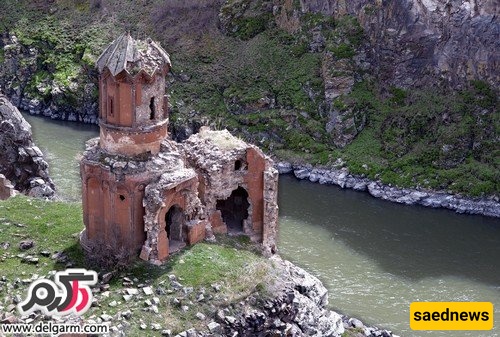
According to Saednews, We have prepared this article about the ancient city of Ani in Armenia for our dear readers and valued users. Stay with us as we explore its fascinating history.
Ani (Armenian: Անի; Greek: Ανίον; Latin: Abnicum) became the capital of Armenia in 961 AD, when King Ashot III transferred the royal capital from the city of Kars to Ani, opening a new chapter in the city's prosperity and development.
The ancient city of Ani was located in the Shirak region, on the left bank of the Akhurian River. Its geographical boundaries were surrounded by rivers, valleys, and mountains, giving the city a distinctive triangular shape.
In ancient times, Ani was a fortress in the Shirak region of historical Armenia. The earliest Armenian references to the fortress date back to the 5th century AD. Two Armenian historians, Eghishe Vardapet and Ghazar Parpetsi, mentioned a strong fortress called Ani that belonged to the Armenian Kamsarakan dynasty.
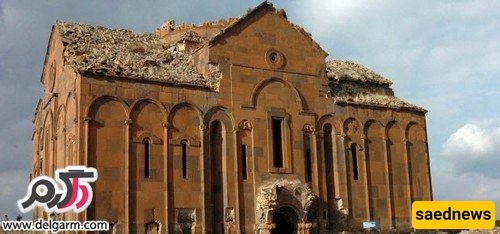
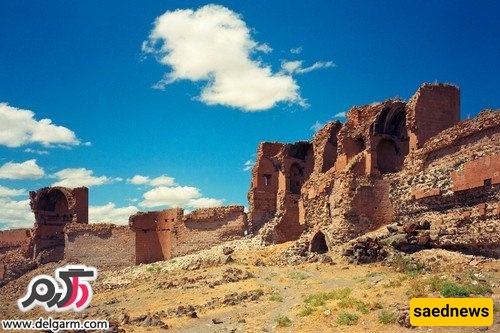
Ruins of the ancient Armenian city of Ani
In the late 8th century AD, a prominent Armenian prince named Ashot I purchased the Shirak region and the fortress of Ani from the Kamsarakan dynasty.
Over time, the fortress expanded considerably. Approximately a century later, when Armenia came under the rule of the Bagratuni dynasty, Ani was described as a well-fortified settlement. Historical sources referred to it as a strong defensive position along the banks of the Akhurian River.
From that period onward, Ani continued to flourish until it was officially chosen as the capital of Armenia in 961 AD.
King Ashot III, known by the title Voghormats (the Merciful), was the first ruler to undertake major expansion projects in Ani. He extended the city's boundaries, constructed new defensive walls, and built towers and churches.
King Smbat II, the son and successor of Ashot III, further expanded the city. He built a larger defensive wall stretching from the Akhurian River to the Tsaghkots Valley. He also constructed additional towers and installed gates made of hardwood reinforced with iron nails.

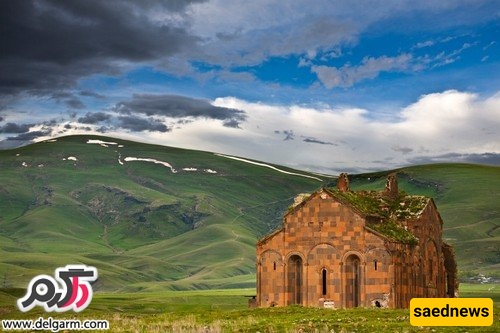
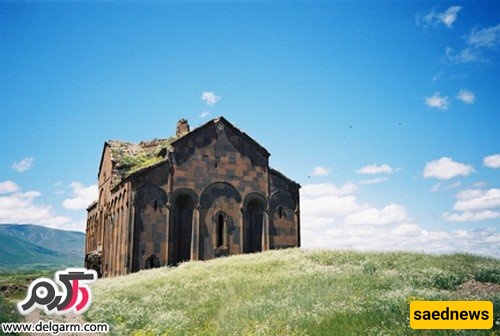
Ani, the capital of Armenia, quickly developed into a wealthy and magnificent city. Beautiful buildings and churches were constructed throughout the city, earning it the famous title "The City of a Thousand and One Churches."
Industry and trade flourished alongside science, education, and the arts. Ani's reputation for prosperity and cultural achievement spread among neighboring and distant nations.
One of the main reasons for Ani's rapid development was its strategic location in the heart of Armenia, which provided greater security.
Furthermore, Armenia and the city of Ani played an important intermediary role in major north–south and east–west trade routes.
North–South trade route: Connecting Baghdad with the Black Sea.
East–West trade route: Connecting the territories of Persia with the Byzantine Empire.
Ani stood at the crossroads of important commercial routes and was connected to major cities in neighboring countries through well-established roads.
The city also maintained trade connections across the Black Sea with distant European regions, including Poland and southern Russia.
In 961 AD, King Ashot III transferred the Armenian capital from Kars to Ani, initiating a new era of growth and prosperity. Although Ani had originally been a fortress in the Shirak region of historical Armenia, it eventually developed into one of the most remarkable medieval cities in the region.
Ani remains an extraordinary symbol of medieval Armenian civilization, celebrated for its architectural achievements, religious monuments, commercial importance, and historical significance. Its magnificent ruins continue to reflect the city's former glory.
Discover the remarkable ruins and architectural heritage of the ancient Armenian city of Ani through photographs.