SAEDNEWS: Children can begin practicing with a spoon when they are developmentally ready for complementary foods, usually around 6 months. Early practice helps them gradually develop the coordination and skills needed for independent eating.
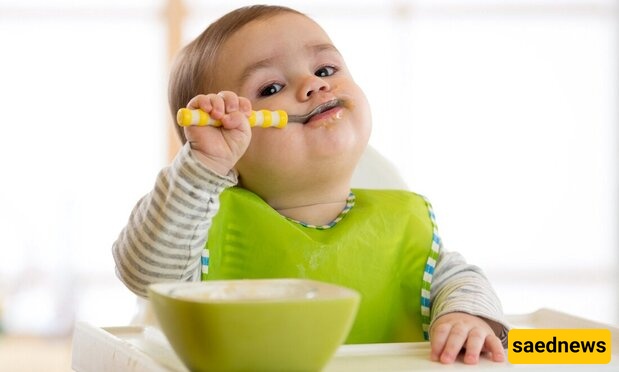
According to SAEDNEWS, learning to use a spoon is a gradual process rather than a skill that children master at a specific age. When a baby is ready to start complementary foods, parents can offer a suitable spoon and allow the child to experiment with it. Around 6 months, many babies can sit with support, control their head and neck, and coordinate their hands and mouth well enough to begin practicing.
At first, the spoon may be more interesting as an object than as a feeding tool. A baby may grab it, turn it around, drop it, or bring it to the mouth. These actions are part of learning. Parents can offer a small, easy-to-hold spoon with a soft or appropriately designed tip and allow the child to practice under supervision.
During the early stages, parents may continue feeding while also giving the child a second spoon to hold. This gives the baby an opportunity to participate without expecting independent eating immediately.
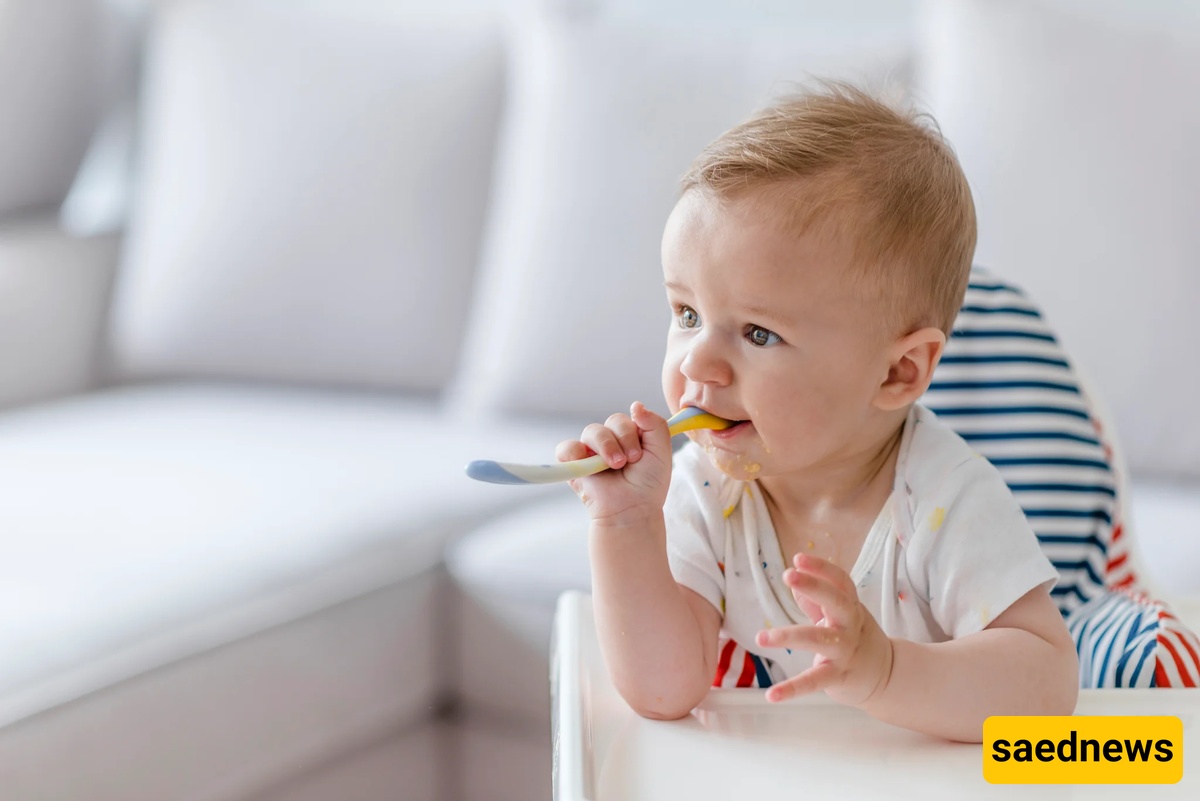
Rather than focusing only on age, look for developmental signs such as:
Sitting upright with good head control
Reaching for objects and bringing them toward the mouth
Showing interest in food during family meals
Coordinating hand and mouth movements
Being able to take food from a spoon without consistently pushing it out with the tongue
These signs can help indicate that a child is ready to begin practicing eating skills.
Children develop spoon skills at different rates. A typical progression may look like this:
Holding the spoon: The child becomes comfortable gripping and exploring it.
Bringing it to the mouth: Coordination gradually improves, although food may frequently be spilled.
Scooping food: The child begins attempting to pick up food independently.
Eating with less help: With repeated practice, the child becomes more accurate and needs less assistance.
Messy meals are normal during this learning period. Spilling food does not necessarily mean that the child is struggling; it is often part of developing hand-eye coordination and fine-motor control.
There is no need to pressure a child to use a spoon independently. Offering opportunities regularly, allowing enough time to experiment, and providing appropriate supervision can make practice more comfortable. Parents can also model spoon use during family meals so children can observe how the utensil is handled.
If a child consistently has difficulty managing food or utensils, shows unusual difficulty with eating skills, or has concerns related to swallowing or development, discussing the situation with a pediatrician or other qualified child-health professional can help determine whether further evaluation is appropriate.