SAEDNEWS: Mud stains are among the most common yet challenging household stains. If not treated properly, they can become permanent and difficult to remove.
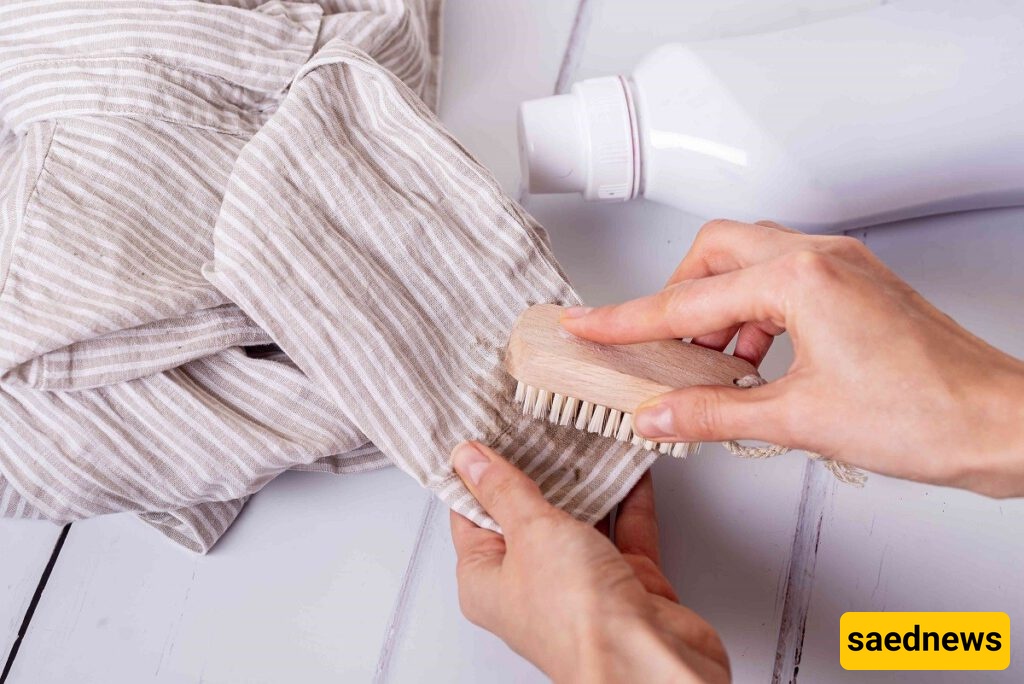
Accoridng to Saednews, The most important advice when dealing with mud stains can be summed up in one simple sentence: Let the mud dry first. This may seem counterintuitive because our natural reaction to seeing a stain is to wash or scrub it immediately. However, rubbing wet mud pushes clay particles deeper into the fabric fibers and spreads the stain over a larger area. Allow the mud to dry naturally. Once dry, much of the dirt will remain on the surface as a crust that can easily be removed with a soft brush or by gently shaking the garment.
Another important tip is to avoid using hot water during the initial cleaning stage. Hot water can cause organic and protein-based substances in the mud to set into the fabric, making the stain more difficult to remove. It can also cause wool and silk garments to shrink or lose their shape.
You only need a few simple, readily available items to get started:
A soft-bristled brush (a clothes brush or an old soft toothbrush)
A spoon or plastic scraper for removing dried mud
A small vacuum cleaner with a soft brush attachment
A clean, lint-free white cloth
Cold water
Mild laundry detergent or diluted dishwashing liquid
Enzyme-based laundry detergent
Oxygen bleach (powder or liquid containing sodium percarbonate)
Baking soda
White vinegar
Vegetable glycerin for old stains
3% hydrogen peroxide for white garments
A clean basin or washing tub
Important safety precautions: Always test any cleaning solution on an inconspicuous area, such as an inside seam, before applying it to the stain. Check the garment's care label before washing. Never use chlorine bleach on wool, silk, colored fabrics, or many synthetic fibers. Use a white cloth to prevent color transfer onto the garment.

Before attempting to remove the stain, check the fabric's care instructions. If the label specifies dry cleaning only, or the garment is made of suede, leather, velvet, or silk, water-based cleaning methods may cause damage. In these cases, professional dry cleaning is the safest option.
Once the mud has completely dried, take the garment outdoors or hold it over a sheet of newspaper and gently shake it. Use a spoon or plastic scraper to loosen larger pieces of dried mud.
For smaller, loose particles, you can use a vacuum cleaner with a soft brush attachment. Avoid aggressive brushing or rubbing the stain while it is still damp, as this can push dirt deeper into the fabric fibers.
At this stage, a significant amount of the dirt should come off without requiring strong cleaning products.
Hold the garment so that the reverse side of the stained area faces the water. Run cold water gently through the back of the fabric to push any remaining dirt particles outward.
This technique is more effective than pouring water directly onto the front of the stain because it helps prevent dirt from being driven further into the fabric.
Apply a small amount of enzyme-based laundry detergent or diluted dishwashing liquid directly to the stain.
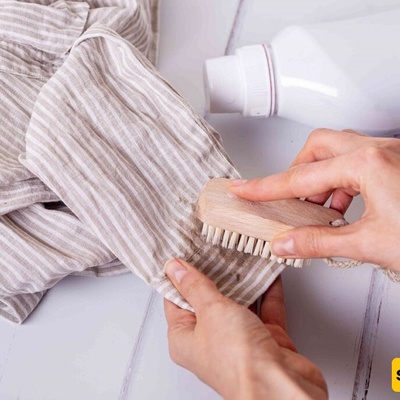
Using your fingertips or a soft toothbrush, gently work the solution from the outer edges toward the center. This helps prevent the stain from spreading into clean areas.
If the stain appears greasy, apply a drop of dishwashing liquid directly to the affected area and leave it for a few minutes to help break down the grease.
Soak the garment in cold water mixed with mild detergent for 15–30 minutes.
For particularly stubborn stains, you can extend the soaking time to one hour. However, soaking overnight is not recommended, as prolonged exposure to water and detergent may damage certain fibers or affect fabric colors.
Avoid using excessive detergent, as residue left in the fibers can attract dirt and make the fabric look dull.
Wash the garment using cold water and a gentle washing cycle.
If your washing machine has an extra-rinse or additional-rinse option, use it to remove detergent and remaining dirt more effectively.
Avoid adding fabric softener at this stage. Some fabric softener ingredients can leave a coating on the fibers and make complete stain removal more difficult.
After washing, inspect the garment under natural light from different angles.
Mud stains can sometimes become difficult to see while the fabric is wet and reappear once it dries.
If any discoloration remains, do not put the garment in a tumble dryer or iron it. Heat can permanently set the stain into the fabric.
Instead, repeat the pre-treatment and washing steps until the stain has completely disappeared.
The best option is to hang the garment outdoors in a shaded area and allow it to air-dry.
Strong, direct sunlight can cause discoloration in certain fabrics. If you prefer using a tumble dryer, make sure the stain has been completely removed first.
Baking soda is a mild alkaline substance that can help loosen stubborn dirt particles.
Mix three tablespoons of baking soda with a small amount of water to create a thick paste. Apply it to the stained area and leave it for 20–30 minutes.
Gently work the paste into the fabric using a soft toothbrush, then rinse thoroughly.
This method is suitable for cotton and synthetic fabrics.
White vinegar can help dissolve mineral deposits and detergent residue.
Mix one part white vinegar with three parts cold water. After the main washing cycle, soak the garment in this solution for a few minutes.
Avoid using vinegar on natural stone surfaces or certain delicate fabrics that may be sensitive to acidic solutions.
For white garments and colorfast fabrics, 3% hydrogen peroxide may help remove residual discoloration.
Apply a small amount to the stain, leave it for a few minutes, and then rinse thoroughly.
Never use more concentrated hydrogen peroxide without proper dilution. Always test it on a hidden area first to ensure it does not damage or discolor the fabric.
If a mud stain has been sitting on clothing for a long time and has become particularly stubborn, vegetable glycerin may help soften the hardened residue.
Apply a small amount of glycerin to the stained area and leave it for approximately 30 minutes. Then wash the garment using a mild detergent.
Final Tip: The key to successfully removing mud stains is patience. Allow the mud to dry, remove as much loose dirt as possible, use cold water, and avoid applying heat until the stain has completely disappeared.