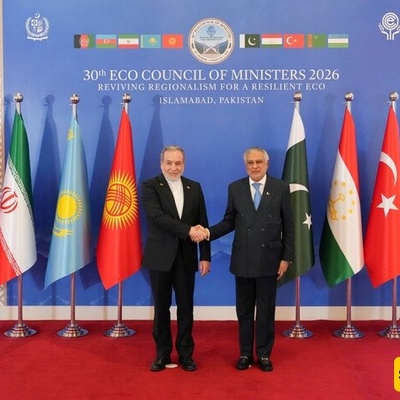
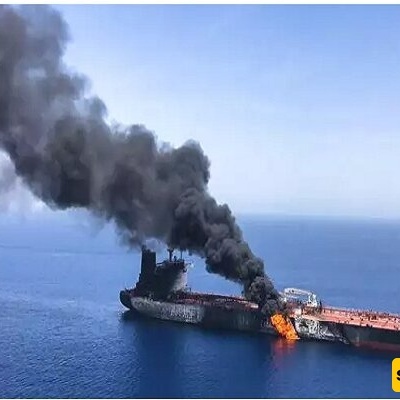
SAEDNEWS: Iranian Foreign Minister Abbas Araqchi said that insecurity in the Persian Gulf and tensions around the Strait of Hormuz are the result of US policies and joint aggression against Iran by Washington and Israel.
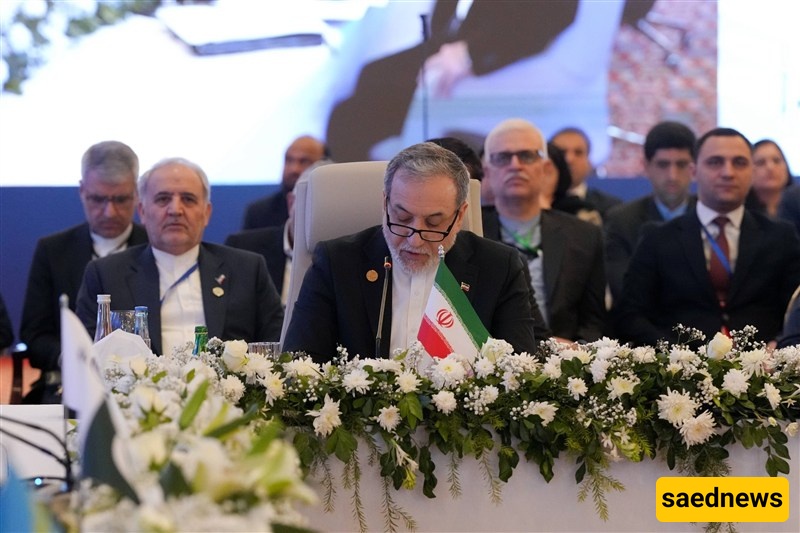
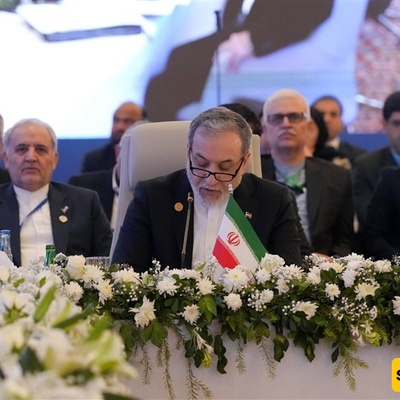
According to Saednews, Addressing the 30th meeting of the Council of Ministers of the Economic Cooperation Organization (ECO), held in Islamabad on Monday, Iranian Foreign Minister Abbas Araghchi called on member states to deepen regional cooperation in trade, transportation and energy. He also emphasized the need for an inclusive, regionally managed security framework founded on the principle of non-aggression.
Below is a complete paraphrased version of his address:
Your Excellency, Deputy Prime Minister and Minister of Foreign Affairs of the Islamic Republic of Pakistan,
Distinguished Ministers and Heads of Delegation,
Honorable Secretary General,
At the beginning of my remarks, I would like to express my appreciation to Pakistan's Ministry of Foreign Affairs and the ECO Secretariat for organizing this important gathering. I am also grateful to my esteemed brother, His Excellency Ishaq Dar, Deputy Prime Minister and Foreign Minister of Pakistan, for his effective leadership within the organization and the generous welcome extended to my delegation.
I would also like to recognize the valuable work of ECO Secretary General Asad Majeed Khan and his colleagues. Furthermore, I sincerely thank all countries and representatives who, on this occasion and through their previous statements, have firmly denounced violations of Iran's territorial integrity and aggression against its people. Their expressions of sympathy and solidarity with the Iranian government and nation following the killing of our Supreme Leader and other innocent citizens are deeply appreciated.
Holding this meeting at a time of major international changes and increasing global uncertainty demonstrates why closer cooperation, better coordination and a common regional approach are more important than ever. ECO members must move beyond political commitments and turn their shared objectives into practical achievements.
Distinguished Colleagues,
As the international political and economic landscape continues to evolve, ECO has an opportunity to expand its responsibilities beyond its traditional functions. The organization should become a more influential mechanism for collective initiatives, stronger partnerships and coordinated action, helping its members respond to emerging challenges while supporting a fairer and more inclusive global economic system.
Under present regional and international circumstances, trade, transportation and energy should serve as the three principal areas of ECO cooperation. Expanding regional connections, removing obstacles to trade between member countries and developing energy partnerships can improve our collective capacity to withstand external pressures, reduce economic vulnerabilities and create a more integrated and independent region.
Iran supports the creation of the Technical Negotiation Committee tasked with reforming the ECO Trade Agreement (ECOTA). Countries already participating in the agreement should make serious efforts to reopen negotiations and modernize its provisions, while other members should also be encouraged to participate.
A renewed trade agreement, designed to reflect contemporary economic requirements and provide broader opportunities for participation, could significantly increase regional commerce, strengthen economic security and support sustainable development for the benefit of all member nations.
Your Excellencies,
The Islamic Republic of Iran has consistently maintained its commitment to international law, the United Nations Charter and the peaceful resolution of disputes, particularly through diplomatic engagement.
Throughout the past two years, Iran has continued to pursue diplomatic channels and peaceful approaches to resolving disagreements. However, the United States chose a different path, resorting to military aggression, threats, targeted killings, economic pressure and blockades in clear violation of international law and the principles of the UN Charter.
These actions have resulted in the killing of Iran's Supreme Leader, several senior political and military figures, and more than 5,000 Iranian civilians. Among the victims were 168 students and teachers who lost their lives in the attack on a school in Minab.
Consequently, the current instability in the Persian Gulf and tensions surrounding the Strait of Hormuz must be understood in the context of the hostile policies and joint military actions undertaken by the United States and the Israeli regime against Iran. The origins of this situation should not be distorted or misrepresented.
Iran has always sought to maintain constructive and friendly relations with neighboring countries and does not have any fundamental disputes with regional states. Nevertheless, one essential principle must be respected by everyone: no country should allow its territory, airspace or military installations to be used as a launching point for attacks against another state.
Iran's defensive operations are exclusively directed at the military facilities and designated targets of those responsible for the aggression. They should not be interpreted as hostility toward neighboring nations, their governments or their populations.
These developments make it increasingly urgent for regional countries to establish an authentic and inclusive dialogue on security arrangements. Such discussions should be led by the countries of the region themselves, prioritize non-aggression and prevent external powers from using the territory or infrastructure of one country to attack another.
The continued application of sanctions designed to intensify economic difficulties and deny the Iranian population its fundamental rights has not weakened the country's determination. Instead, these measures have reinforced Iran's resolve to protect its legitimate interests and reject excessive and unlawful demands.
I also wish to express my sincere appreciation to those ECO members that have stood alongside the Iranian people and demonstrated solidarity during these difficult circumstances.
Considering the growing consequences of American and Israeli aggression for regional energy security, expanding cooperation in the energy sector has become an immediate strategic necessity.
Our region requires more than an independent security arrangement. It also needs a dependable and sustainable regional energy framework capable of protecting energy transportation routes, maintaining uninterrupted supplies, limiting dependence on external actors and strengthening collective resistance to geopolitical crises and disruptions.
Your Excellencies,
One of the organization's major undertakings during the past year has been the preparation of a strategic vision for the next decade, following extensive discussions and consultations among member states.
Drawing on the experiences and lessons gained from implementing the previous strategic plan, the new document places greater emphasis on practical objectives, measurable achievements and effective implementation.
It is therefore important that the new vision be carried out in accordance with the instructions and strategic guidance to be provided by our leaders during the 18th ECO Summit, scheduled to take place in Tehran on December 4, 2026.
Ladies and Gentlemen,
Before concluding, I would like to highlight one of the most serious international challenges that continues to demand our attention. This issue must remain a central part of our collective discussions, and the international community must not allow it to disappear from the global agenda.
The ongoing situation in the Occupied Palestinian Territories represents a profound disgrace for humanity. It is among the most severe moral and humanitarian disasters of our era, made even worse by the international community's failure to take adequate action.
Over the last three years, Gaza has endured what amounts to a devastating genocide. The Israeli regime's actions include grave violations of international humanitarian law, war crimes, continued occupation, efforts to change the demographic structure of the territory, the employment of prohibited weapons, widespread destruction, forced displacement and restrictions on the delivery of essential humanitarian assistance.
These measures represent only part of the extensive and destructive policies imposed on the Palestinian population.
At the same time, the situation in the West Bank and occupied Al-Quds has continued to deteriorate as the Israeli regime expands its settlement activities and pursues increasingly aggressive policies.
These developments include the illegal construction and expansion of settlements, repeated attacks by extremist settlers against Palestinian civilians and the systematic removal of Palestinian communities from their homes and lands.
The circumstances of approximately 10,000 Palestinians detained in Israeli prisons are equally alarming. Reports indicate that many prisoners face severe physical and psychological abuse, torture and other forms of inhumane treatment.
Given the particularly difficult conditions during the winter season, Gaza urgently needs immediate international intervention. The Israeli regime must be pressed to end the humanitarian restrictions and allow international relief organizations to deliver assistance without obstruction.
Priority must be given to providing food, medical supplies, temporary accommodation and the construction materials required to restore essential infrastructure.
These resources are critical to meeting the immediate humanitarian needs of more than 1.5 million Palestinians who have been displaced and left without adequate housing.
The continuing humanitarian emergency in Gaza and the West Bank represents a major challenge to the international community's commitment to humanitarian values and its responsibility to protect civilian populations.
This situation requires meaningful measures, coordinated international action and a clear rejection of continued silence and indifference.
Dear Colleagues,
Creating a more balanced, inclusive and prosperous future will require determined efforts and a shared sense of responsibility among all member countries.
We must ensure that our nations and our region play an active role in shaping the emerging international system and influencing the direction of global developments.
The Islamic Republic of Iran considers its own stability and economic progress inseparable from the security, development and prosperity of other ECO member countries.
Based on this understanding, Iran remains determined to strengthen cooperation within the organization and contribute to more effective partnerships that produce practical and visible results.
I look forward to receiving Your Excellencies in Tehran on December 4, 2026, for the 18th Summit of the Economic Cooperation Organization.
Thank you for your attention.