SAEDNEWS: Pistachio leaf drop outside the normal autumn season can be caused by water deficiency, nutrient deficiencies, temperature stress, pests and diseases, or improper pesticide use. Identifying these factors can help maintain tree health and improve crop yield.
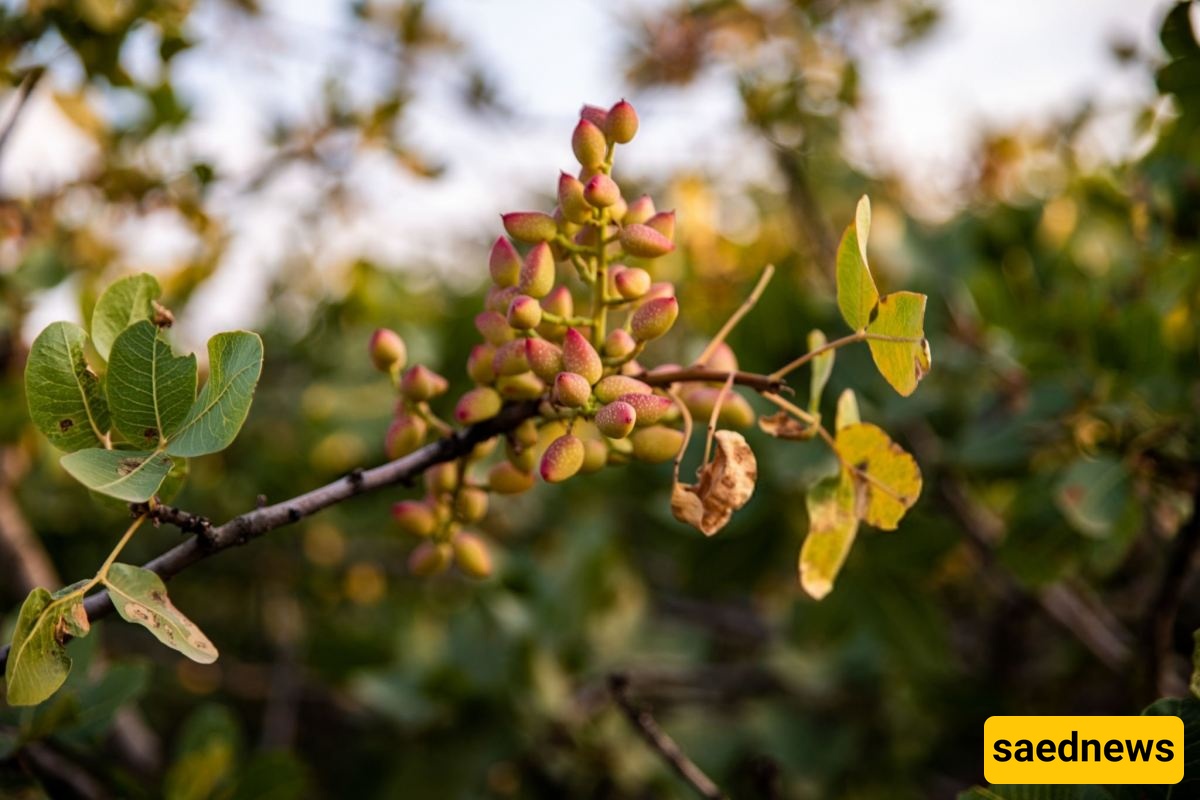
According to Saednews, Pistachio trees naturally shed their leaves during autumn as part of their normal dormancy cycle. The leaves then regrow and become green again in spring.
However, if pistachio leaves begin falling outside the normal autumn period, this may indicate a problem. Identifying the underlying cause of premature leaf drop is essential for protecting the tree and maintaining healthy growth.
This article examines the main causes of pistachio leaf drop, including insufficient water and nutrients, environmental stresses, pests, and plant diseases. Understanding these factors and applying appropriate preventive measures can help improve tree health, crop quality, and orchard productivity.
Pistachio leaf drop can generally be attributed to several different factors, including the following:
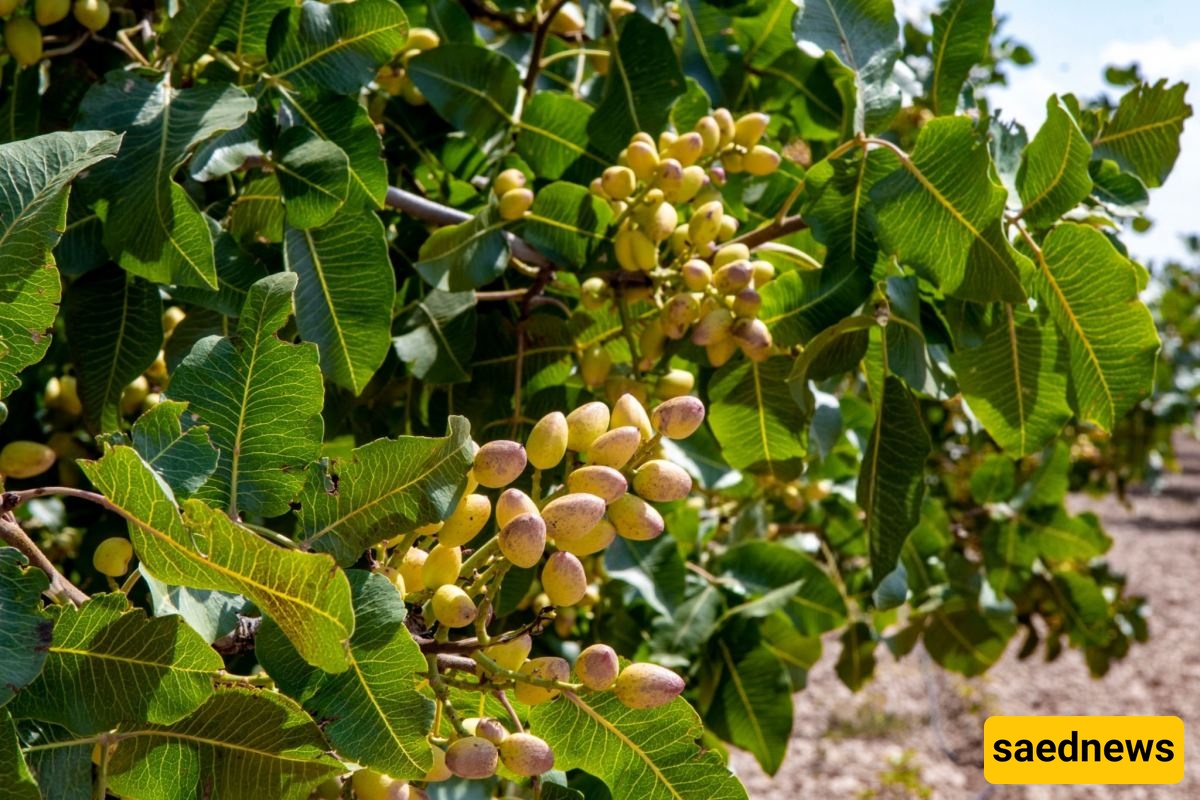
Pistachio trees begin active growth in spring, and sudden drops in temperature can cause frost damage. Frost is an important weather-related phenomenon that can cause significant losses in agricultural crops and orchards.
Spring frost is one of the major causes of serious damage to pistachio orchards. It primarily affects the above-ground parts of the tree, causing leaves, buds, and flowers to become damaged, dry out, and eventually die.
Severe spring cold can freeze the sap inside the tree's vascular tissues. This reduces or prevents nutrients from reaching plant tissues, eventually causing leaves and buds to die.
Insufficient water caused by high summer evaporation and inadequate soil moisture can create drought stress. When the stress becomes severe, it can damage the tree and lead to leaf drop.
Pistachio trees require a relatively significant amount of water, and prolonged water deficiency can weaken the tree and cause its leaves to fall.
A lack of nutrients such as nitrogen, phosphorus, potassium, and other essential minerals can weaken pistachio trees and eventually contribute to leaf drop.
Nitrogen deficiency is particularly important, especially in fruit-bearing trees. When the tree's energy is heavily consumed by fruit clusters, nitrogen deficiency can cause the leaves to turn yellow and eventually fall.
Note: An imbalance in calcium (Ca) uptake can also contribute to pistachio leaf drop.
Reduced calcium absorption may occur because of lower evaporation and transpiration, eventually leading to temporary production of the growth-inhibiting hormone ethylene. This can contribute to leaf drop in pistachio trees.
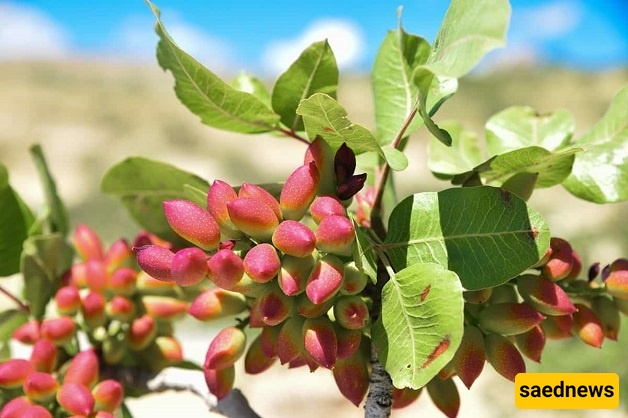
Keep in mind that foliar spraying at the wrong time or at excessive concentrations can cause leaf burn and subsequent leaf drop.
When trees are experiencing leaf drop, avoid applying nitrate fertilizers such as ammonium sulfate, growth stimulants, seaweed products, high-nitrogen NPK fertilizers, and heavy irrigation unless recommended based on the specific orchard conditions.
Severe heat during the period when pistachio kernels are filling is another important cause of summer leaf drop.
A sharp increase in summer temperatures, particularly when the kernels are actively growing and developing, can cause leaves to become scorched and dry. These damaged leaves may eventually fall from the tree.
Pests and fungal or bacterial diseases can damage pistachio leaves and cause them to fall.
The pistachio psyllid is one of the most important pests affecting pistachio trees. Severe infestations that are not properly controlled can cause significant damage and eventually lead to leaf drop.
Appropriate pest-control measures should be selected based on the specific pest or disease affecting the orchard.
Verticillium wilt, which may appear at the beginning of summer, can also cause pistachio leaf drop. The disease interferes with water transport from the roots to the leaves, eventually causing wilting and plant death.
One way to reduce the risk of this disease is to select tree varieties or planting material with resistance to the pathogen.
Septoria leaf spot can also cause leaf damage and premature leaf drop. This is a fungal disease that can be managed with appropriate fungicides.
Improper pesticide application can damage pistachio leaves and fruit. Some active ingredients may cause phytotoxicity when used incorrectly.
Although insecticides are designed to control pests, they can sometimes cause plant injury, particularly when the wrong product is selected or the application rate is excessive.
Extra care should also be taken when mixing several pesticides in the same tank. It is generally better to minimize the number of products mixed together unless their compatibility has been confirmed.
Horticultural oils specifically intended for use on trees are generally relatively safe when applied according to label instructions. However, applying them during hot weather or when trees are suffering from water stress can cause damage. Leaves injured by oil sprays may fall rapidly.
Excessive or inappropriate pesticide use, including combining several products to control pests and diseases, can damage leaves and become a cause of pistachio leaf drop.
Various stresses during the growing season, particularly severe heat and drought, can cause premature leaf aging and may result in pistachio leaves falling before normal dormancy.
Other environmental factors, including soil compaction, heavy soil texture, saline irrigation water, soil salinity, and temperature fluctuations, can stress pistachio trees and cause leaf drop, ultimately reducing crop yield.
If the soil is saline, soil amendments such as sulfur may be used as part of an appropriate soil-salinity management program.
Overall, pistachio leaf drop can have many causes. Proper tree care, adequate water and nutrient management, effective pest and disease management, and suitable environmental conditions are all important for preventing premature leaf loss.
High summer temperatures during the kernel-filling stage are one of the most important causes of pistachio leaf drop in summer.
Extreme heat can cause leaves to dry out and become scorched, after which they eventually fall.
To reduce heat and drought stress, irrigation should be provided regularly and according to the tree's actual water requirements.
Potassium silicate and kaolin products may also be used, where appropriate, to help reduce heat stress and sunburn.
Higher humidity combined with rising temperatures in spring can create favorable conditions for damaging fungal pathogens.
Spring often provides suitable conditions for fungal growth. If fungal diseases are not properly prevented or controlled, they can become severe and contribute to premature pistachio leaf drop.
As autumn begins and weather conditions change, pistachio trees naturally enter dormancy.
Natural leaf shedding before winter dormancy is a normal physiological process and is generally not a cause for concern.
After identifying the causes of leaf drop, another common issue is leaf curling or folding.
Certain pests, such as the pistachio leaf-curling psyllid, can cause leaves to become distorted.
Feeding by nymphs can cause the edges of leaves to curl inward toward the main vein.
Eggs of the pistachio leaf-curling psyllid generally hatch in spring as new leaves emerge. After hatching, the nymphs begin feeding on the underside of the leaves. Their feeding on plant sap can cause the leaves to curl.
Water deficiency is not only a potential cause of pistachio leaf drop; it can also cause leaves to curl.
Under water-stressed conditions, trees may curl their leaves to reduce transpiration and conserve moisture.
Drip irrigation can be useful for managing water supply under water-limited conditions.
Pistachio trees require a range of nutrients for healthy growth and fruit production, including both macronutrients and micronutrients.
These nutrients also contribute to disease resistance and improved nut quality.
Deficiencies in certain nutrients, such as boron, can cause leaves to become yellow, curled, distorted, or asymmetrical. Nutrient deficiency may also reduce shoot growth and contribute to leaf curling.
Internal physiological processes can also contribute to leaf curling, including hormonal regulation and the tree's natural response to changing environmental conditions.
Leaf curling can sometimes be a normal physiological response to environmental stress.
Stress caused by major changes in temperature or light, weather fluctuations, and changes in water pressure within the stems can also contribute to this condition.
A condition known by pistachio growers in Iran's Kerman Province as "Ghermezoo" is commonly associated with unusually small leaves.
Small-leaf symptoms may appear on one or several branches or, in advanced cases, affect the entire tree.
The leaflets become noticeably smaller than normal, and the number of leaflets per leaf may decrease. The leaflets may also develop a reddish coloration.
Nuts on affected branches may become small and reddish and fail to develop normally. In some cases, the hard inner shell may be poorly developed or fail to form properly, while the kernel may also fail to develop normally.
Affected trees may have limited ability to absorb micronutrients such as zinc, copper, manganese, and iron. Therefore, small-leaf symptoms in pistachio trees may be associated with deficiencies or imbalances of micronutrients in the soil and impaired nutrient uptake, particularly involving iron, manganese, zinc, and copper.
One of the causes of unusually small pistachio leaves is therefore inadequate nutrition. This problem may be improved through an appropriate fertilization program based on soil and plant nutrient requirements.
Pistachio trees can lose their leaves for many different reasons, including pests, diseases, water deficiency, wilting, nutrient deficiencies, and temperature-related stress.
To address premature pistachio leaf drop, growers should first identify the underlying cause and then apply appropriate measures, such as proper irrigation, balanced fertilization, and suitable pest and disease management.
Preventive orchard management and careful monitoring are key to maintaining healthy pistachio trees and achieving good crop production.