SAEDNEWS: Frost can form unevenly in a refrigerator because temperature, airflow, and humidity differ between areas. Colder or more moisture-exposed spots tend to accumulate frost faster.
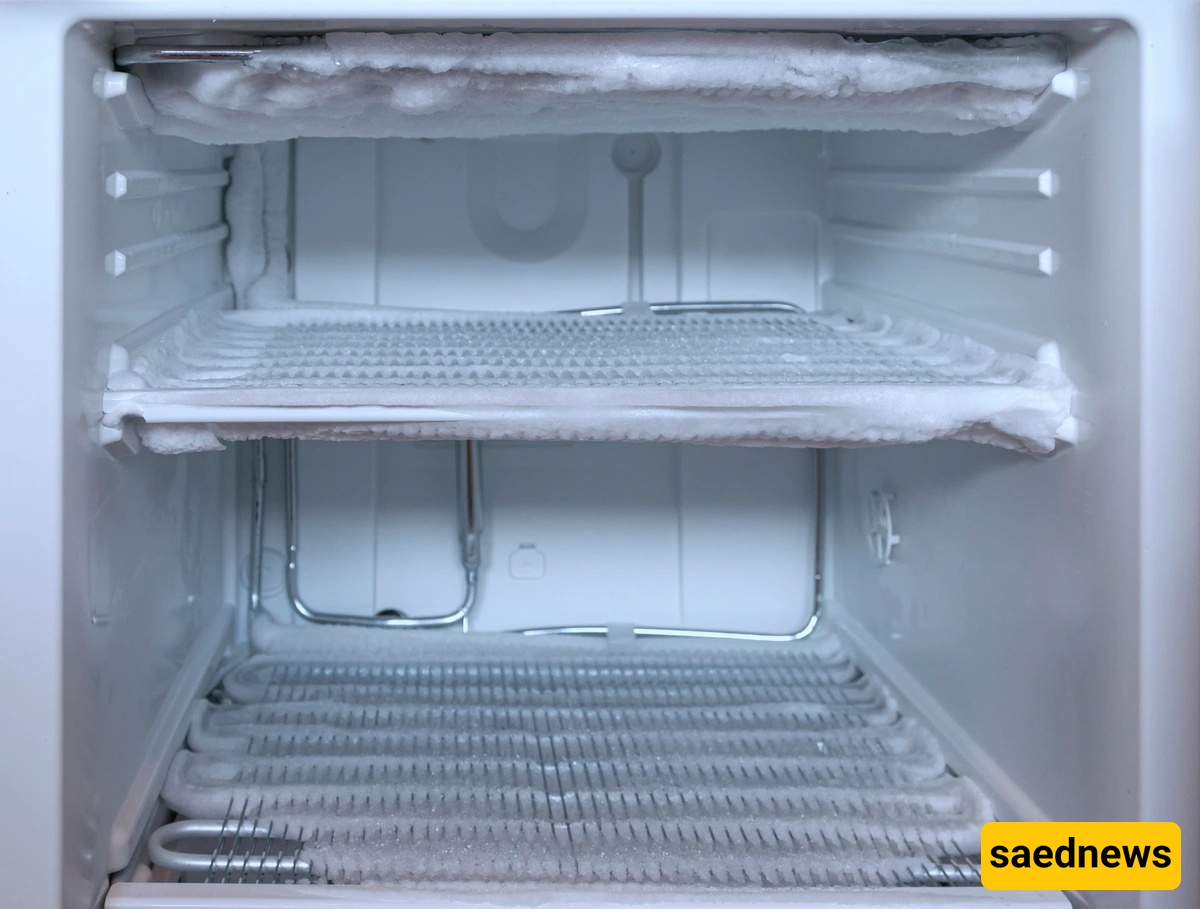
According to SAEDNEWS, frost forms when moisture inside the refrigerator comes into contact with surfaces that are cold enough to freeze it. Moisture can enter when the door is opened frequently, warm food is placed inside, or humid air gets into the compartment. As the moisture reaches colder surfaces, it turns into tiny ice crystals that gradually build up.
Not every part of a refrigerator has exactly the same temperature. Areas located closer to cooling elements may become colder than other sections. When a surface stays below the freezing point for longer periods, moisture is more likely to freeze there. Small differences in temperature can therefore lead to noticeably different amounts of frost.
Air circulation also affects where frost appears. Cold air may move more strongly through certain areas, while other sections receive less direct airflow. If moist air repeatedly passes over a particularly cold surface, frost can accumulate faster in that location. Blocked vents or overcrowded shelves can further interfere with normal circulation.
Frequent door openings allow warm, moisture-rich air to enter. When that air meets very cold surfaces, the moisture can condense and freeze. Items placed close to the door may also experience changing temperatures, while surfaces farther inside may remain consistently colder. These differences can contribute to uneven frost formation.

A small amount of uneven frost can occur naturally, especially in older or manually defrosted refrigerators. However, thick or rapidly returning frost may point to problems such as a damaged door seal, restricted airflow, or an issue with the cooling system. Keeping vents clear, checking the door seal, avoiding unnecessary door openings, and following the appliance's defrosting instructions can help reduce excessive frost.