SAEDNEWS: A cherry tree failing to produce fruit can have several causes, including poor pollination, spring frost damage, and nutrient deficiencies. By identifying the main cause and applying proper scientific methods, the problem can be corrected and the tree’s fruit production can be improved.
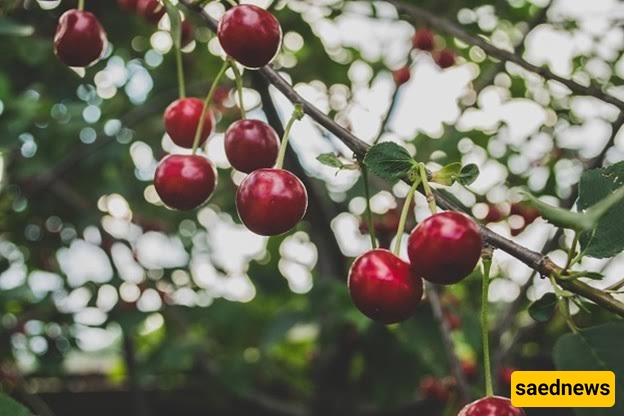
According to Saednews, This article provides a comprehensive review of the main reasons why cherry trees fail to produce fruit and explains practical methods to solve these problems and improve fruit production.
One of the most important reasons for poor fruit production in cherry trees is insufficient pollination. Most cherry varieties are self-incompatible, meaning they require pollen from another compatible cherry tree variety to produce fruit. If there is only one cherry tree in the garden or if incompatible varieties are planted together, fruit production may be greatly reduced.
Plant at least two different and compatible cherry varieties close to each other.
Suitable pollination combinations include:
Bing cherry with Lapins cherry
Stella cherry with Sunburst cherry
Local Iranian varieties such as Takdaneh cherry and Black cherry
Proper variety selection and planting arrangement can significantly improve pollination and fruit formation.
Honeybees and other pollinating insects play an essential role in transferring pollen between cherry blossoms. A decline in pollinator populations due to chemical pesticides, diseases, or unfavorable environmental conditions can reduce fruit production.
Avoid using chemical pesticides during the flowering period.
Place beehives near the orchard (approximately 2–3 hives per hectare).
Plant bee-attracting flowers around the orchard, such as lavender, clover, and sunflower.
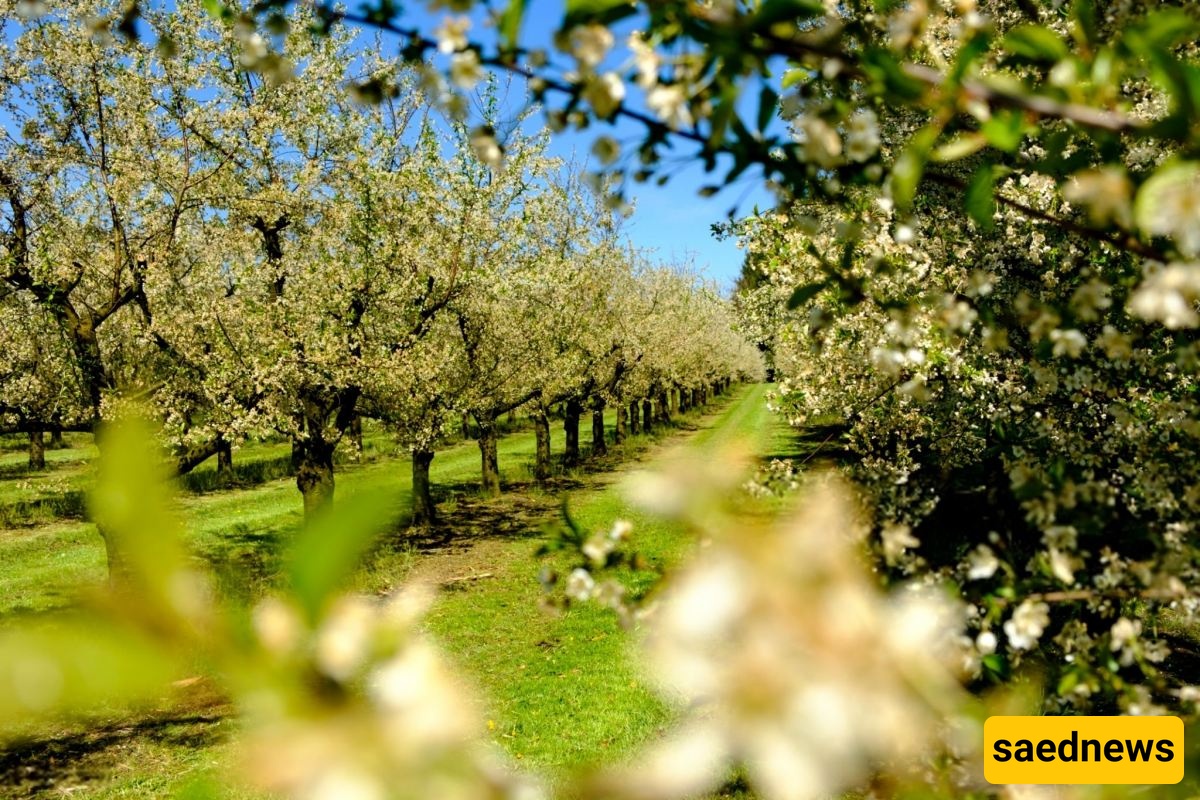
Heavy rainfall, cold winds, or sudden heat during the flowering period can reduce bee activity and cause flowers to fall. Temperatures below 10°C during flowering can significantly decrease pollination activity.
In areas with unstable weather conditions, grow self-fertile varieties such as Stella, Lapins, and Sunburst.
Use protective covers or windbreaks where possible.
Select varieties that flower later in the season in regions prone to spring weather changes.
Cherry trees require specific nutrients for healthy flowering and fruit production. Deficiencies of nitrogen, phosphorus, potassium, zinc, and boron can reduce flowering and fruit formation.
Nitrogen deficiency:
Yellowing leaves
Reduced vegetative growth
Phosphorus deficiency:
Poor flowering
Reduced fruit production
Potassium deficiency:
Burned leaf edges
Small fruits
Zinc deficiency:
Small leaves
Shortened spaces between leaf nodes
Boron deficiency:
Flower drop
Falling young fruits
Perform soil testing and apply fertilizers according to the results.
Use nitrogen- and potassium-based fertilizers during spring.
Apply phosphorus and potassium fertilizers in autumn.
Foliar spraying with zinc and boron before flowering can improve fruit set.
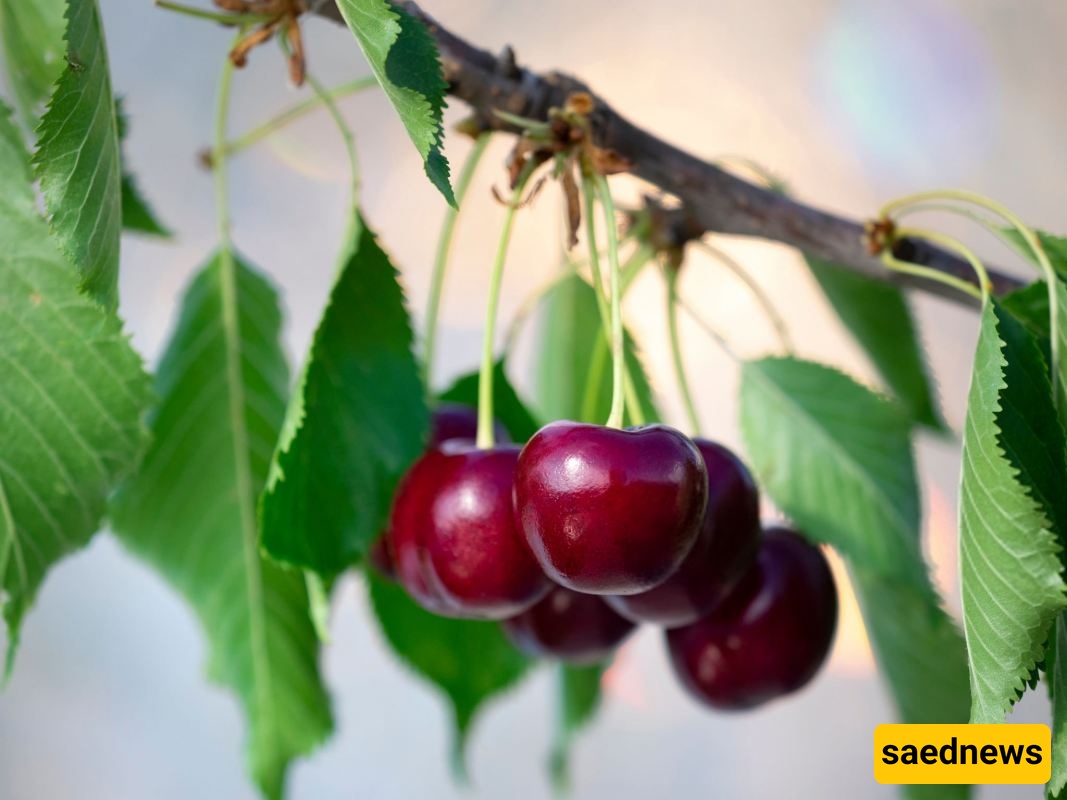
Excessive growth of branches and leaves can redirect the tree’s energy away from fruit production. This problem often occurs because of excessive nitrogen fertilization or improper pruning.
Avoid overuse of nitrogen fertilizers.
Perform summer pruning to control excessive vegetative growth.
Use special growth-control techniques such as girdling when necessary and under expert guidance.
Young cherry trees, especially those under 3–4 years old, usually do not produce significant fruit. Older trees, particularly those over 15–20 years, may also produce fewer fruits because of aging and reduced vitality.
Be patient with young trees and provide proper care.
Apply rejuvenation pruning and balanced nutrition for older trees.
Environmental and Orchard Management Factors
Spring frost is one of the most common causes of poor fruit production in cherry trees. Cherry trees bloom earlier than many other fruit trees, and their flowers are highly sensitive to freezing temperatures. Temperatures below 0°C during flowering can completely destroy blossoms.
Choose late-flowering varieties such as Lapins and Sunburst.
Use frost protection systems, including orchard heaters, sprinklers, or wind machines.
Cover trees with protective materials during cold nights.
Insufficient water during fruit development can cause young fruits to drop. On the other hand, excessive irrigation can lead to root problems and reduced nutrient absorption.
Provide regular and deep irrigation during flowering and fruit formation.
Use drip irrigation systems for accurate moisture management.
Reduce irrigation near harvest time to improve fruit quality.
Heavy or incorrect pruning can remove flower buds and reduce fruit production. On the other hand, neglected trees may develop dense branches that block sunlight.
Perform winter pruning to remove dry, diseased, and crossing branches.
Carry out summer pruning to control growth and improve sunlight penetration.
Avoid severe pruning on young trees.
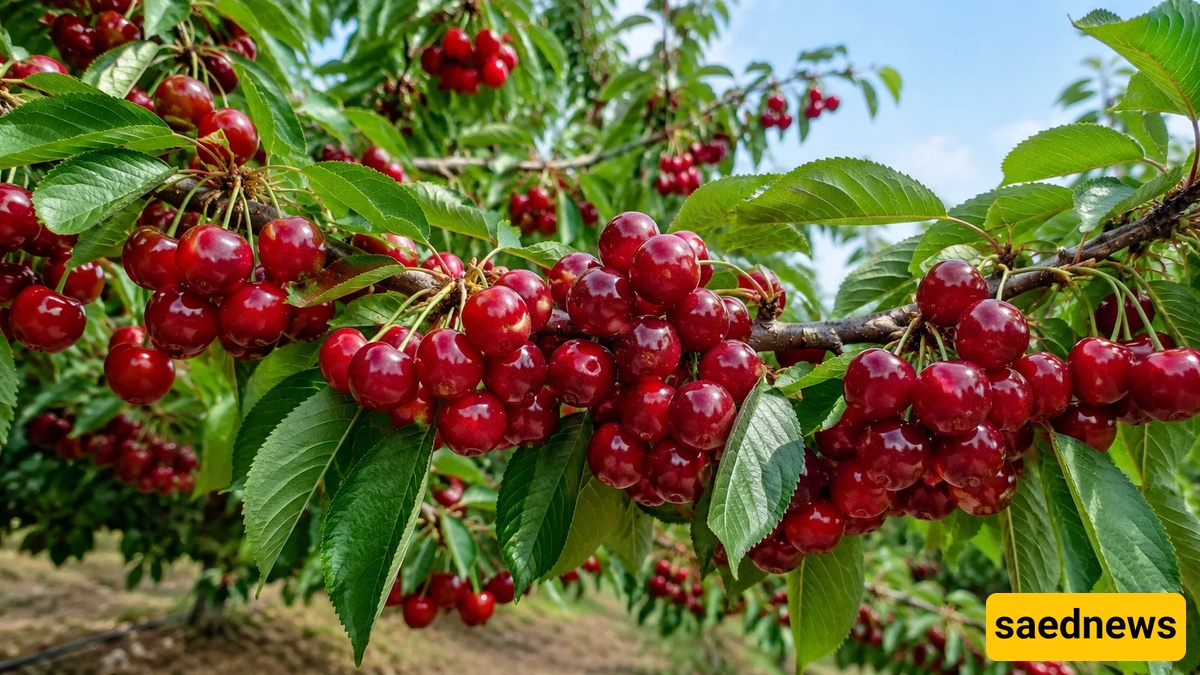
Diseases such as brown rot, shot hole disease, and bacterial canker can cause flower and fruit loss.
Select disease-resistant varieties.
Apply suitable fungicides during critical periods.
Remove and destroy infected branches.
Pests such as aphids, mites, cherry fruit flies, and fruit worms can damage flowers and young fruits.
Use biological control methods, such as beneficial insects like ladybugs to manage aphids.
Apply approved insecticides at the correct time.
Install pheromone traps to monitor and control cherry fruit flies.
Comprehensive Methods to Increase Cherry Tree Fruit Production
Selecting a variety suitable for the local climate is essential for successful fruit production.
Stella: Self-fertile and relatively cold-resistant
Lapins: Self-fertile and late-flowering
Sunburst: Self-fertile and high-yielding
Bing: Requires a pollination partner
Rainier: Requires a pollination partner
Local varieties such as Takdaneh cherry and Black cherry
A balanced fertilization program helps maintain tree health and increase yield.
Spring: Apply nitrogen and potassium fertilizers.
Summer: Use micronutrient foliar sprays.
Autumn: Apply phosphorus and potassium fertilizers.
Winter: Add organic materials such as well-rotted manure.
Provide deep irrigation every 7–10 days during the growing season.
Reduce watering during fruit ripening.
Use mulch to maintain soil moisture.
Remove dry, diseased, and crossing branches.
Control excessive vegetative growth.
Improve air circulation and sunlight exposure.
Restore productivity in older trees.
Inspect trees regularly.
Use biological control methods whenever possible.
Apply pesticides only at the appropriate time and preferably with professional advice.
A cherry tree that does not produce fruit is usually affected by one or more factors, including poor pollination, unsuitable weather conditions, nutrient deficiencies, improper irrigation, incorrect pruning, pests, diseases, or tree age.
By selecting suitable varieties, improving pollination, maintaining balanced nutrition, managing water correctly, performing proper pruning, and controlling pests and diseases, gardeners can significantly increase cherry tree flowering, fruit formation, and overall productivity.