SAEDNEWS: If you are planning to get married and are unsure whether to look for a working woman or a homemaker, or if you are already married but still uncertain, join us as we review the opportunities and challenges of each situation!

According to the Saed News Family Magazine service report, marriage with working women has both positive and negative aspects, and no general rule can be given in this regard. Instead, a girl and boy who intend to marry should, first, reach an agreement regarding the woman’s employment outside the home. Second, after reaching an agreement, they should carefully evaluate all aspects of the issue. By using appropriate strategies, benefiting from the experience of families who are skilled in this area, and consulting with family counselors, they should develop a plan and follow a path in which the woman’s employment causes the least harm to their married life and prevents potential future damage to their children.
In the following section, we examine the advantages of women’s employment:
Working outside the home helps women utilize their education and professional skills, which is very beneficial for their psychological security and sense of effectiveness.

A working woman better understands the pressures and stress of her husband’s job. Housewives, on the other hand, usually stay at home alone and must handle all household responsibilities without their spouse’s help. As a result, if you plan leisure time with your housewife spouse but are forced to cancel at the last minute due to work or arrive late, she may become very upset.
It is difficult to convince a woman who is not familiar with work necessities that an urgent meeting or task has come up. However, if your wife is working, she will behave more understandingly because she has also experienced stressful workdays and overtime. A woman accustomed to modern office life can better understand unexpected delays or overtime work from her husband.
People need emotional support from different sources to fulfill their psychological needs. However, housewives—especially those without children—often spend the entire day alone at home, which may increase their expectations from their husbands. In such cases, a woman may expect her husband to fulfill all emotional needs alone, which can lead to dissatisfaction, resentment, and even depression for both sides.
In today’s difficult economic conditions, it is clear that a household where both partners work and earn income has a much better financial situation. Some also believe that working women have a better understanding of the value of money and, having less time to spend it, tend to save more for the family.

One issue with traditional housewives is that they may become overly attached to old traditions and think in a conservative or outdated way. In contrast, working women are more engaged with society and more aware of modern ideas. They are generally more open-minded and up-to-date.
Additionally, women who are active in society tend to be more stylish and modern. If your wife is working, you will not need to convince her to try new fashion trends, as working women are usually more willing to experiment with modern styles and follow fashion trends.
Housewives generally have more freedom compared to working women. A housewife does not need to obey a boss or request leave from an employer when she is sick. This freedom can make her happier and more independent. She can rest when ill without pressure or obligations. She is not stressed about deadlines or work responsibilities, which is a major factor in marital problems.
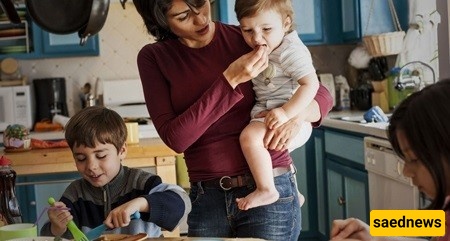
Working outside the home requires significant time and energy. Therefore, it is natural that a working woman may return home more physically and mentally exhausted compared to a housewife and may not have enough energy left for her spouse and children.
The most important disadvantage of a woman’s employment outside the home is the challenge of childcare and upbringing. In many cases, a mother’s job responsibilities conflict with her role as a parent. For example, due to work obligations, she may constantly worry about whether she can spend enough time with her child, talk to them, and play an essential role in their upbringing.