SAEDNEWS: Halva without syrup is a very delicious and delicate type of halva that is also simple to prepare. You can easily make this sweet treat at home in a short amount of time.
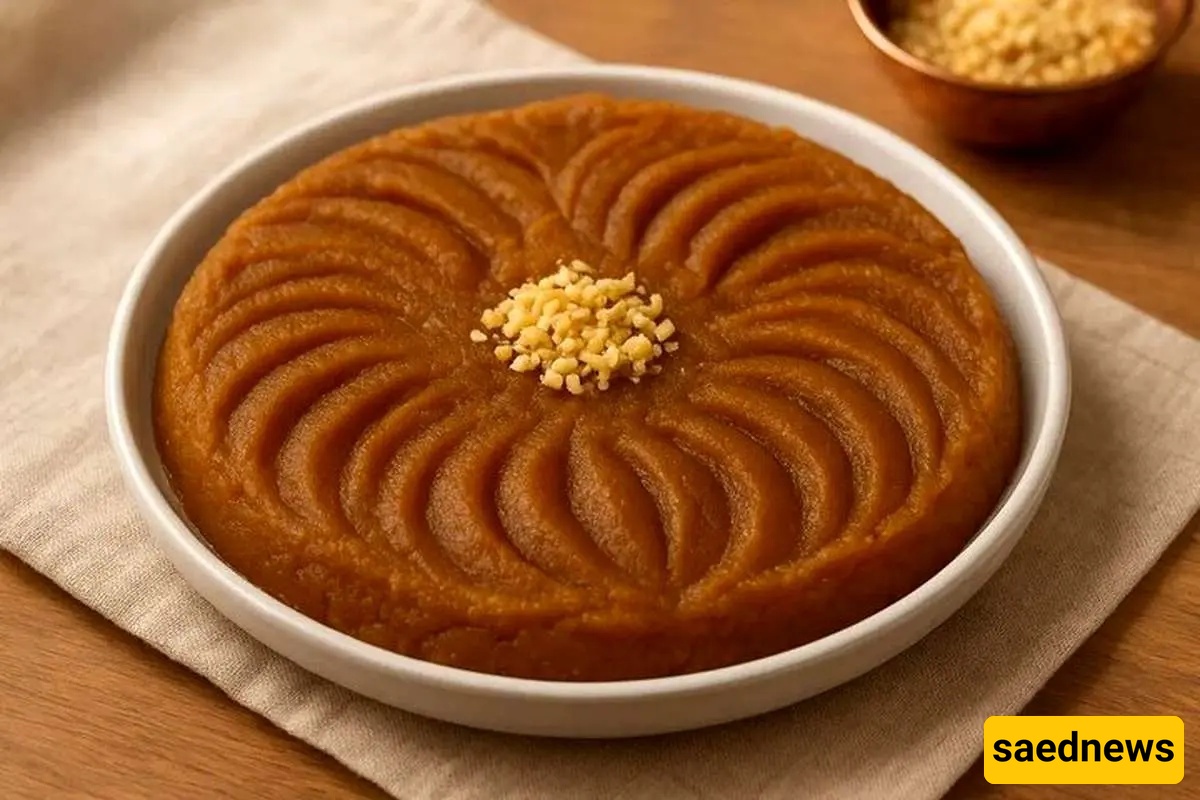
According to SAEDNEWS, Halva is one of Iran’s traditional sweet dishes, and it is prepared in different ways across various regions of the world. In Iran, halva is commonly made for funeral ceremonies and religious occasions such as the mourning days of Muharram, the Nights of Qadr, and during the iftar table in Ramadan.
Besides being served as a sweet dessert, halva is also considered a nourishing and energy-rich food. This version, halva without syrup, is a very soft and delicious variation that is easy to prepare and can be made at home in a short time. Unlike traditional halva recipes, this method does not require sugar syrup. If you would like to prepare a simple and tasty halva for iftar, follow the recipe below.
1 cup wheat flour
1 cup sugar
¾ cup oil (a mixture of solid and liquid oil)
1 cup milk
¼ cup rosewater
1 teaspoon green cardamom powder
Brewed saffron (thick), as desired
Sift the flour into a deep frying pan or pot. Place it over medium heat and toast the flour for about 5 minutes until the raw smell disappears.
Add the oil and continue sautéing the mixture over low heat for about 15 minutes until the flour gradually changes color and reaches your preferred shade. Then add the sugar gradually in three stages, stirring well each time until the sugar granules completely dissolve.
Add the cardamom powder, rosewater, and brewed saffron to taste and mix thoroughly. After adding the rosewater and saffron, the mixture will become slightly loose at first and then gradually thicken, so keep stirring.
Finally, add the milk and stir quickly until the halva begins to come together. When the mixture separates from the sides of the pan, move it gently in the pan until smooth. Transfer the halva to a serving dish and decorate it with slivered pistachios, almonds, or dried rosebuds. Serve and enjoy.
Always use strongly brewed saffron. If saffron is brewed with too much water, its color becomes lighter and you may need to use more saffron to achieve the desired color.
To brew saffron properly:
Grind the saffron thoroughly without adding sugar.
For every 1 teaspoon of saffron, add 2 tablespoons of boiling water and 2 small pieces of ice.
The ice causes a temperature shock, helping the saffron release more color.
Store brewed saffron in a covered container in the freezer. Before using it, allow it to thaw at room temperature, and return the remainder to the freezer afterward.
To check if saffron is pure, press it between your fingers. If it releases oil, it may be adulterated. Pure saffron usually does not produce an oily residue and fake saffron often appears unusually shiny.
For sweets, cakes, halva, and desserts, it is best to use green cardamom powder, which has a stronger aroma than white cardamom and is more suitable for desserts.
Whole-grain flour is preferable for halva. Flour used for traditional Sangak bread works especially well because it contains more bran than other types of flour, giving the halva a richer color and flavor.
There is no exact time for roasting flour—it depends on personal preference. Some people prefer dark halva while others like a lighter color. Once the flour reaches your desired shade, add the oil and stop roasting.
Rosewater is the fragrant extract of Damask roses, and some of the finest varieties are produced in the Iranian cities of Kashan and Meymand. Many commercial rosewaters available in stores are not pure.
Authentic rosewater:
Smells distinctly like Damask roses
Does not have a sour scent
Is clear, bright, and free of sediment
Has a slightly heavy taste with a mild bitterness
When buying rosewater, paying attention to these characteristics helps ensure better flavor in your desserts.