Saed News: “Design of Binuclear Organoplatinum and Tin Complexes: Synthesis, Characterization, and Crystallographic Structure” is the title of a research project completed with the support of the Iran National Science Foundation.
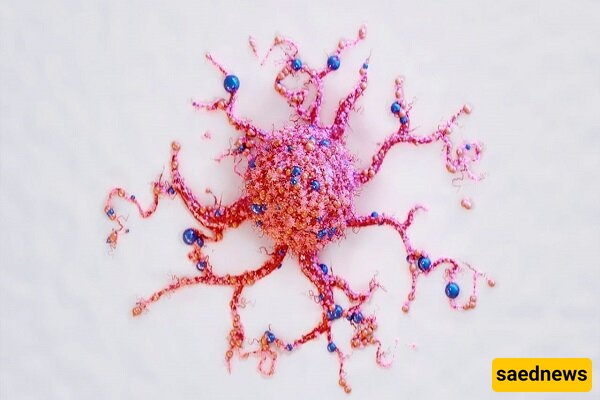
According to SAEDNEWS, extensive research has been conducted on cancer treatment. Some researchers focus on prevention, while others seek more effective therapeutic methods for the disease. The Iran National Science Foundation supports research projects in all cancer-related fields.
“Design of Binuclear Organoplatinum and Tin Complexes: Synthesis, Characterization, and Crystallographic Structure” is a research project led by Badri Zaman Momeni, a faculty member at K. N. Toosi University of Technology, and supported by the Iran National Science Foundation.
Momeni, who holds a PhD in inorganic chemistry from Shiraz University, explained that well-known platinum-based drugs such as cisplatin and oxaliplatin are commonly prescribed for treating many cancers. However, even when effective, their use is limited by side effects and dosage restrictions. Research around the world is currently focused on designing a new generation of platinum-based anticancer drugs.
The researcher added that recent studies have demonstrated the importance of non-covalent interactions in the photophysical properties of platinum compounds for the design of new anticancer drugs.
Many platinum-based anticancer drugs developed in recent years have been designed using macromolecules and platinum polymers, which show fewer side effects compared to cisplatin and, in most cases, work through mechanisms similar to traditional platinum anticancer drugs.
Momeni further explained that platinum–tin binary compounds have recently attracted significant attention because of their applications in catalysis, nanomaterials, anticancer compound design, clusters, and supramolecular chemistry.
He stated that, for the first time, oxidative addition reactions of platinum(II) complexes with new organotin(IV) compounds were successfully carried out. In this research project, a new series of platinum compounds was synthesized for the first time, compounds that could not be produced through other methods. Since both tin and platinum possess strong anticancer properties in medicine, these compounds are expected to have significant therapeutic potential. Despite extensive research, the catalytic assisting role of tin still remains unclear.
Momeni concluded that the results of this project could encourage researchers to continue working in this field and contribute to the future design of new-generation drugs.